
The complete guide
Choosing a Window Catio, A Practical Buyer's Guide
The problem with keeping a cat indoors
Indoor cats live longer. Most vets agree on that, and most owners have made peace with it. What nobody tells you is how much your cat will complain about the arrangement.
A cat that spends its whole life inside gets bored. You see it in the pacing near the door, the yowling at five in the morning, the sudden sprint down the hallway at nothing. They are not being difficult. They are under-stimulated. A house, however nice, has a fixed set of smells and sights, and a cat works through all of them in about a week.
The outdoors is where the stimulation lives. Moving grass, birds, insects, wind carrying news of other animals. A cat can sit in that for an hour and come back genuinely tired. The problem is that outdoors also contains cars, dogs, other cats, ticks and the risk that your cat simply does not come home.
A window catio is the compromise. Your cat gets the sensory input of being outside, fully contained, and you get to stop worrying.
How an enclosure like this works
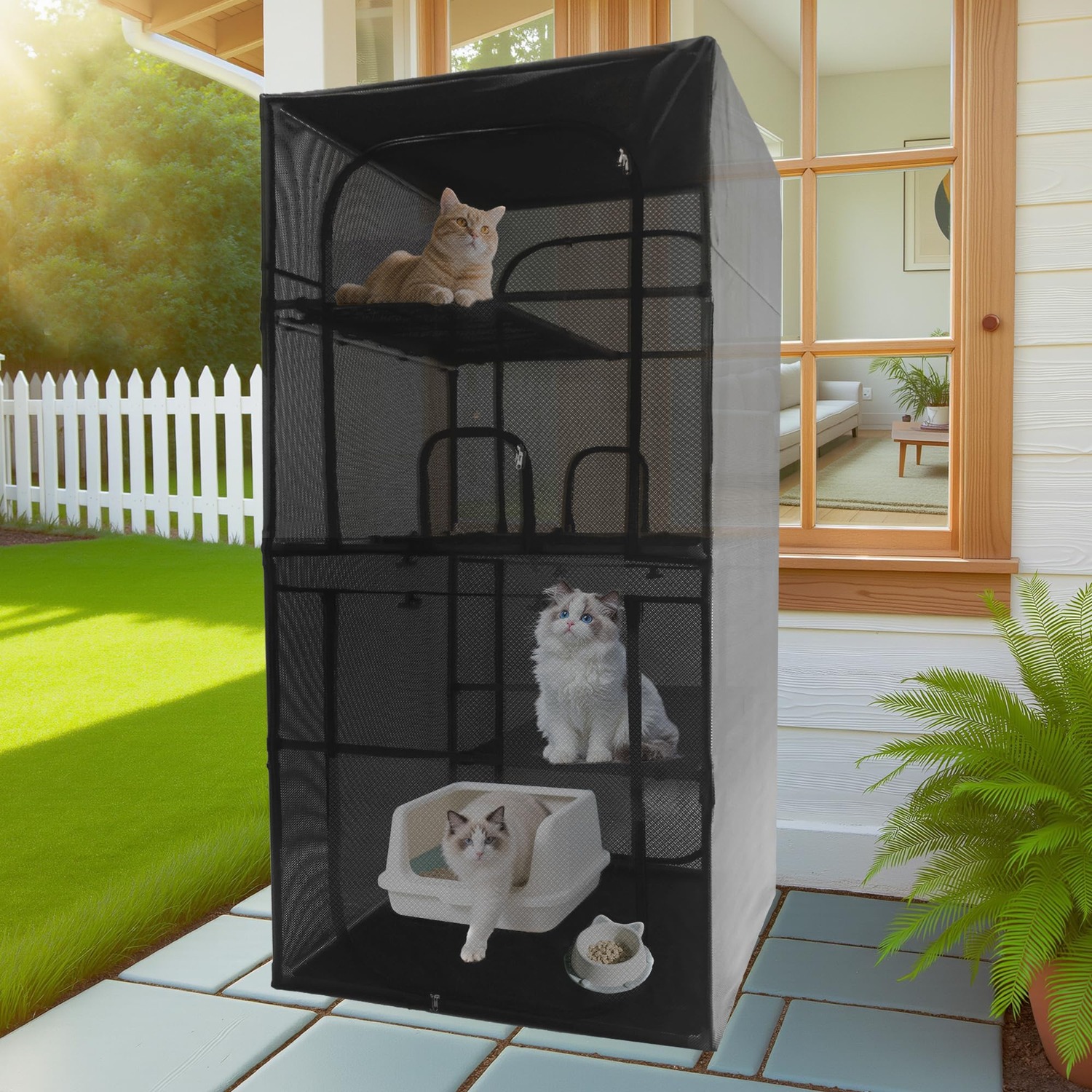
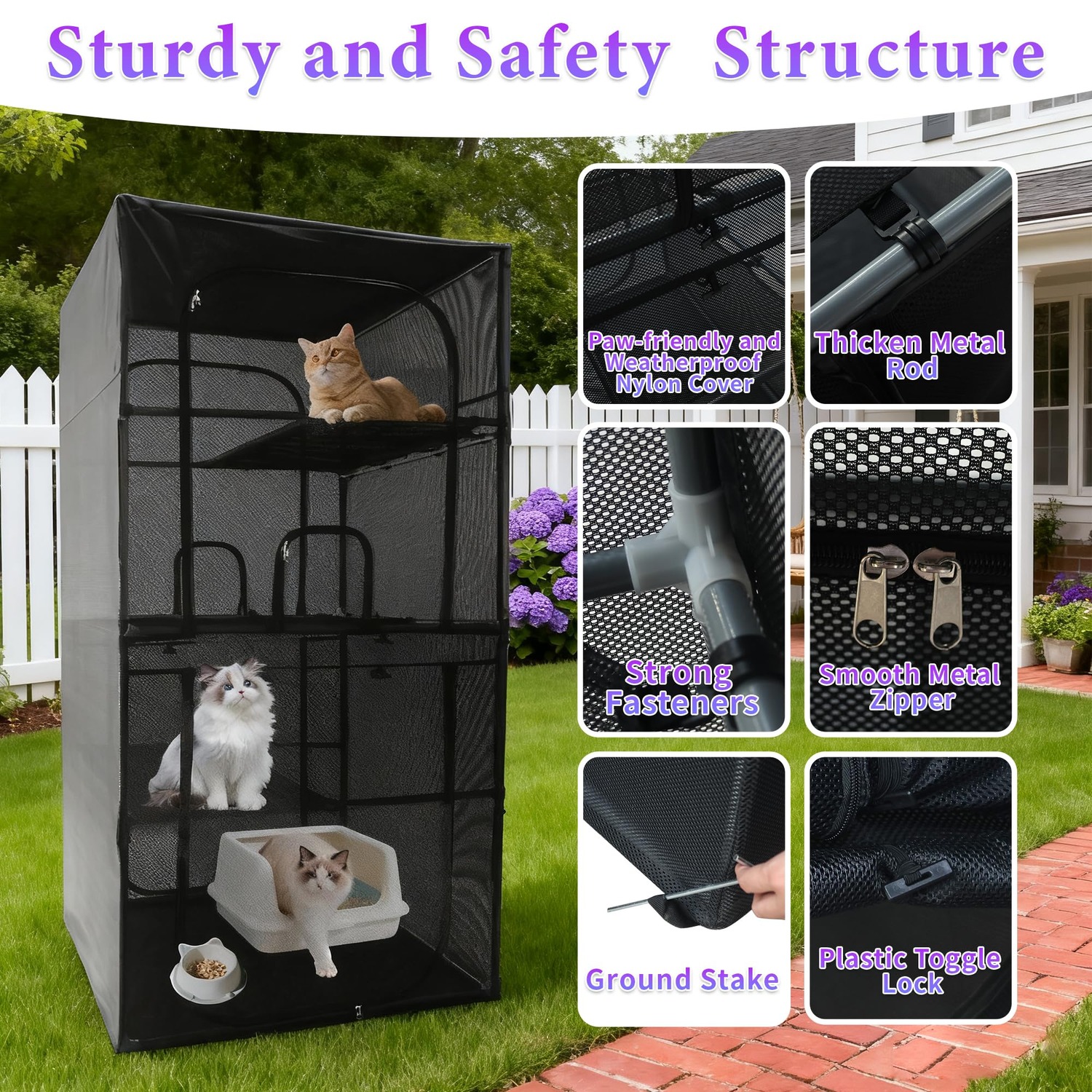
The basic idea is simple. You have a frame made of metal rods that clip together into a tall box. Over that frame goes a nylon mesh shell. The mesh is the clever part: fine enough to keep insects out and cats in, open enough that air moves straight through and you can see what is happening inside.
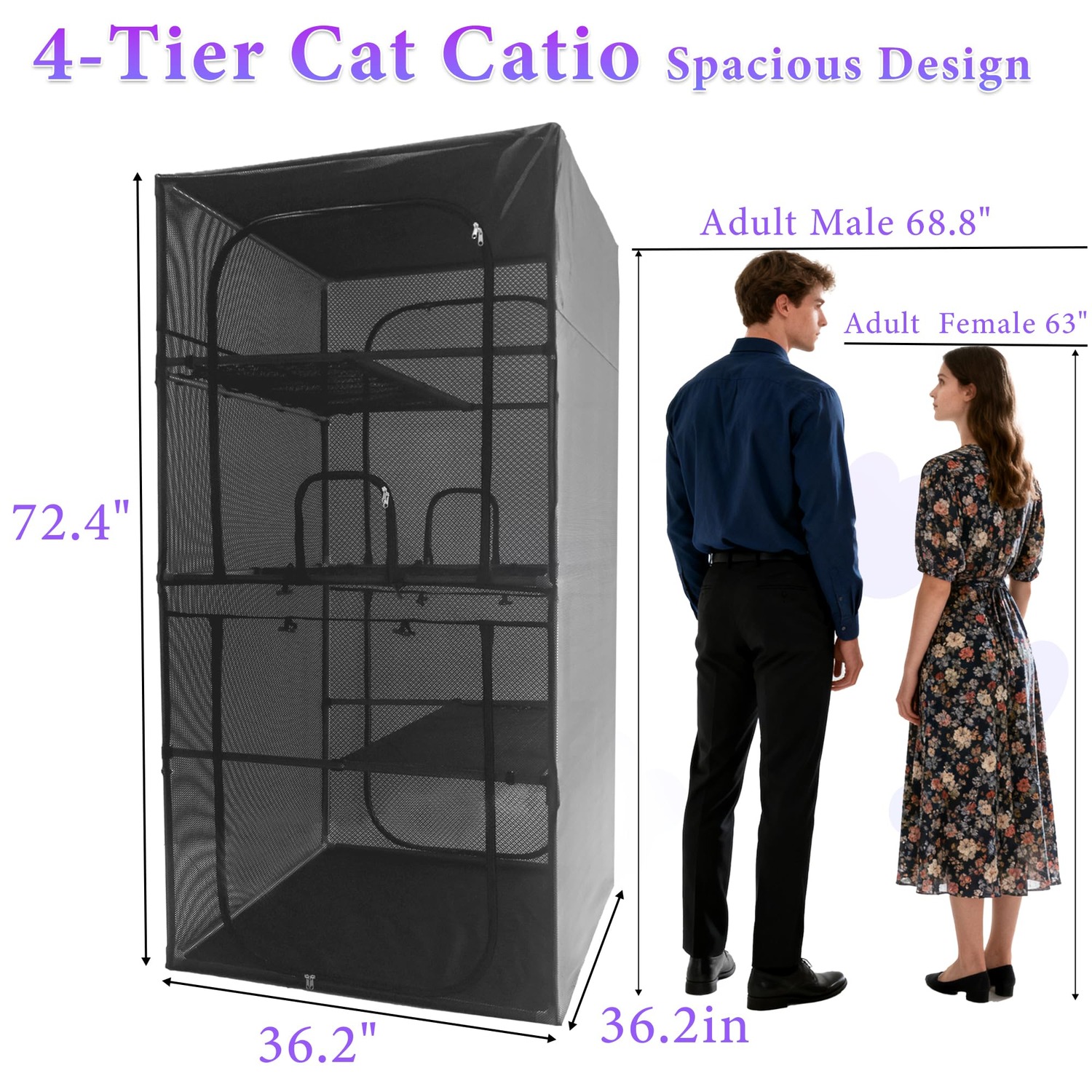
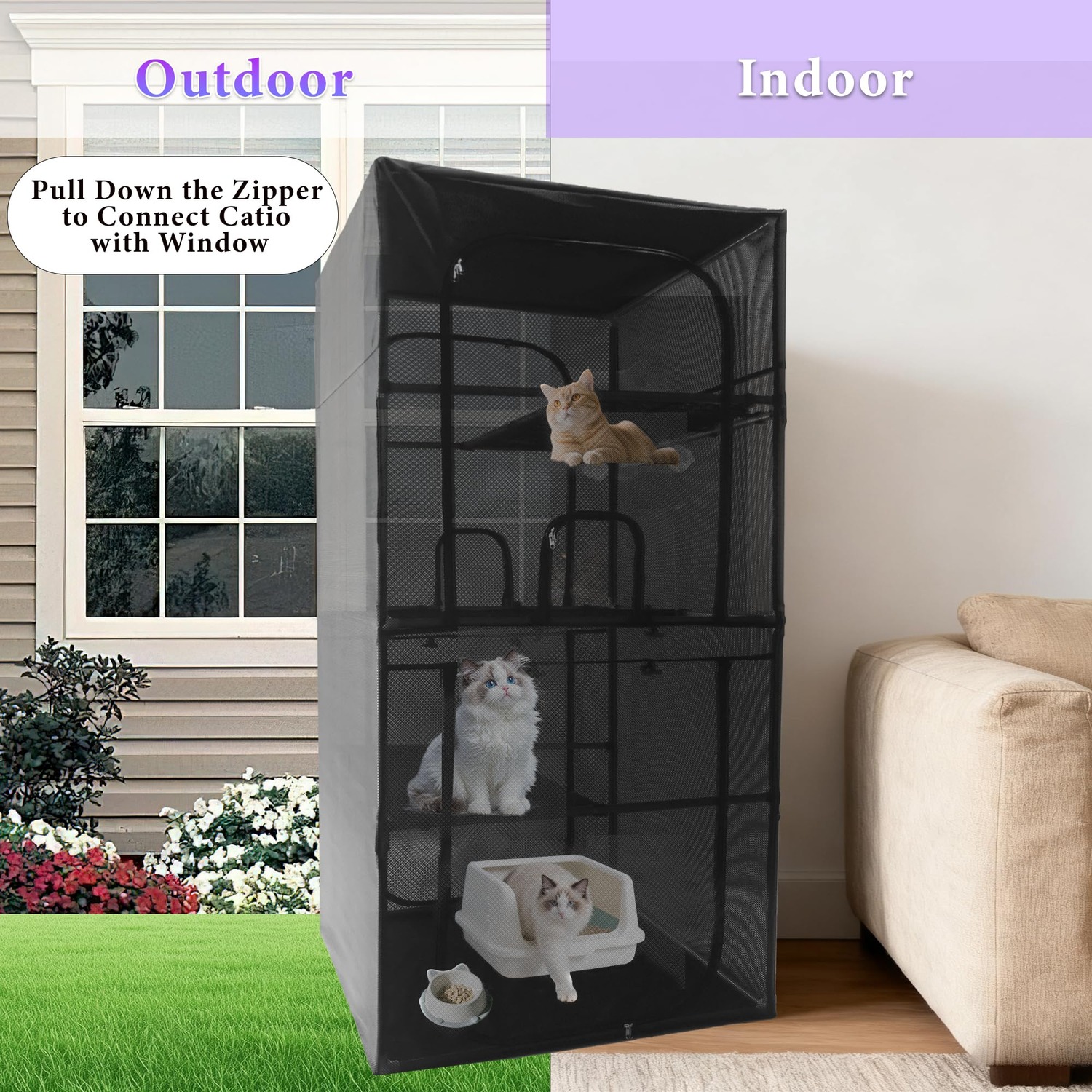
This particular model stands 183.9 cm tall on a square base of 91.9 by 91.9 cm. Inside, there are four tiers. Think of them as floors in a narrow building. A cat climbs from one to the next, picks a level that suits its mood, and stays there.
Why four tiers instead of one big open space? Because cats measure territory vertically. Give a cat a wide floor and it uses the edges. Give it height and it uses everything. A four tier cat cage feels dramatically larger to a cat than the footprint suggests, which is exactly what you want when you are short on balcony space.
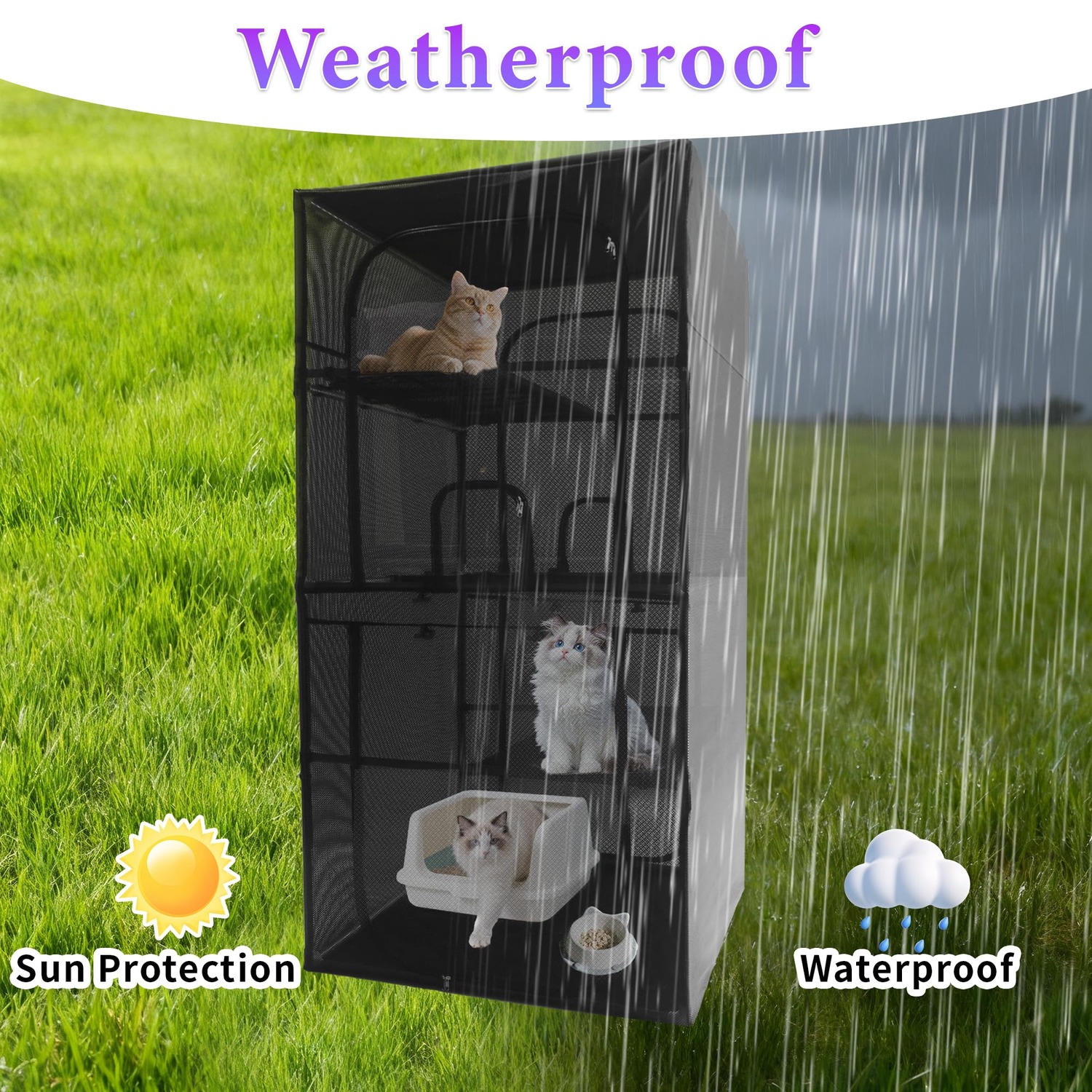
The roof carries a waterproof cover. That does two jobs. It shades the top level, so your cat is not baking in direct sun, and it sheds light rain so the inside stays usable on a grey afternoon. It also gives a nervous cat a sense of cover overhead, which many cats need before they will relax somewhere new.
Five zippered doors handle access. Three are large, two are small. The small ones are cat sized. The large ones, particularly those at the bottom, are big enough that you can reach in with both arms or climb inside entirely. That matters more than it sounds. Anyone who has tried to change a litter tray through a narrow flap will understand.
Who this suits
The clearest fit is an apartment or townhouse with a balcony. You have no yard, your cat has no safe outdoor access, and you are not allowed to build anything permanent. A freestanding enclosure that needs no tools and packs down flat solves all three problems at once.
It also suits people with yards who have decided their cat should not free roam. Maybe there is a busy road nearby. Maybe there is wildlife you would rather your cat left alone. Setting up an outdoor cat cage near the back door gives the cat supervised access on your terms.
Multi-cat households get good value from the tiers. Two cats that tolerate each other indoors will often share an enclosure happily, because each one can claim a level. A single shelf would force them into negotiation. Four shelves means nobody has to.
It works indoors too. Plenty of owners set one up beside a sunny window and treat it as a cat condo, somewhere the cat can perch above the floor traffic. If you have a dog, a toddler or a nervous rescue cat, a contained vertical space is genuinely useful inside the house.
The one group it suits less well is cats with real mobility problems. A very old or arthritic cat will use the bottom level and ignore the rest. That is not a disaster, but you are paying for height you will not use.
How to choose between enclosures
Start with the footprint. Measure the actual patch of floor or balcony where this will live, then leave clearance around it. Under a metre square sounds small until you place it next to a table and a chair.
Then look at height. Taller is better for cats, but check what is above the spot you have chosen. A low balcony ceiling, an awning or a pergola beam can all get in the way of a 183.9 cm enclosure.
Next, count the doors and look at where they sit. This is the detail buyers overlook and then regret. Enclosures with a single cat-sized flap look fine in photos and become a nuisance the first time you need to clean inside. Multiple doors, including large ones at ground level, make the thing practical to live with.
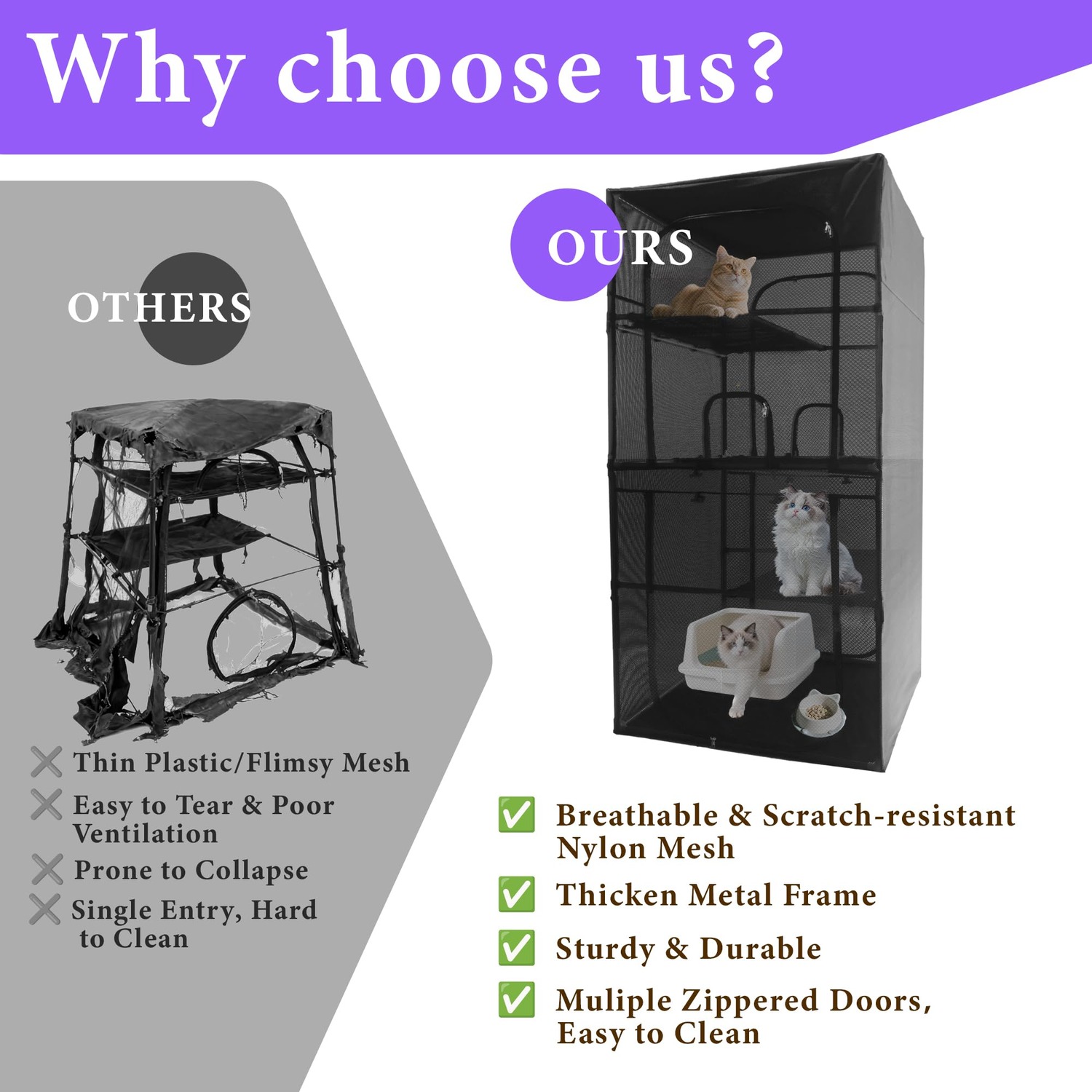
Material matters for durability. Metal and nylon mesh is the common build, and for good reason. Metal holds the shape so shelves do not sag. Mesh breathes. All-fabric pop-up enclosures are cheaper and lighter, but they wobble, and a determined cat can push the walls out of shape.
Finally, think about whether you need it to pack down. If the enclosure lives permanently on a covered patio, storage does not matter. If you want it out in summer and gone in winter, or you move house often, a tool-free frame that disassembles is worth a lot.
Setting it up well
Pick your spot before you build. Level ground, partial shade, and ideally against a wall or railing so the structure has something to brace against. Full sun all day is too much, even with the roof cover.
Assembly needs no tools. Lay out the poles, connect the frame, then fit the mesh shell over the top. Run every zip open and closed once before you let a cat in. A stuck zip is far easier to fix on an empty enclosure.
If you are placing it on grass or soil, stakes help. On concrete or decking, position it where wind cannot catch it side on. Give the whole thing a firm push with your hand. If it rocks, move it.
Introducing your cat takes patience rather than effort. Put a blanket that already smells like them on one of the middle shelves. Open a door and walk away. Do not carry the cat in and shut the zip; that turns a new space into a trap in their mind. Most cats investigate within a day.
Keeping it in good condition
Maintenance is light. Wipe the metal frame with a damp cloth now and then and dry it, so moisture does not sit in the joints. Spot clean the mesh with mild soapy water and let it dry fully before you zip it up, since damp fabric closed up tight will start to smell.
Brush off leaves, dust and fur regularly. Mesh only breathes if it is clear. A soft brush or a quick pass with a vacuum nozzle does it.
Check the zips and pole connections every few weeks. Zips are the first thing to fail on any fabric enclosure, and catching a sticking slider early usually means a bit of lubricant rather than a replacement.
Weather is the main enemy. The roof cover handles sun and light rain, but take the enclosure down or bring it under shelter before storms and strong wind. Nylon left out through a harsh season will last nowhere near as long as nylon that gets packed away.
The short version
A window catio gives an indoor cat the outdoors without the risk. This one is 91.9 cm square and 183.9 cm tall, with four tiers inside, a metal frame, nylon mesh walls and a waterproof roof cover. Five zip doors, three large and two small, make it easy for cats to come and go and easy for you to clean.
It assembles without tools and comes apart for flat storage. It fits a balcony, a patio corner or a sunny spot indoors.
Measure your space, check the height clearance, and give your cat somewhere better to spend the afternoon than the back of the sofa.