
The complete guide
Outdoor Cat Tunnels, A Practical Buyer's Guide
The problem with a cat who wants out
Indoor cats are safer. Nobody argues with that. The trouble is that your cat did not read the research, and they spend a fair chunk of each day at the back door making it clear they would like a word.
You see it in the behaviour. Chirping at birds through glass. Darting for the gap when you bring the shopping in. Restless evenings that look a lot like boredom. A cat that never gets outdoor stimulation has fewer things to do, and that shows up as overgrooming, furniture-shredding or 3am zoomies.
Letting them roam solves the boredom and creates bigger problems. Roads, dogs, other cats, ticks, and in plenty of places local wildlife that your cat would happily treat as a hobby. So most owners end up looking for something in between, and that is exactly the gap an outdoor cat tunnel fills.
How an outdoor cat tunnel actually works
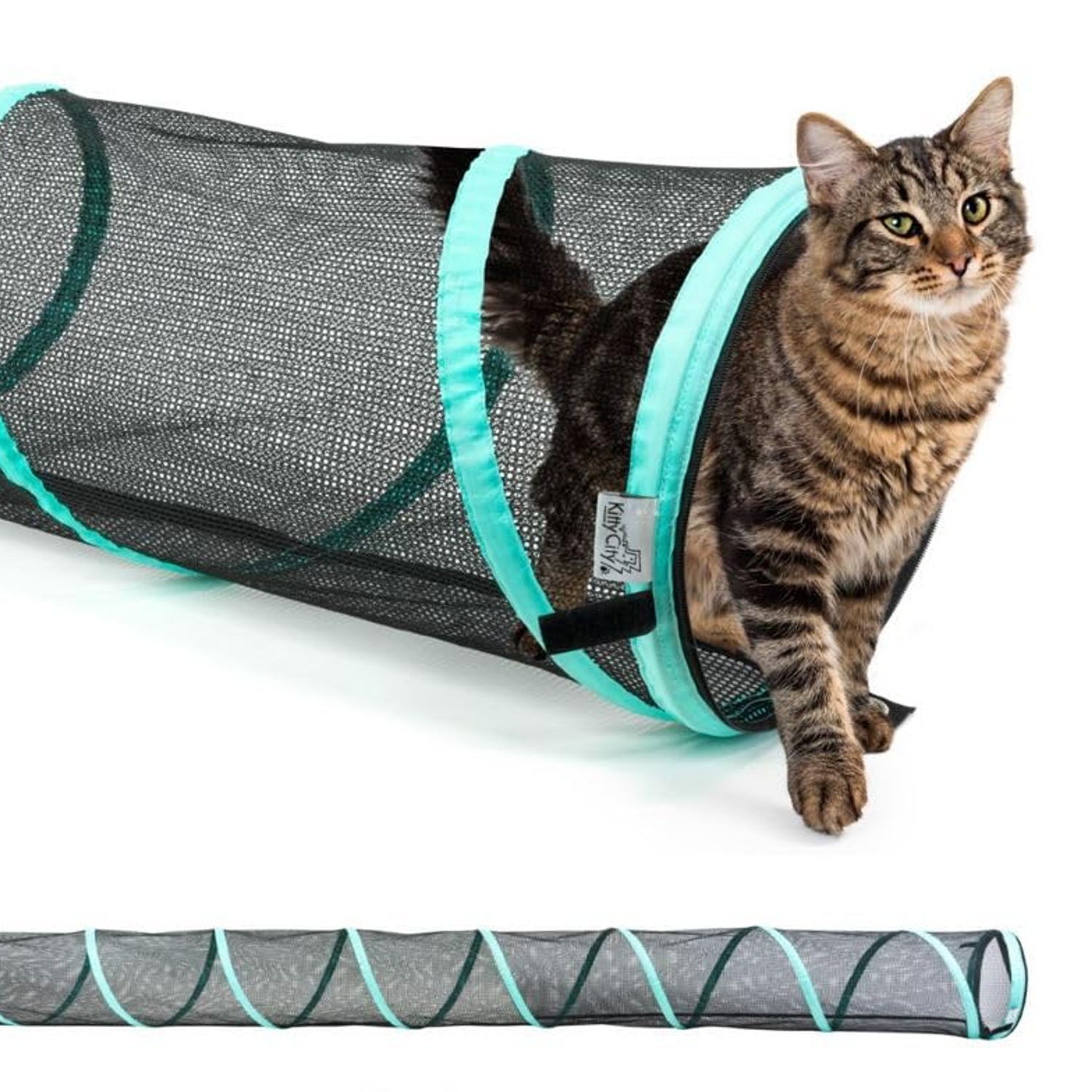
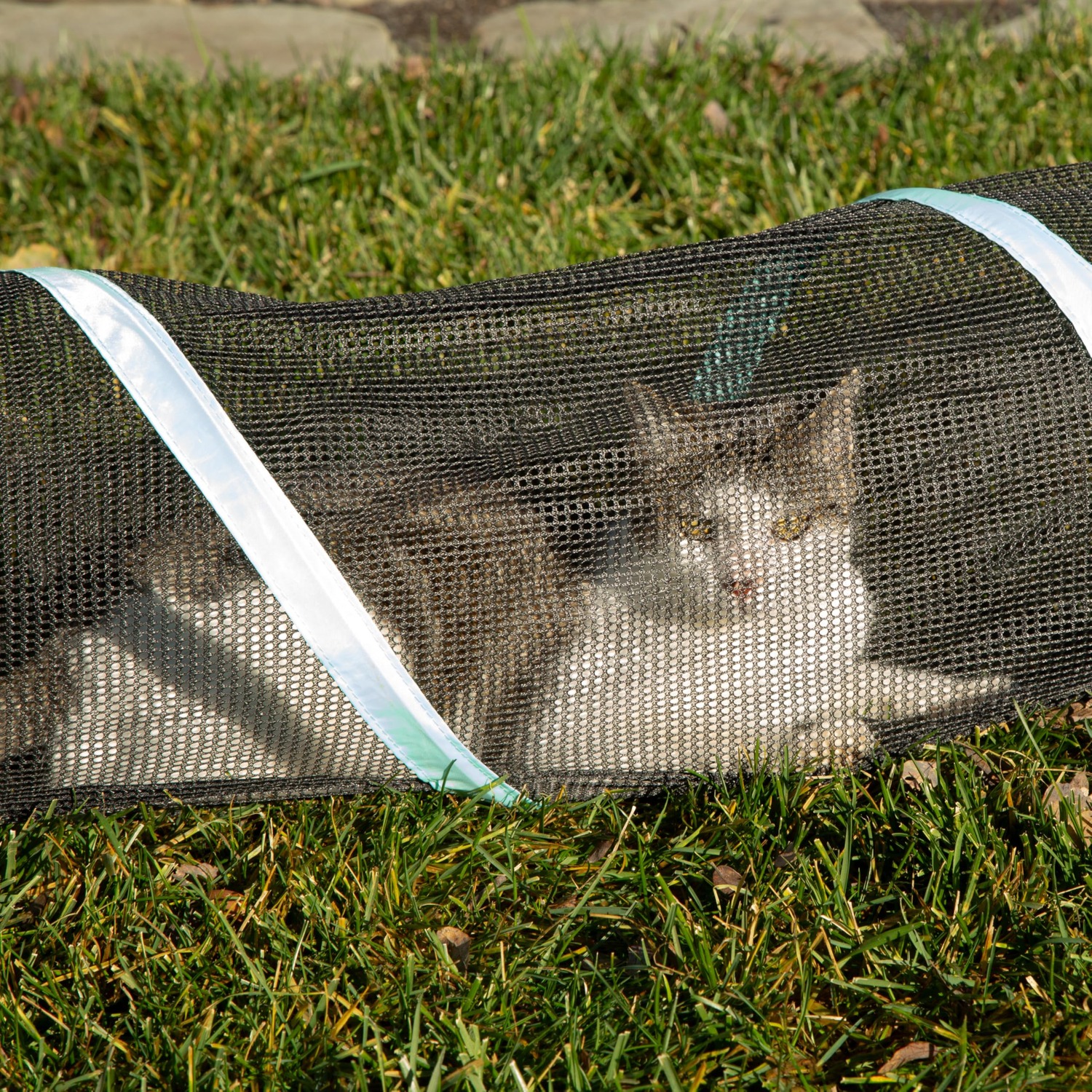
The idea is simple. You give your cat a defined outdoor space they cannot leave. A tunnel does this in a long, narrow shape, which suits cats better than you might expect, because cats like enclosed spaces with sightlines out of both ends.
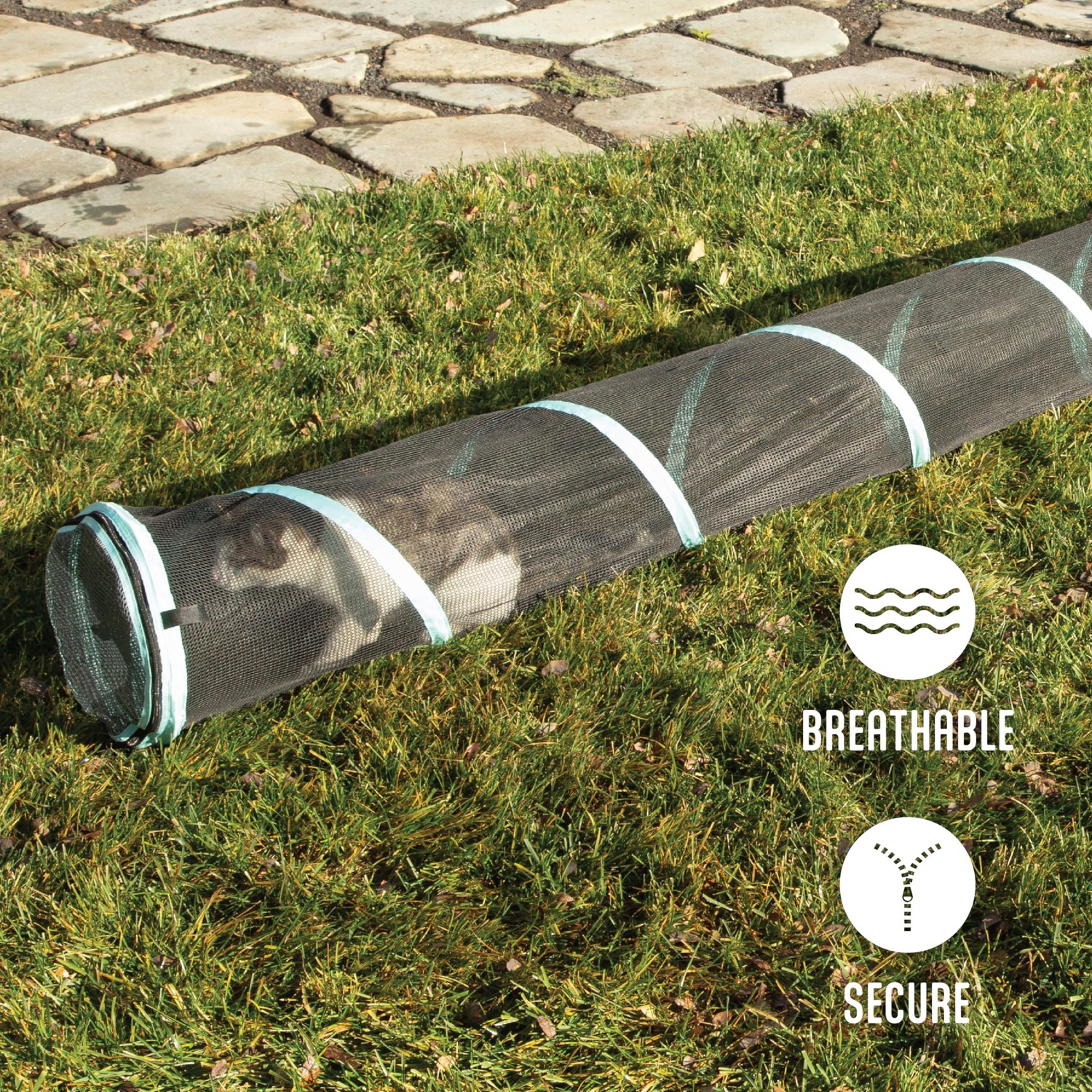
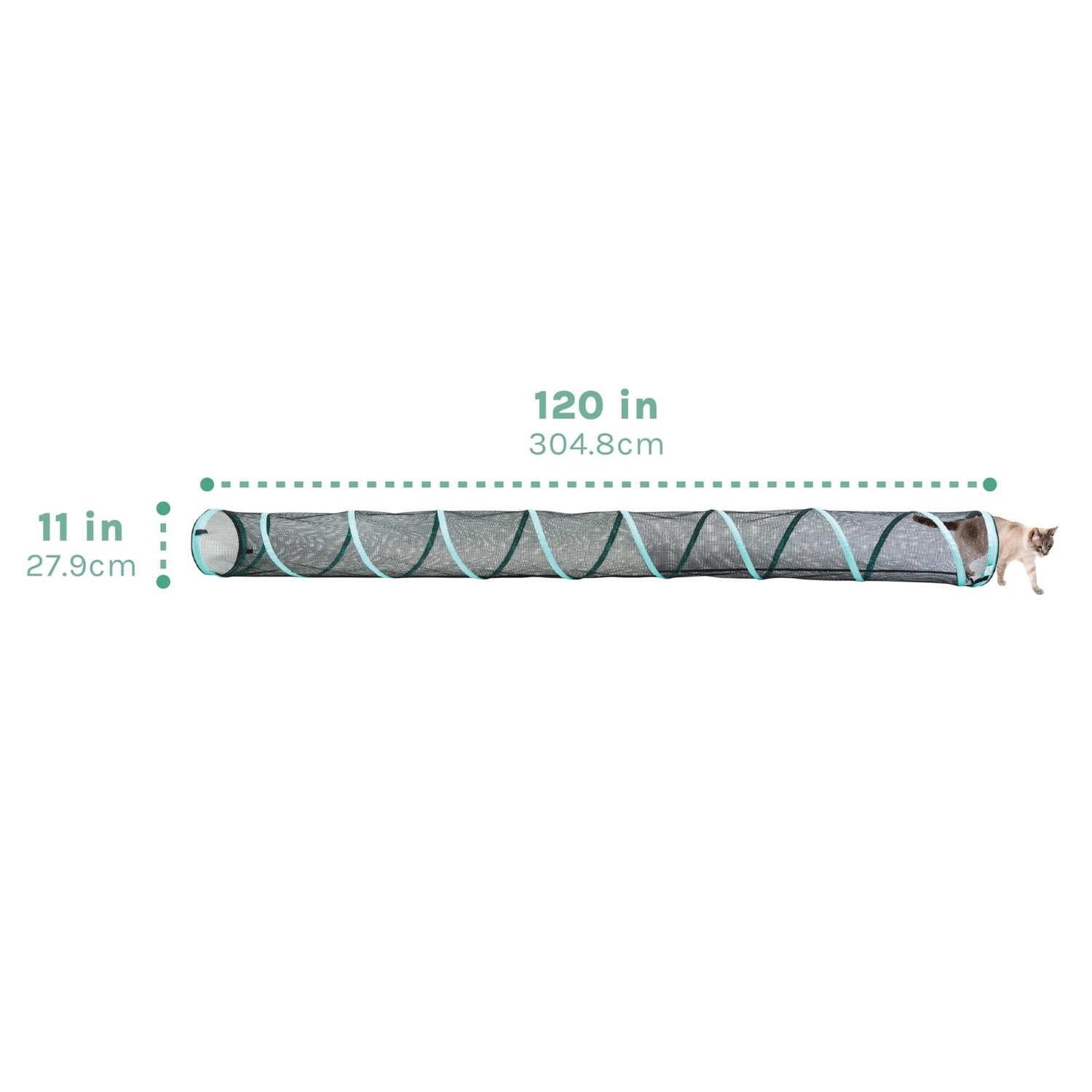
This particular one runs 3.05 metres, so 10 foot. That length matters. A one metre play tube is a toy. Three metres is a route. A cat can accelerate, stop, turn and do the whole thing again, which is far closer to the movement they get from real outdoor time.
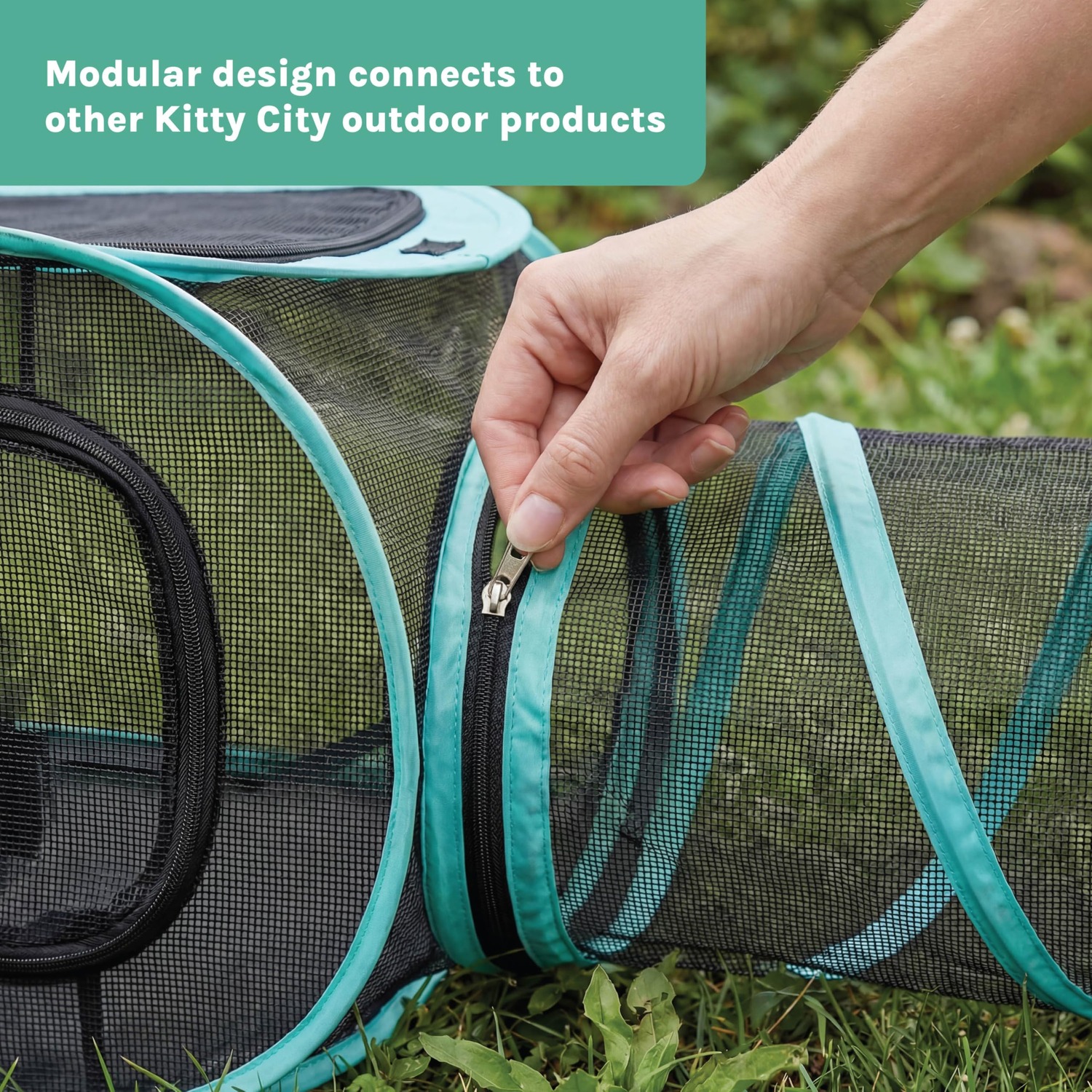
Both ends zip closed. That is the containment part. With both zips done up, the tunnel is a sealed run, and your cat is in it until you open it. Leave one end unzipped and attached to an enclosure or a doorway, and it becomes a passage instead.
The stakes do the stability work. A light fabric tunnel on grass will shift when a cat hits it at speed, and a tunnel that bunches or rolls is both annoying and a bit unnerving for the cat inside. Pushing the stakes in takes seconds and makes the whole thing feel solid.
At 816 grams the tunnel is genuinely portable. You are not wrestling equipment. You pick it up, move it, and set it down somewhere with better shade.
Who this suits
Indoor cats with a yard. This is the obvious one. Your cat has never been allowed out, you are not about to start, but you have grass and sun and a cat who clearly wants both. A cat run tunnel on the lawn for half an hour in the afternoon changes their whole day.
Apartment dwellers with a balcony or courtyard. Three metres fits along most balcony edges. You get a contained strip of outdoor space without modifying the building.
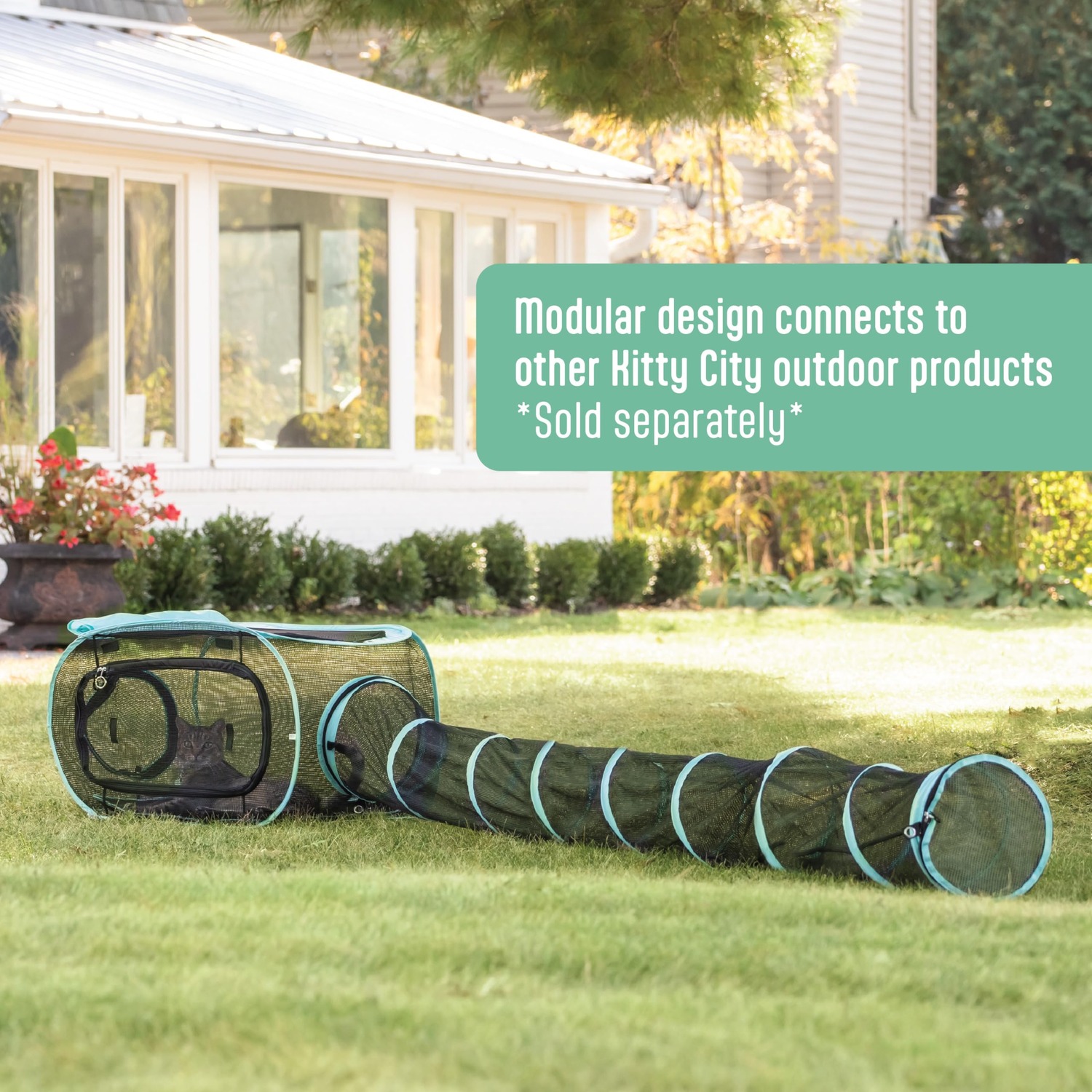
People already building a catio. If you have an enclosure, a tunnel extends its reach. Connect the enclosure to a sunnier corner, or to a second structure, and you have doubled the usable territory without doubling the footprint. Being part of the Kitty City outdoor modular range means this piece pairs with the Outdoor Mega Kit rather than sitting on its own.
Renters. Nothing is drilled, bolted or permanent. It stakes into the ground and comes back out, which matters when you cannot modify a property.
Travellers. Folded, it goes in a car boot. If you visit family regularly with your cat, having a familiar outdoor space to set up on arrival makes those trips far less stressful for everyone.
Who it suits less well: owners of very large cats. The tunnel is 0.28 metres across, which is comfortable for an average cat and tight for a big Maine Coon. The breed recommendation is small breeds. Measure across your cat's shoulders before you commit.
How to choose, and what to check first
Measure your space before you measure the tunnel. Three metres is longer than people picture. Walk it out in your yard. You need a reasonably flat, clear run, ideally with some shade at one end so your cat has a choice about temperature.
Think about what the ends connect to. A tunnel with both ends zipped is fine for supervised play. A tunnel that links to an enclosure is more useful day to day, because your cat can self-direct. If you think you will eventually want a full cat tunnel system, buying into a modular range now saves you replacing things later.
Check your ground. Stakes need soil. Lawn, garden bed and soft dirt all work. Paving, decking and concrete do not, and you will need weights instead. Test it with your foot before you trust it with your cat.
Be honest about supervision. This is a fabric tunnel. It contains a cat very well. It does not stop a determined dog, and it does not provide shade on a 35 degree day. Treat it as a tool for supervised outdoor time and it works beautifully. Treat it as unattended containment and you are asking too much of it.
Consider storage. Collapsible matters if you have a small home. This one folds flat, so it lives behind a door or under a bed rather than taking up a corner of the shed.
Getting your cat to use it
Some cats walk straight in. Others treat a new object as a threat until proven otherwise. Both are normal.
The reliable approach is to set it up indoors first with both ends open. No zipping, no pressure. Let it sit there for a day. Then drop a few treats just inside one end and walk away. Cats investigate when nobody is watching.
Once they are going through happily indoors, move it outside. The outdoor version is a different thing to a cat because of all the new smells, so expect a short reset. Keep the first outdoor sessions brief and positive, and do not zip both ends until your cat is clearly relaxed in there.
Toys help. A wand toy drawn along the outside of the tunnel will usually trigger the chase instinct within a minute or two.
Care and keeping it decent
Outdoor gear gets dirty, and a cat tunnel gets dirty in specific ways. Grass clippings, soil, the occasional leaf, and fur.
Shake it out after each session. That alone handles most of it. For anything more, wipe with a damp cloth and a mild soap, or run it through a gentle machine wash cycle. Polyester dries quickly, but it needs to dry fully before you fold it, or you will open it next time to a musty smell.
Store it flat and dry. Avoid leaving it bunched in a corner of a damp shed. If you want the tunnel to last several seasons, bringing it inside between uses is the single biggest thing you can do, since UV exposure is what breaks fabric down over time.
Check the stakes occasionally. They take the strain when a cat charges, and a bent stake does not grip properly.
The short version
A 3.05 metre outdoor cat tunnel gives an indoor cat real outdoor time without the risk of letting them roam. Zip-close ends contain them, stakes keep the tunnel steady on grass, and 816 grams means you can set it up and pack it away without it feeling like a project.
It suits indoor cats with a yard, balcony owners, renters who cannot build anything permanent, and anyone already putting together a catio who wants to extend it. It is less suited to very large cats, and it needs soft ground for the stakes to do their job.
Set it up in a shady spot, supervise the sessions, shake it out afterwards, and bring it in when you are done. Do that and one of these lasts a long time, and your cat gets the fresh air they have been asking for.