
The complete guide
Cat Tent and Tunnel Buyer's Guide - Safe Outdoor Time for Indoor Cats
The problem with an indoor cat and an open door
Indoor cats live longer. That is the bit everyone agrees on. Traffic, dogs, other cats, snakes, ticks and the slow drift of a cat that wanders two streets over and never comes back are all real risks, and keeping a cat inside removes most of them.
The trouble is that your cat does not know any of that. They know there are birds out there. They know the grass smells different. They sit at the glass and make that strange chirping noise, and every time you come through the front door with shopping bags you have to do the shuffle to stop them slipping past your ankles.
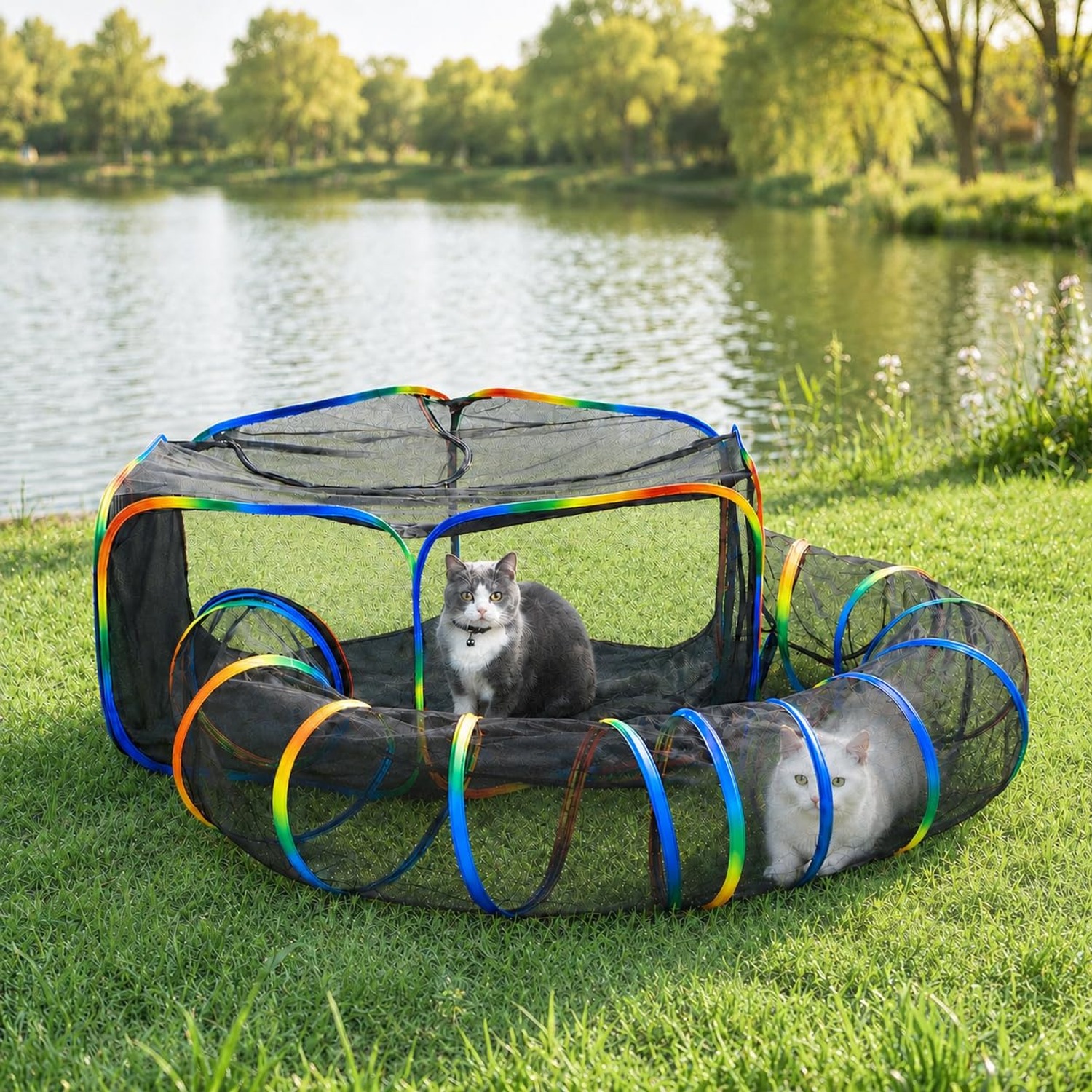
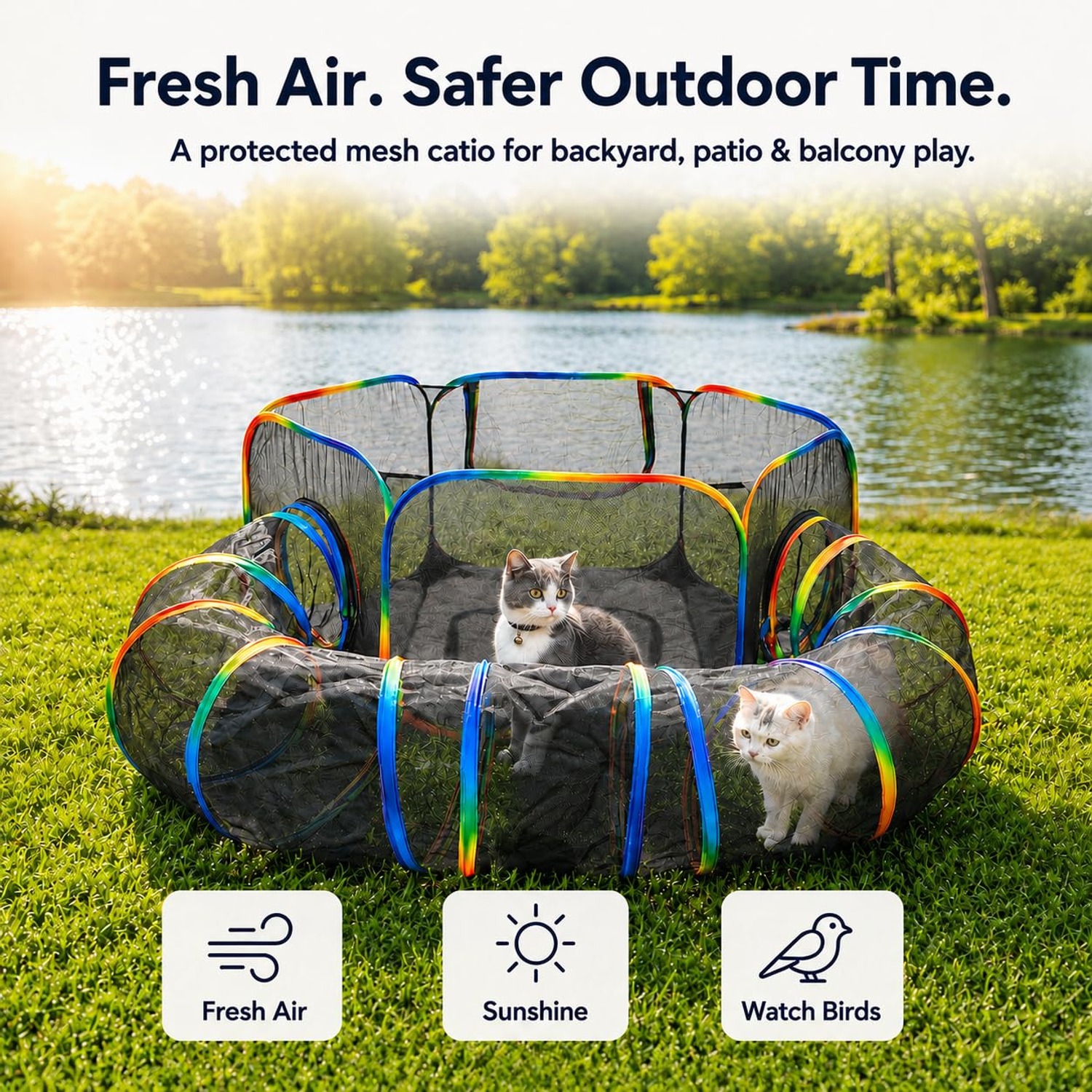
A cat tent and tunnel is the practical answer to that tension. It gives your cat a patch of real outside, with mesh walls between them and everything that could hurt them. You get to stop worrying about the door. They get grass under their feet.
How a pop-up catio actually works
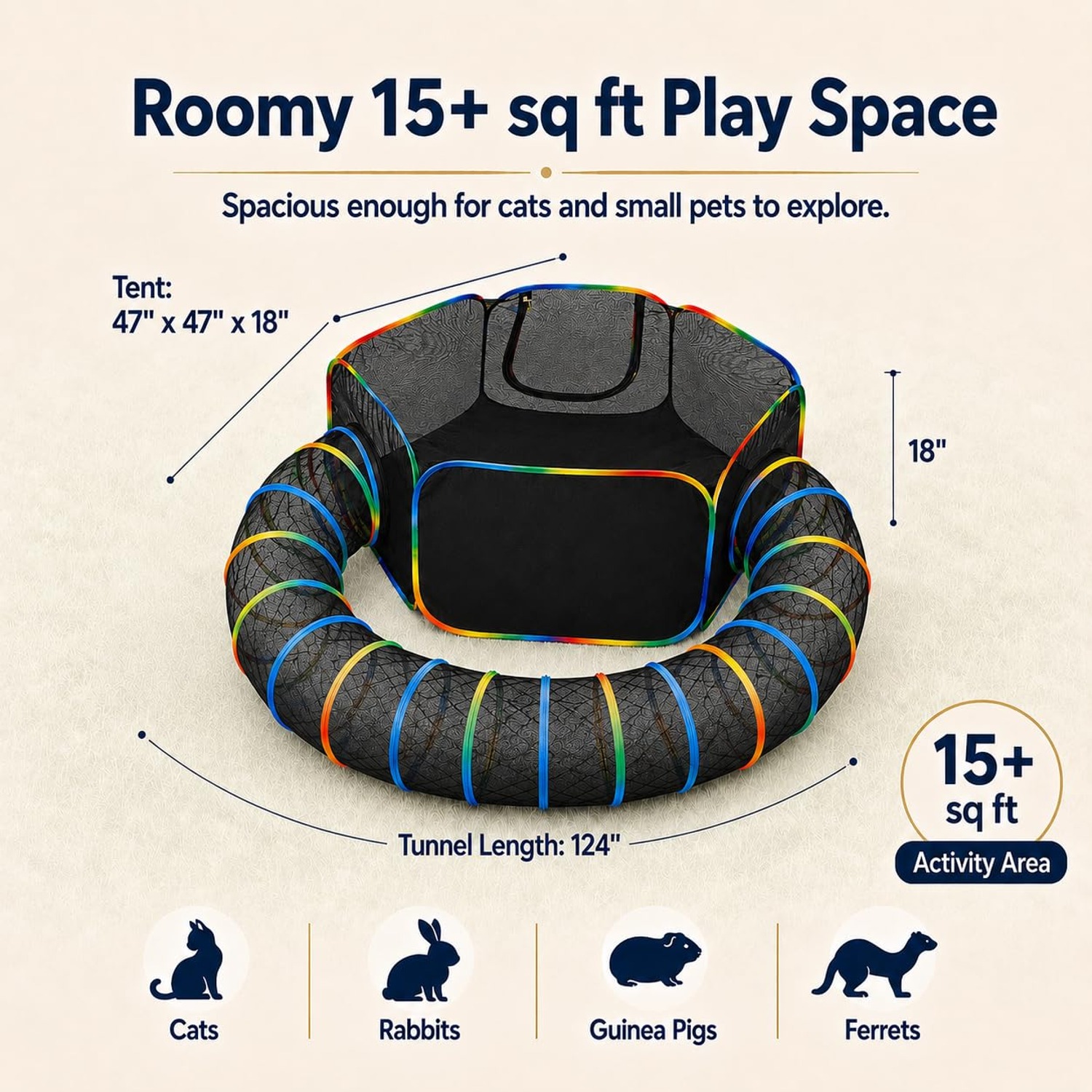
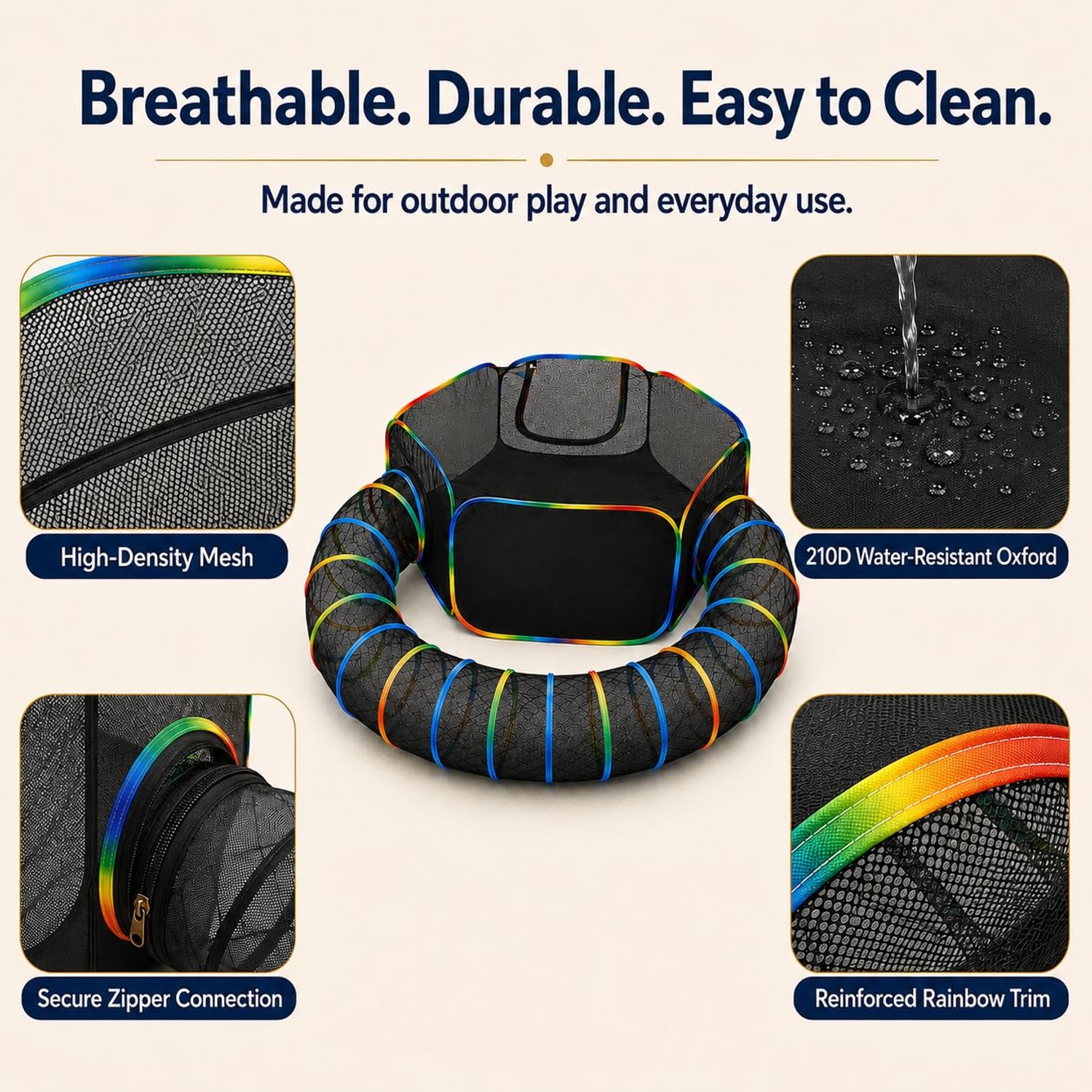
The concept is simple. You have a soft-sided tent made from polyester and mesh, with zippered doors. You set it on your lawn, your deck or your balcony. Your cat goes in and stays in.
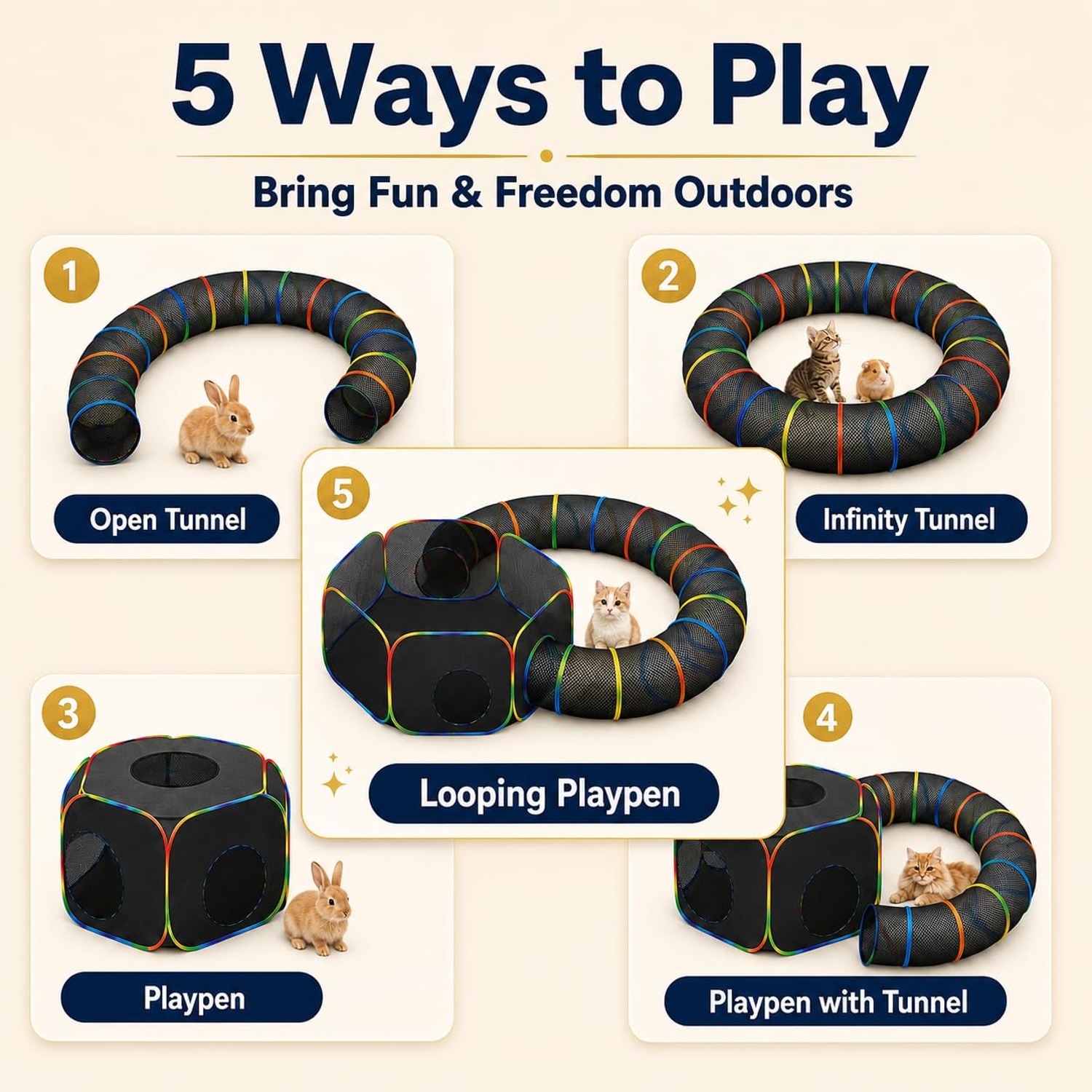
What makes this particular set different from a plain enclosure is the second piece. A tunnel zips onto the tent, so the space is not just a box your cat sits in. It becomes a circuit. Cats are far more interested in a space they can move through than one they can only sit in, and that tunnel is the difference between a cat that naps for ten minutes and a cat that patrols, pounces and actually burns some energy.
The two pieces also work alone. Leave the tunnel in the shed and the tent is a compact sunning spot. Bring the tunnel inside on a wet day and it becomes a hallway chase toy. Buying a 2 in 1 cat tent means you are really buying two products that happen to clip together.
Both doors on the tent are full zipper doors. One is your loading door, the one you use to get a reluctant cat inside without a scuffle. The other is your service door, for swapping toys, topping up water or lifting a litter tray out. Having two is a small design decision that you will appreciate about three sessions in.
Who this suits
This works best for an indoor cat who is curious about outside but has never been trusted with it. Those cats take to a mesh cat enclosure quickly because it gives them everything they were craving through the window, minus the part where they have to make decisions about traffic.
It also suits renters. You cannot bolt a permanent catio onto a rental balcony, and most strata rules will not allow it either. A foldable cat tent sits on the surface, leaves no marks, and disappears into a bag when the inspection is due.
Travellers and campers get good use from it too. If you take your cat in a caravan or a van, a portable cat run gives them a base outside the vehicle that is not the inside of a carrier. Set it up beside the awning and your cat has somewhere to be.
Multi-cat households can use it, with a caveat. Two cats who already share a couch will usually share this fine. Two cats who have an ongoing disagreement will turn the tunnel into a standoff. Run those ones separately.
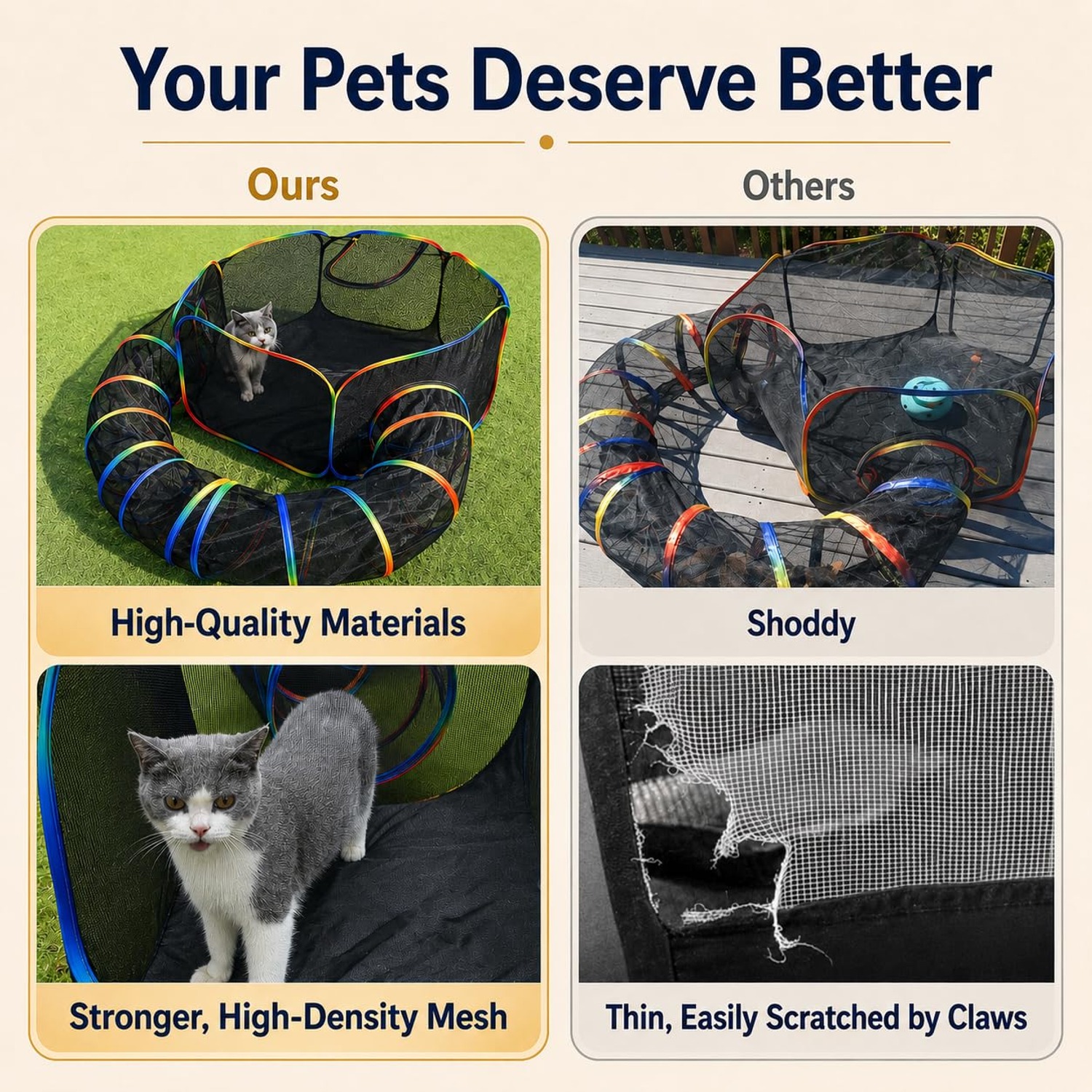
It is less suited to a cat who is a genuine escape artist. Soft fabric and mesh will hold a relaxed cat comfortably. A cat who throws themselves at seams with intent will eventually find a weak point. That is true of every soft-sided cat enclosure outdoor product, not just this one, and it is why supervised use is the rule rather than a suggestion.
Choosing the right outdoor setup
There are a few things worth thinking about before you pick a spot.
Start with shade. Mesh lets light straight through, and a tent sitting in full afternoon sun gets hot faster than you would think. Put it under a tree, beside a fence that throws shade, or under an umbrella. Check the temperature inside with your hand before your cat goes in.
Next, look at the ground. Grass is ideal. A deck or paved courtyard works fine with a blanket or mat down, both to protect your cat's paws and to stop grit grinding into the fabric base. Avoid sharp gravel.
Think about wind. Anything light and hollow catches a breeze. On an exposed lawn, peg the corners or weigh them down with bricks or sandbags. On a genuinely windy day, just skip it.
Finally, consider what else is nearby. Other cats will come to investigate, and a neighbourhood tom pressing his face against the mesh is stressful for a cat who cannot retreat. Set up where your cat has a clear line of sight to the house, and stay within view yourself.
Getting your cat to use it
Do not take a brand new tent straight outside and put your cat in it. That rarely goes well.
Set it up in the lounge room first, doors open, and leave it alone. Put in a blanket that already smells like your cat, maybe a toy they go back to. Cats investigate new furniture on their own schedule, and most will be inside it within a day or two once it stops being suspicious.
Once they are using it inside, move it outside with the same blanket still in it. Start with ten or fifteen minutes while you sit nearby with a coffee. Short and boring is the goal for the first few sessions. If your cat looks tense, flat ears or a low crouch, bring them in and try again tomorrow for less time.
After a week or so most cats will walk into the tent themselves when they see it going up. That is when you can start leaving them for longer stretches, with water and a litter tray inside.
Looking after it
A cat tent with storage bag is only as portable as you keep it. The main thing is drying it properly. Fold a damp tent into a bag and leave it a fortnight and you will open it up to mildew and a smell your cat wants nothing to do with.
After each session, shake out the hair, grass clippings and whatever else came along. Wipe the fabric with a damp cloth and mild pet-safe detergent if there are marks. Let it dry completely in open air, not in direct sun for hours, then fold it away.
Skip the washing machine. Machine washing a mesh enclosure strains the seams and can warp the frame sections. Spot cleaning handles almost everything a cat does to one of these.
Check the zippers now and then. They are the part doing the most work, and a zipper that is starting to catch is worth sorting out before it fails with a cat inside.
Store it dry, in the bag, somewhere out of the sun. UV light is the main thing that ages polyester, so a tent that lives in the garage between weekends will outlast one left on the lawn all summer.
The short version
An indoor cat who wants outside is a problem that does not go away. You can keep saying no at the door, or you can give them a safe version of what they are asking for.
This set gives you a tent and a tunnel that zip together for a proper circuit, or work separately when you want something smaller. Mesh keeps the air and the view coming. Two zipper doors make the practical side easy. The carry bag means it moves to the yard, the balcony, the park or the campsite without a fuss.
Set it in shade, peg it down if it is breezy, stay nearby, and dry it before you pack it. Do those four things and your cat gets the fresh air they have been asking for, and you get to open the front door without doing the shuffle.