
The complete guide
Buying A Modular Catio, A Practical Guide For Cat Owners
The problem most cat owners run into
You know your cat wants to go outside. You can see it in the way they sit at the glass door at 7am, tail twitching, reading the garden like a newspaper. You also know what is out there. Cars, dogs, other cats with opinions about territory, ticks, snail bait, and the simple fact that a cat who walks off does not always walk back.
So most people land in one of two camps. Either the cat lives entirely indoors and you accept the boredom and the weight gain that sometimes follows, or the cat goes out and you spend part of every evening worrying. Neither of those is great.
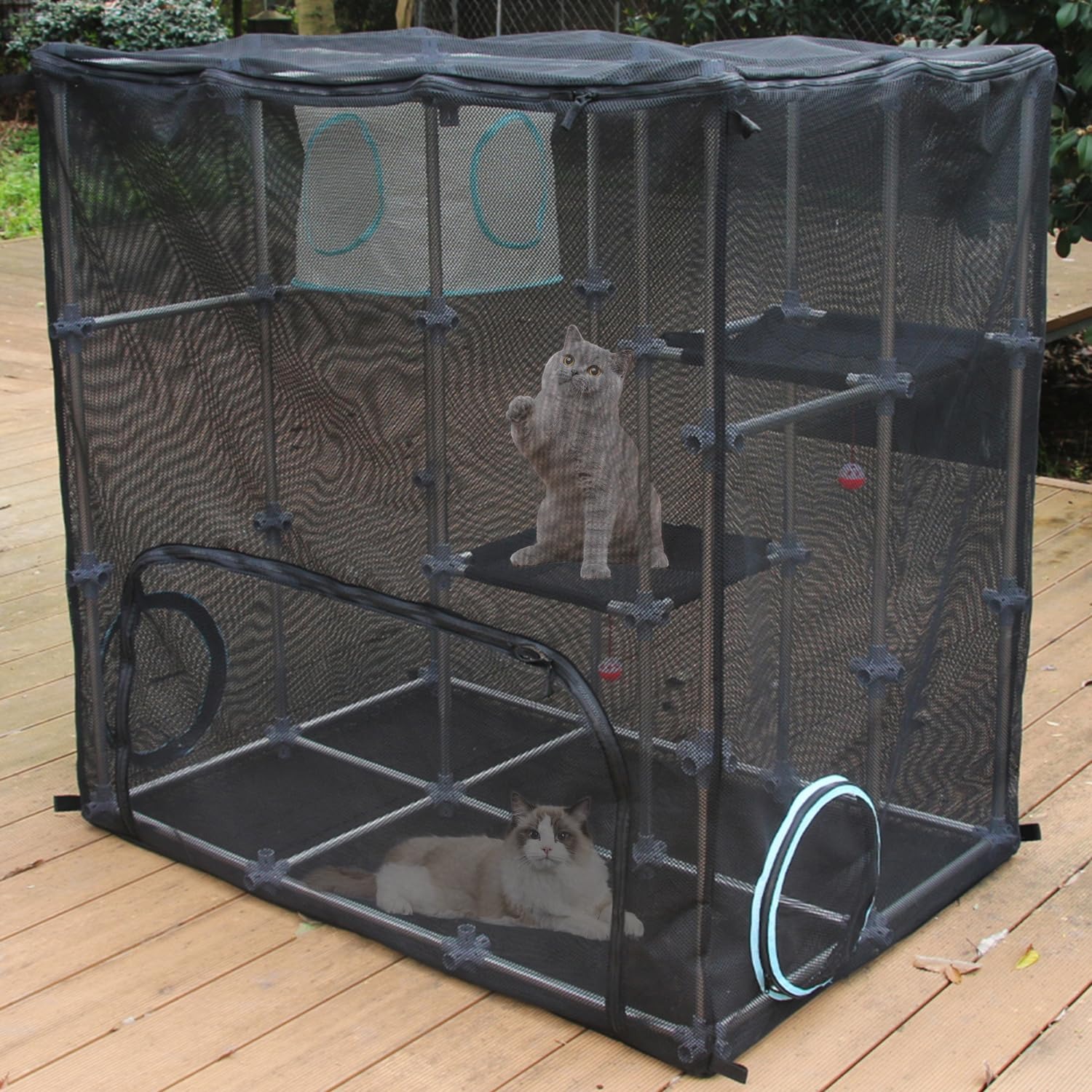
A modular catio sits in the gap. It is an enclosed outdoor space where the cat gets grass, air, insects to stare at and sun to roll in, and you get to stop guessing where they are. This INTURN Mega Kit is one section of that idea, built from aluminium bars and nylon mesh, measuring 119.4 cm square and 78.7 cm high.
How this kind of enclosure works
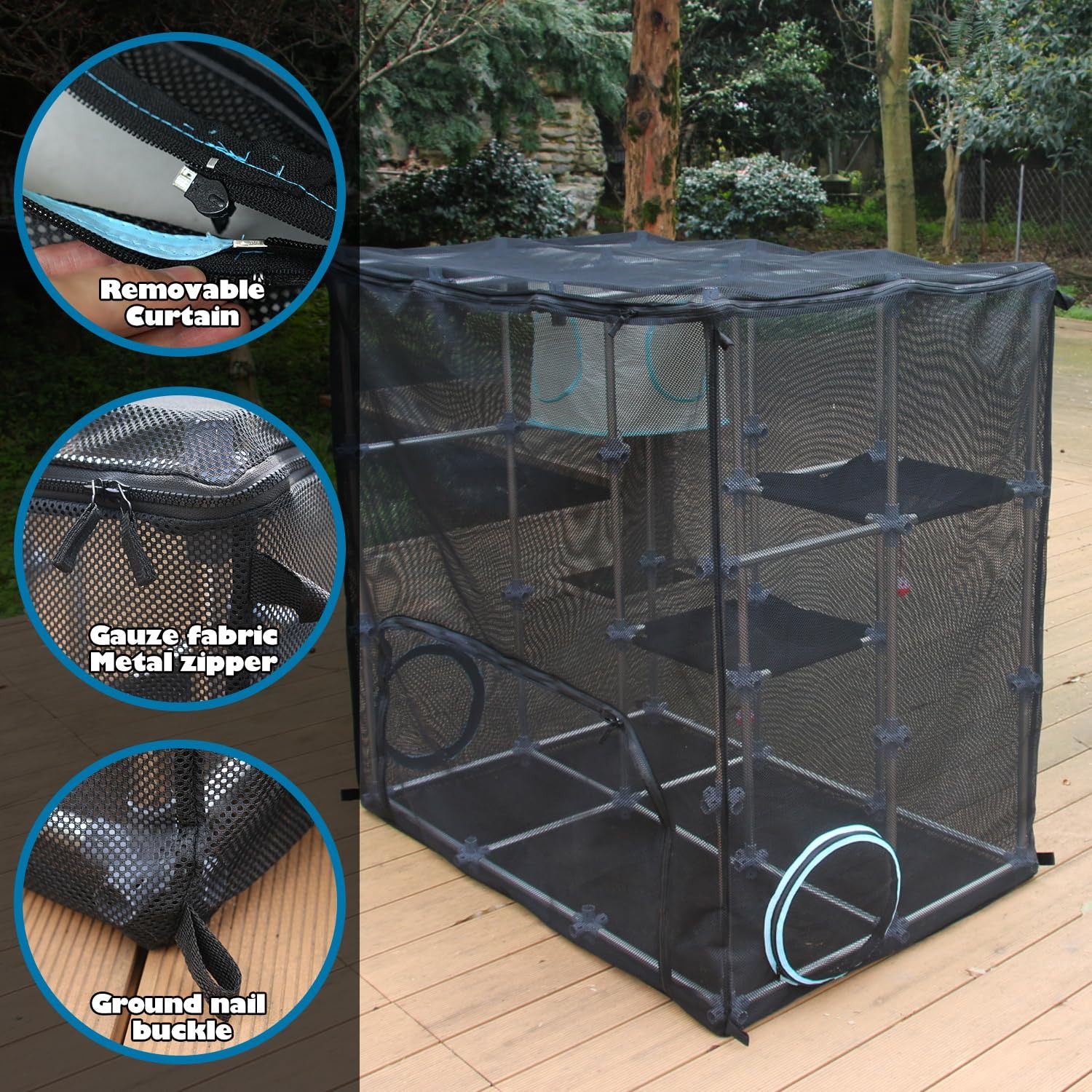
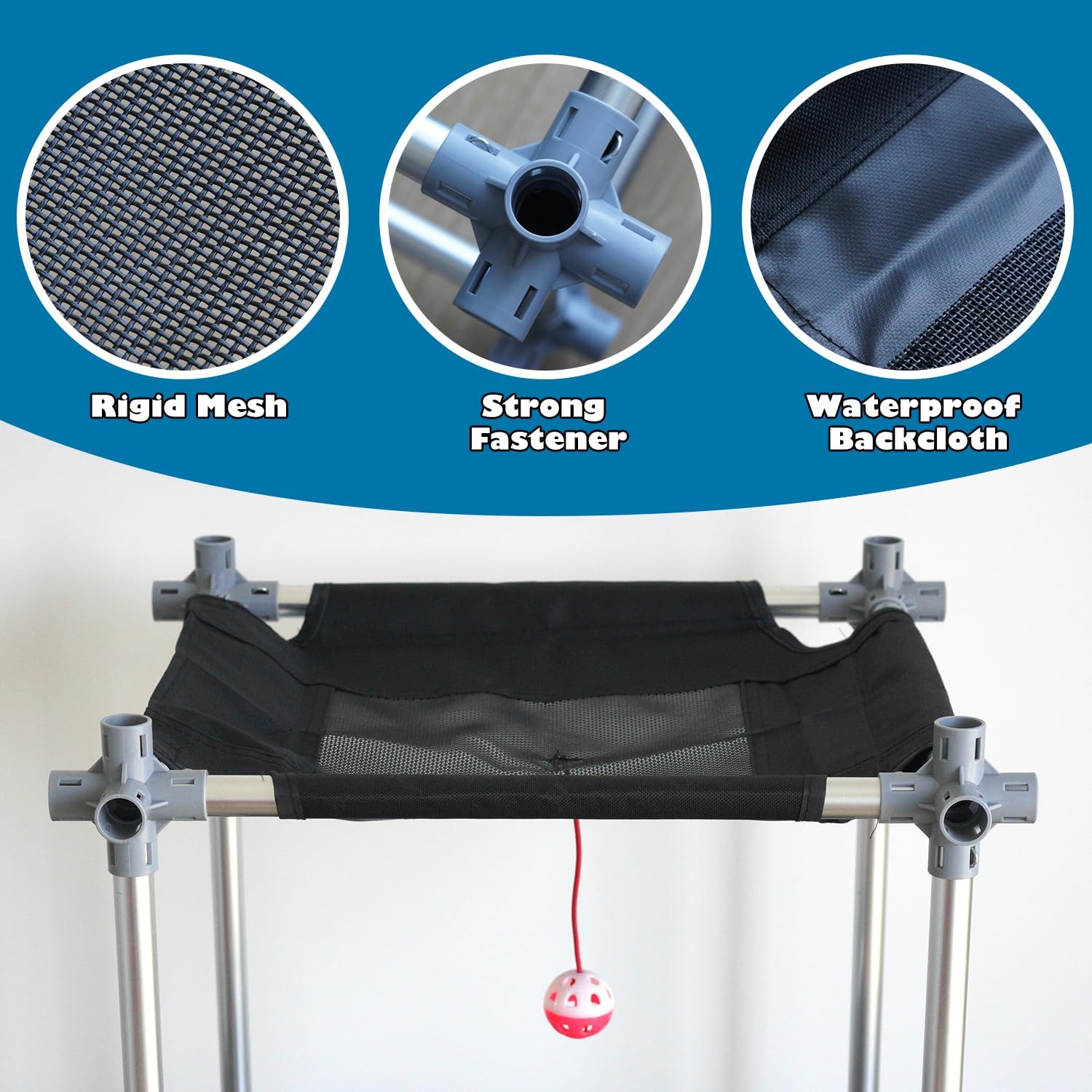
The frame is the skeleton. Aluminium bars slot together and lock at the joints, which is what gives the structure its shape and stops it folding when a cat launches at a wall. Aluminium was chosen over steel for a reason. It holds rigid but stays light, which means you can pick a section up and move it rather than committing to one spot forever.
The mesh is the skin. Nylon mesh lets air pass straight through, so the inside does not turn into a greenhouse the way a solid-sided box would. It also means you can see in. That sounds minor until you have spent an afternoon squinting at an opaque pet tent wondering whether anyone is still breathing in there. With a mesh catio, you glance out the kitchen window and you know.
Access is through zippers. Standard cat logic applies, zips are only as secure as the person who closed them, so build the habit of checking every one before you go back inside.
The part that makes it modular
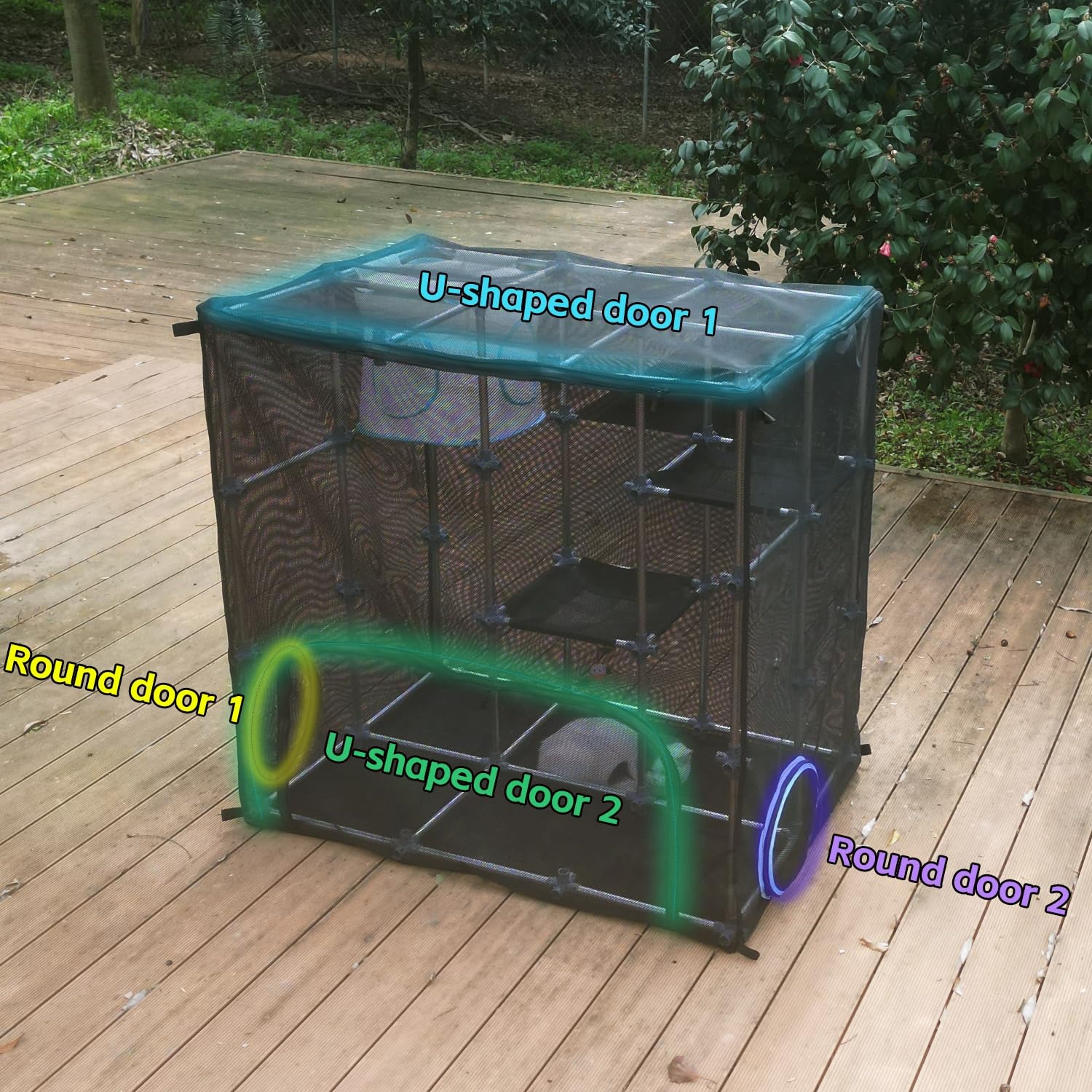
The headline feature here is the double zip doors on both sides. They serve two jobs. They are how you and the cat get in and out, and they are docking points for other INTURN pieces.
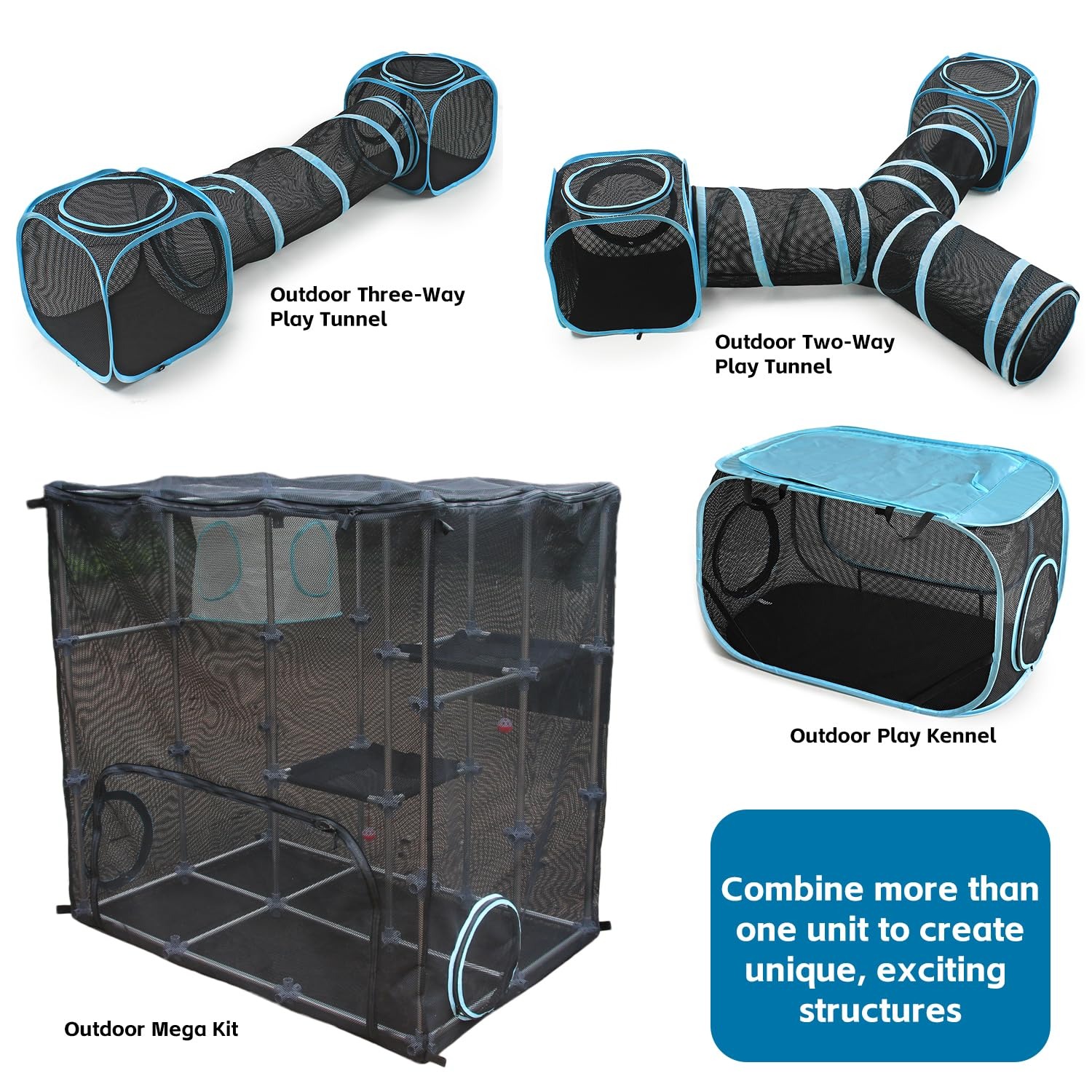
Unzip a side door, bring another section up to it, and join them. Now you have two rooms instead of one. Add a tunnel between them and the cat has a route to patrol rather than a box to sit in, which matters more to feline brains than raw square metres do. Build an L shape around a garden bed. Run a straight line along a fence. Loop it back on itself so there is no dead end, which shy cats appreciate.
This is the practical argument for an expandable cat enclosure. You do not have to decide the final layout on day one. You buy one section, see how your cat responds, and extend when you know what they actually like. That is a much kinder way to spend money than guessing big up front.
Who this suits
Indoor cats who are visibly frustrated are the obvious group. If your cat bolts for the door, yowls at windows or has started redecorating the couch, outdoor time usually helps.
Renters and apartment dwellers come next. A catio for apartments has to be something you can set up and take down without drilling a single hole, and a freestanding aluminium frame meets that test. Measure the balcony first, allow clearance for the side doors to swing open, and keep it clear of any railing gaps.
Owners of new cats and recent rescues find a pen like this useful for a different reason. It gives a nervous animal controlled outdoor exposure before you ever consider letting them loose. Same for cats recovering from surgery who need movement but not freedom.
Multi-cat households fit too, within limits. 1.4 square metres handles two or three cats who already get along. Cats who actively dislike each other should take turns.
How to choose and plan your layout
Start with the ground. You want flat and stable. Lawn, decking, pavers and balcony tiles all work. A slope causes the frame to sit unevenly and puts strain on the joints. If your only flat spot is concrete, put a mat down so the cat has something softer than bare slab to lie on.
Then think about shade. This is the point people most often get wrong. Mesh filters a little light but it is nowhere near full shade, and a cat in an enclosure cannot walk off to find a cool spot. Position the enclosure under a tree, an awning or a shade sail for the warm part of the day, put water inside every single time, and move the whole thing as the sun tracks across. Being able to relocate a portable catio easily is not a gimmick, it is a safety feature.
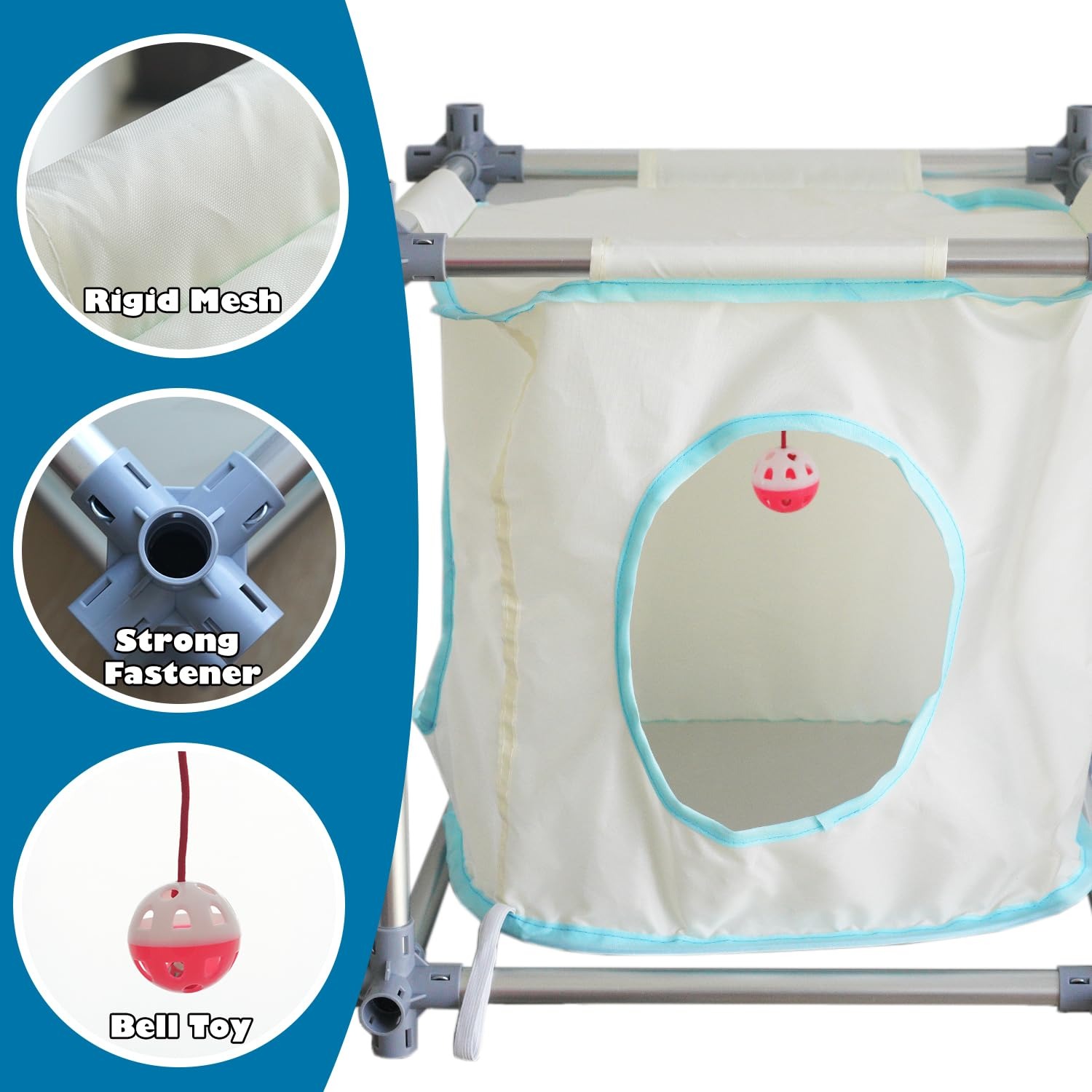
Next, plan the inside. Cats use vertical space more than horizontal, so a hammock or a raised shelf doubles the usable area as far as the cat is concerned. Shy cats need a covered retreat, which is where a cat tent enclosure insert earns its place. Bold cats want the highest perch available. Older cats want a flat, warm, dry spot with a short walk to it.
Finally, think ahead about expansion. If you suspect you will add to it later, leave room on at least one side so a second section or tunnel has somewhere to go. Nothing is more annoying than building a lovely setup and discovering the only expansion direction is a brick wall.
Settling your cat in
Do not expect instant delight. Open the door, let them walk in on their own, and leave it open. Ten minutes on the first day is plenty. Put something inside that already smells like them, a worn t-shirt or their usual blanket, because familiar scent does more to calm a cat than any amount of coaxing.
Treats help. So does sitting nearby reading something and ignoring them completely, which cats read as a safety signal. By the third or fourth session most cats stop checking the exits and start doing cat things.
Keep the first sessions short and supervised. Build up as their confidence does.
Care and keeping it right
Cleaning is simple. Shake out leaves, fur and grit after each session. Spot clean the mesh with warm water and a mild pet-safe detergent, then let it dry fully before you fold anything. Wipe the aluminium bars with a damp cloth and dry them so you do not get water marks.
Check the zips and the locking joints every few weeks. Zip tape wears before anything else does on this kind of product, and a zip that is starting to separate is worth noticing before a cat notices it first.
Store it dry, cool and out of direct sun. UV is the quiet enemy of any outdoor fabric, and damp storage leads to odour that is hard to shift. Those two habits will add years to a catio kit.
One honest note on durability. Nylon mesh is not chew proof and it is not claw proof. Give your cat a scratching post, pad or sisal mat inside and most will leave the walls alone. Keep claws trimmed and you reduce accidental snagging.
The short version
This is a 119.4 cm square aluminium and mesh enclosure, 78.7 cm high, that needs assembly and connects to other INTURN sections through double zip doors on both sides. It gives an indoor cat real outdoor time without the risks, it is light enough to move around the garden, and it can grow into a larger cat enclosure system when you are ready.
Put it somewhere flat and shaded, add water and a soft spot, check the zips, and supervise early sessions. Do that and most cats will claim it as their own within a week.