
The complete guide
How To Choose A Walk-In Catio For Your Cat
The problem with letting cats outside
Cat owners get stuck in the same loop. Your cat sits at the window making that chirping noise at birds. You feel bad. You think about letting them out. Then you remember the road, the neighbour's dog, the ticks, the fights, the wildlife, the vet bill from the last time a cat came home with a torn ear.
Keeping a cat indoors is safer. It is also, for a lot of cats, boring. Indoor cats put on weight, get bored, start chewing things they should not and sometimes take that frustration out on the furniture or on each other.
A walk-in catio is the middle ground. It is an outdoor cat enclosure your cat can actually use, with fresh air, real light, outdoor smells and something moving to watch, but with walls and a roof between them and everything that could hurt them. The cat gets stimulation. You stop worrying.
What makes this one different
Plenty of outdoor cat cages are glorified rabbit hutches. Low, flat, cramped, and cats lose interest within a week.
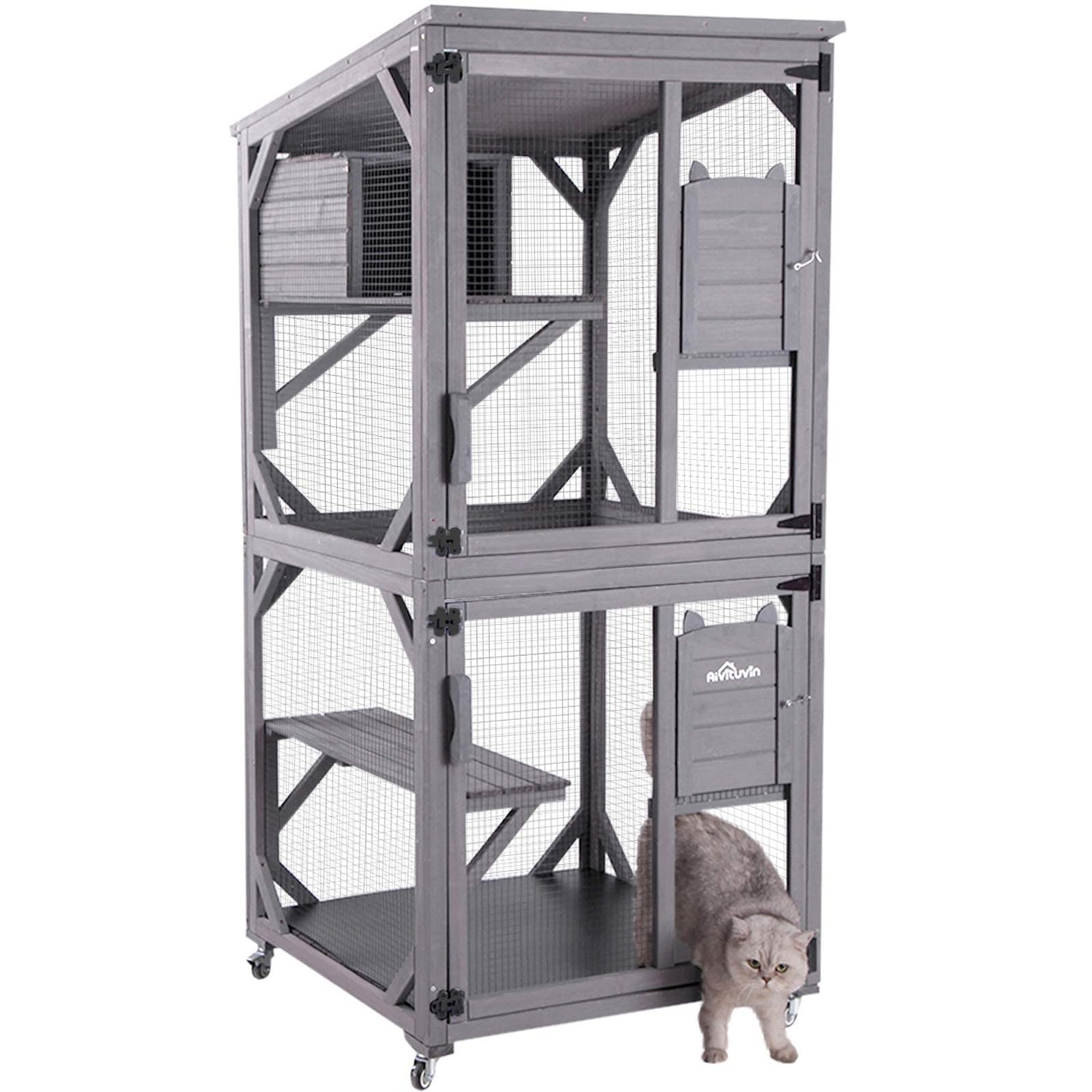
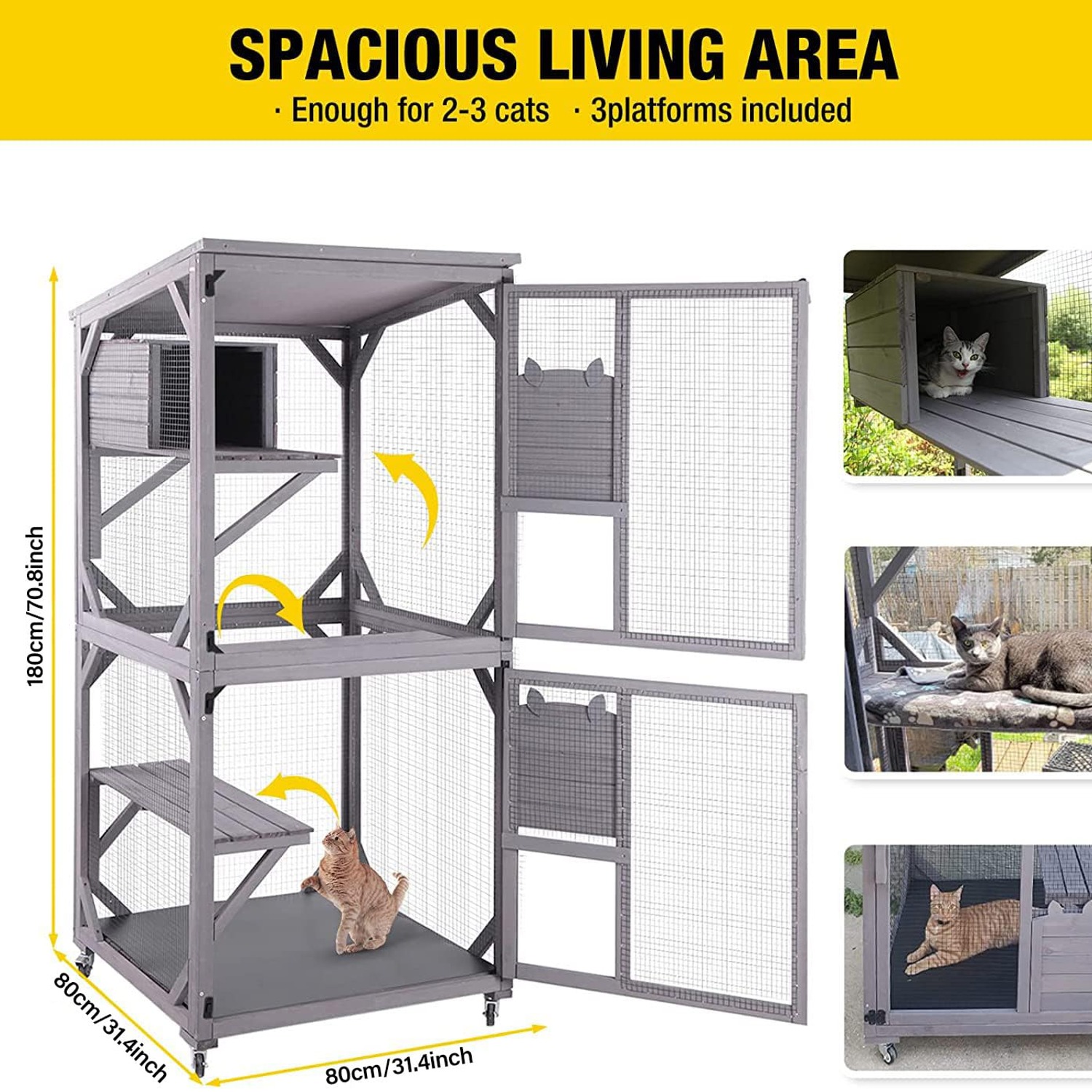
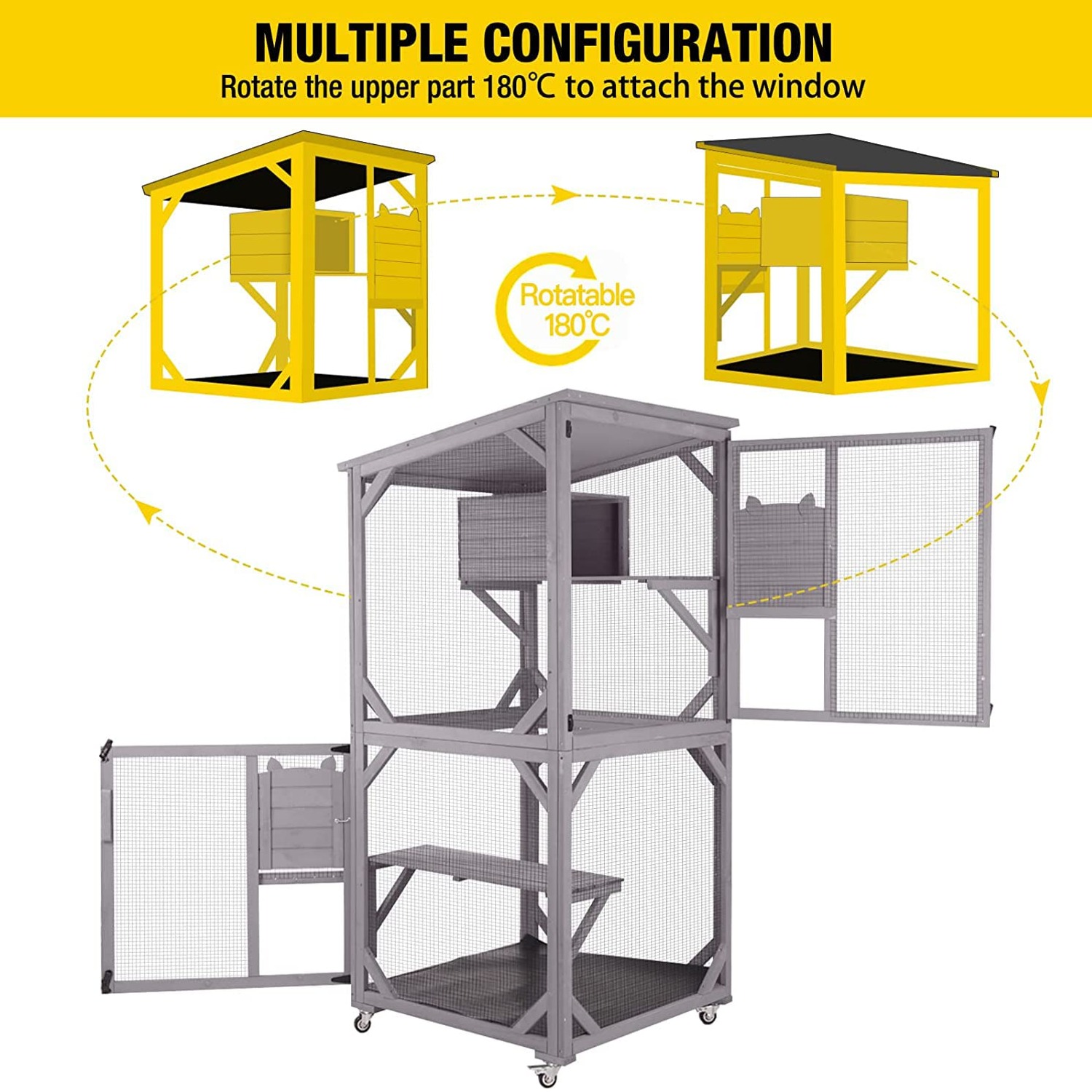
This one is 180cm tall on an 80cm square base. That shape matters. Cats are vertical animals. Given a choice between pacing a wide floor and climbing to a high perch, they climb every time. A tall enclosure with two levels and platforms gives a cat far more usable territory than a sprawling low pen of the same volume.
It is built from wood with PVC components, finished in grey. Total weight is 26.8 kg, which is enough to feel planted when the wind picks up.
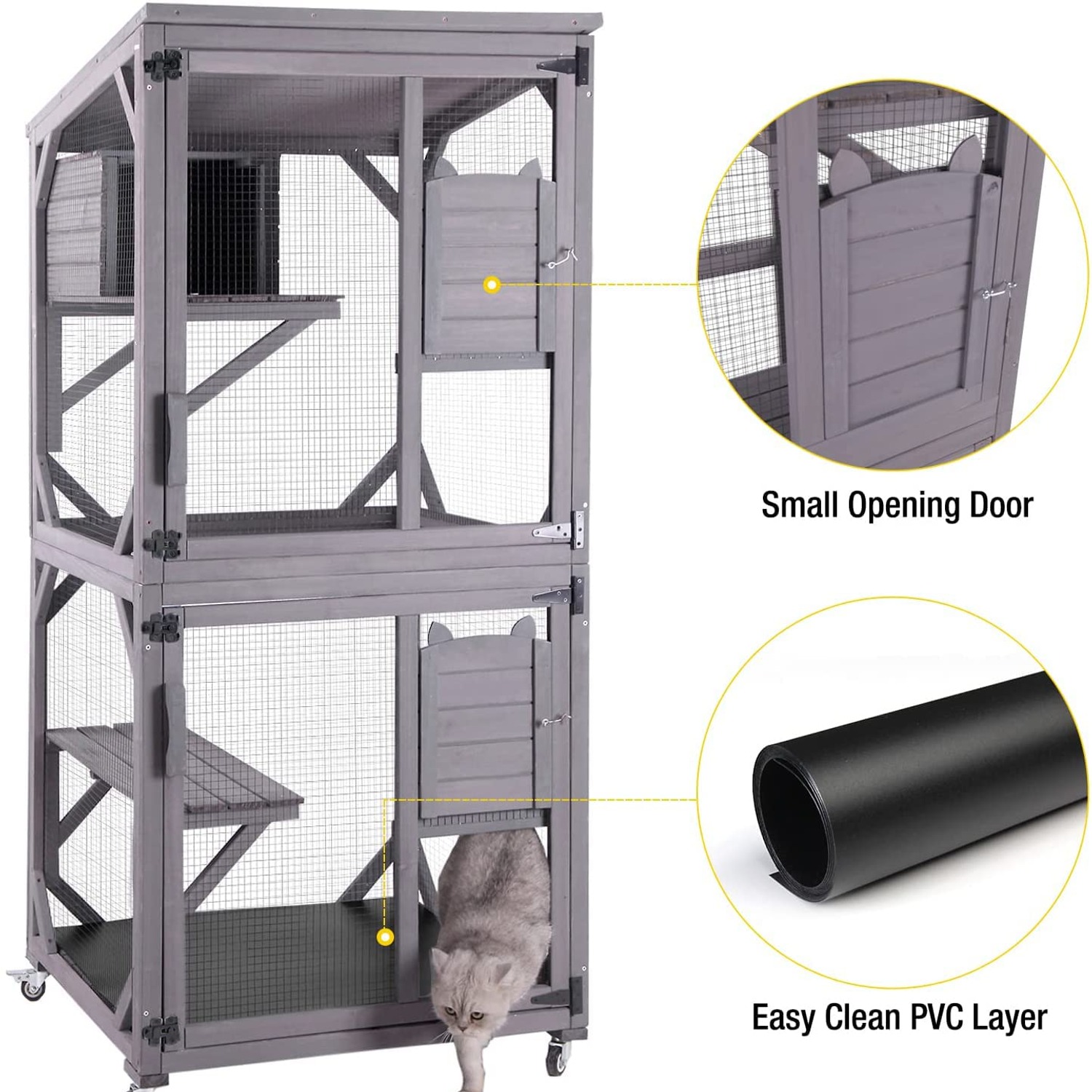
Inside there is a nesting box. That is the bit cats head for when they have had enough of watching and want to sleep somewhere enclosed. Without a sheltered nook, a lot of cats will only use an enclosure in perfect weather. With one, they will sit out in conditions they would otherwise avoid.
Why wheels change how you use it
Most people underestimate this feature until they own one.
A fixed cat run lives where you built it. That is fine on a mild day with the sun in the right place. It is less fine at two in the afternoon in midsummer when the spot you chose is now blazing, or in the week it rains sideways.
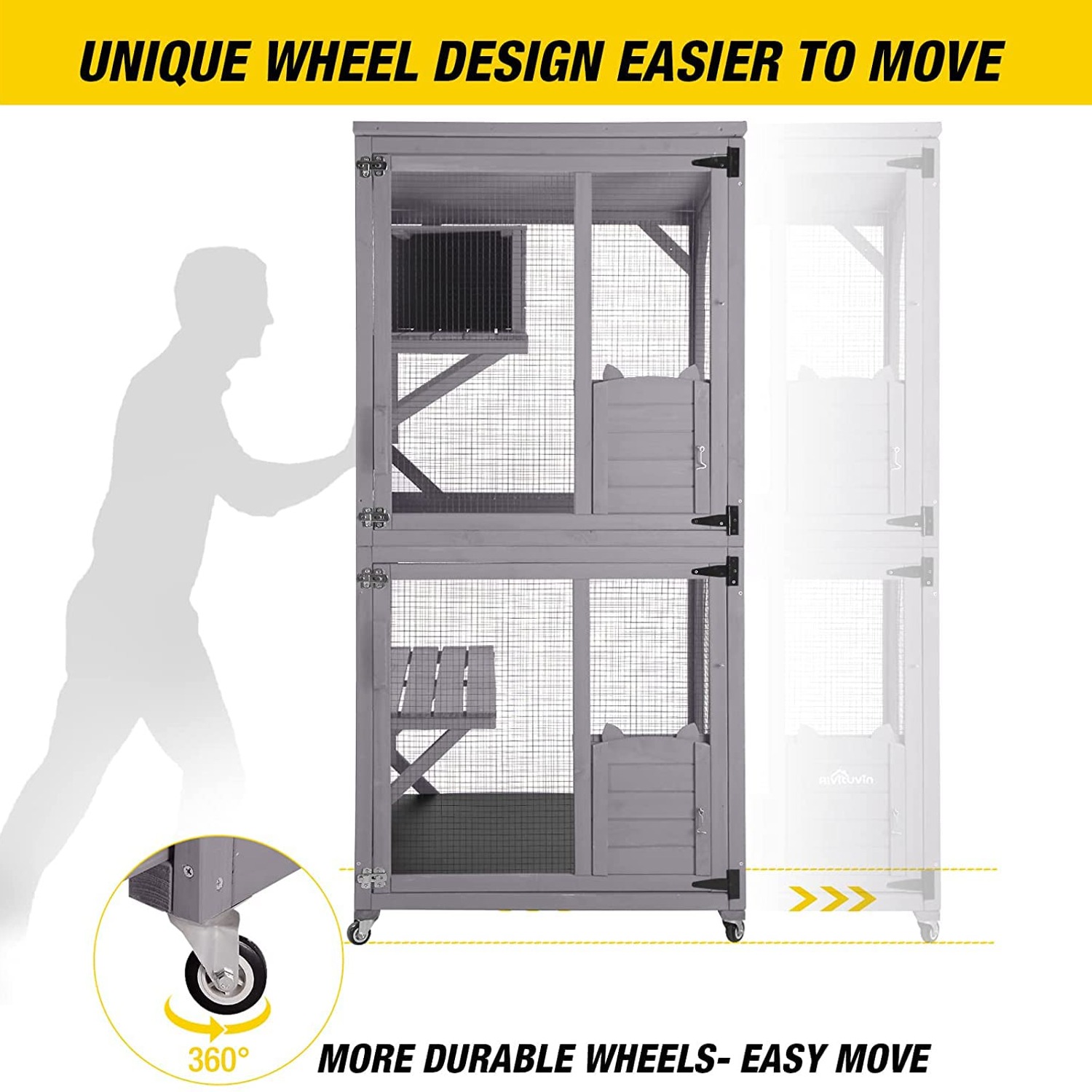
Universal brake wheels mean the whole enclosure moves. Push it into morning sun, roll it under the eaves when clouds gather, shift it off the lawn before you mow, tuck it against the house wall over winter. Then lock the brakes and it stays where you put it.
If you rent, this matters even more. A catio on wheels is furniture. It comes with you. Nothing is bolted to the fence and nothing needs landlord approval.
Who it suits
Indoor cats who stare out windows. The classic case. If your cat already spends hours at the glass, they will take to a backyard catio quickly.
Cats recovering from surgery or illness. A controlled outdoor space lets them get light and air without any chance of overdoing it.
Households with more than one cat. Two levels mean two territories. Cats that tolerate each other indoors usually manage fine when they can pick different heights.
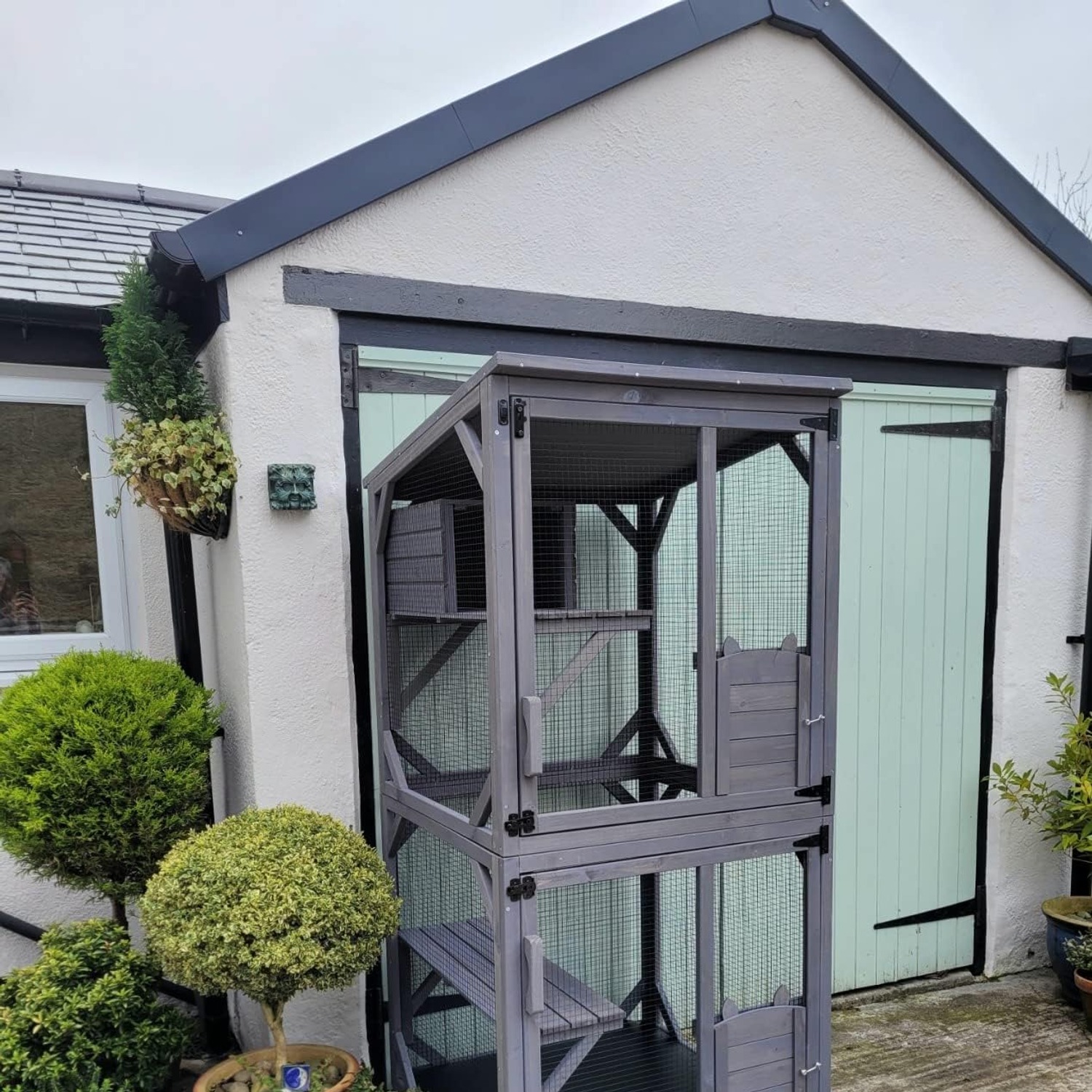
Apartment and townhouse owners. The 80cm square footprint fits on most balconies and courtyards where a full garden run would never work.
Anyone near a busy road. This is the situation that pushes most people to buy. If letting the cat out is genuinely dangerous, an enclosure is the only option that gives them anything at all.
It is less suited to very large multi-cat colonies, or to people who want a permanent walk-through structure they can sit inside with their cat. For that, you are looking at a built-in garden room rather than a freestanding unit.
How to choose the right size and spot
Think about height before floor area. A tall large cat enclosure beats a wide short one for the same money, because cats use the vertical dimension constantly.
Measure your space including swing room for the doors. You want to open both doors fully without hitting a wall or a pot plant. Leave enough clearance behind the unit to roll it out for cleaning.
Pick your surface carefully. Wheels run best on pavers, concrete or decking. Grass works, but soft or uneven ground makes the enclosure harder to move and keeps the timber base damp. If paving is not an option, a few pavers or a timber platform under the wheels solves it.
Then think about the view. A cat enclosure with shelves facing a blank fence is far less interesting than one facing a garden bed, a bird bath or a bit of passing street life. Your cat is there to watch things. Give them something worth watching.
Shade is the last thing. Full sun all day is too much, full shade all day is dull and cold. Partial shade with a sunny corner in the morning is close to ideal, and with wheels you can chase that as the seasons change.
Getting your cat to actually use it
Do not just put the cat in and shut the door. That makes the enclosure feel like a trap, and some cats will hold that grudge for months.
Start with the doors open and the enclosure next to a door your cat already uses. Put a blanket that smells like home in the nesting box. Drop a few treats on the lower level and walk away. Let curiosity do the work.
Once they are wandering in on their own, feed a meal or two inside. Then start closing the door for short stretches while you stay nearby. Most cats are comfortable within a week. Nervous cats take longer, and that is normal.
Add things over time. A scratching post, a toy on a string, a flat cushion on the upper platform. The more it feels like theirs, the more they use it.
Keeping it in good shape
Timber outdoors needs a bit of attention, but not much.
Slide the PVC cleaning board out each week, wash it with mild soapy water, rinse it and let it dry fully before it goes back. That one habit keeps the whole thing pleasant.
Wipe timber surfaces with a damp cloth rather than hosing them down. Water sitting in joints is what rots wood. Dry off anything that stays wet.
Every month or so, run a screwdriver around the fixings. Outdoor furniture loosens with temperature swings, and tightening a few screws early saves a wobbly panel later.
Check the wheels too. Grit gets into castors. A quick clean keeps them rolling and keeps the brakes holding properly.
Over winter, move the enclosure somewhere sheltered if you can. Under an eave or against a wall out of prevailing wind will add years to the timber.
The short version
If your cat wants outside and you cannot safely let them out, a walk-in catio is the answer that works. This one gives you 180cm of height on a small footprint, two levels, two doors, a nesting box and wheels that let you move the whole thing with one hand.
It weighs 26.8 kg, is made from wood and PVC in grey, and comes with a 6 month warranty.
Assembly takes an afternoon. Cleaning takes a few minutes a week. After that, it mostly just sits there doing its job while your cat gets the thing they have been asking for every time they sat at that window.