
The complete guide
How to Choose an Outdoor Cat House That Your Cat Will Actually Use
The problem with leaving a cat to find its own shelter
Cats are good at finding somewhere to hide. That is exactly the issue. Left to their own devices, outdoor cats end up under cars, behind hot water systems, in neighbours' sheds, or wedged into a gap in the fence that floods when it rains. None of those places are safe, and none of them are places you can check on easily.
An outdoor cat house fixes two things at once. The cat gets a dry, enclosed spot that stays the same from one day to the next, and you get a known address. If a cat has not been seen in a day or two, you know exactly where to look first. For people feeding strays or managing a colony, that alone justifies the purchase.
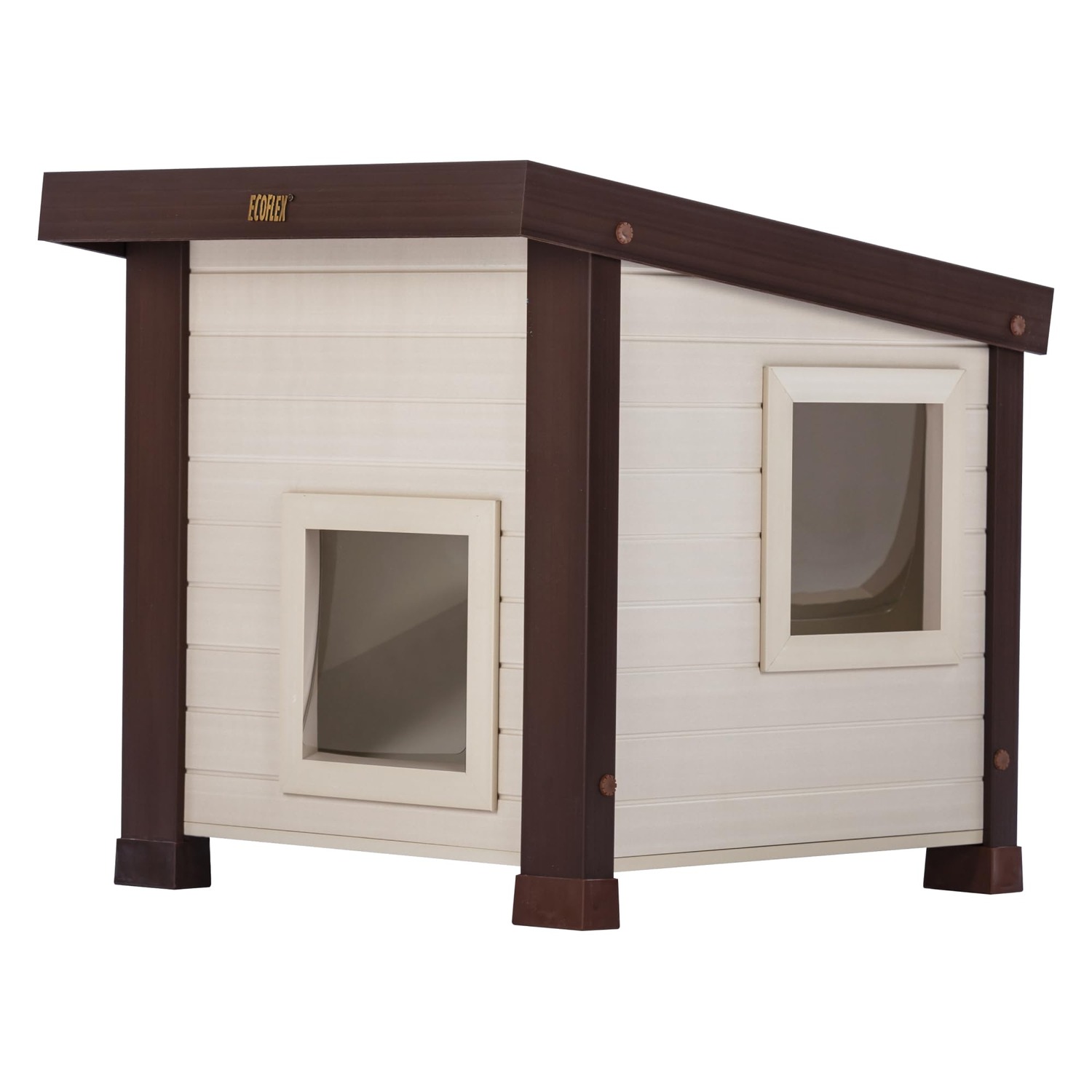
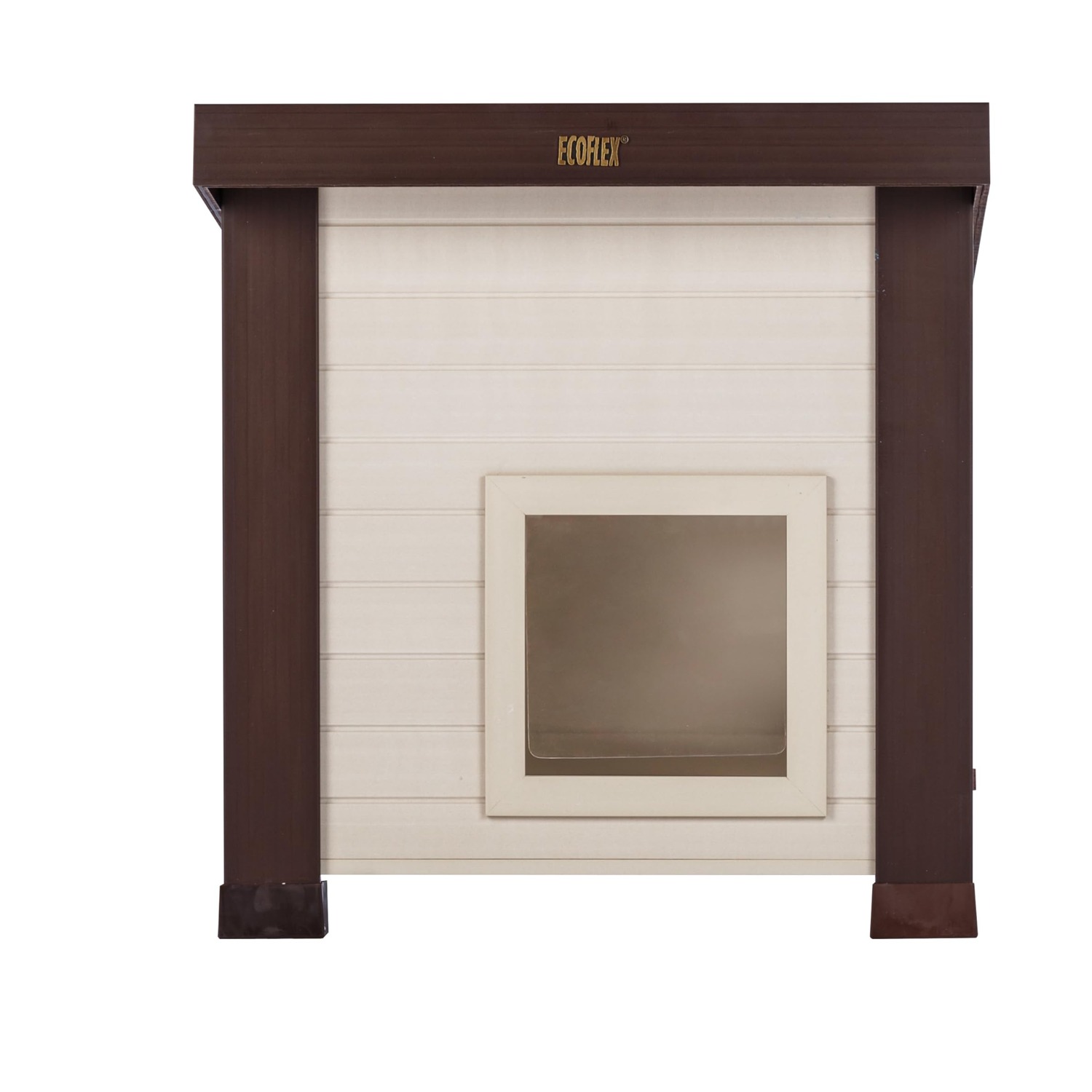
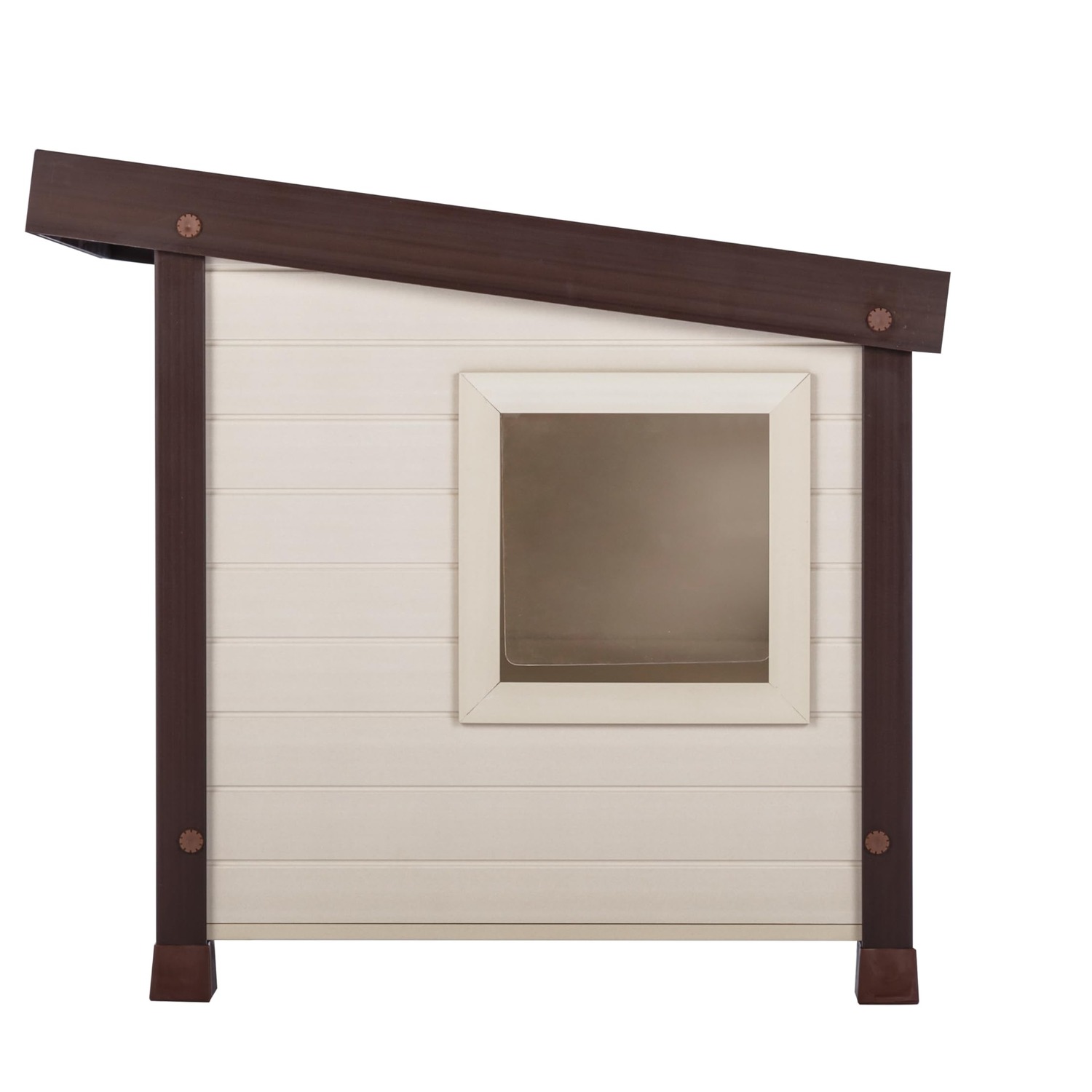
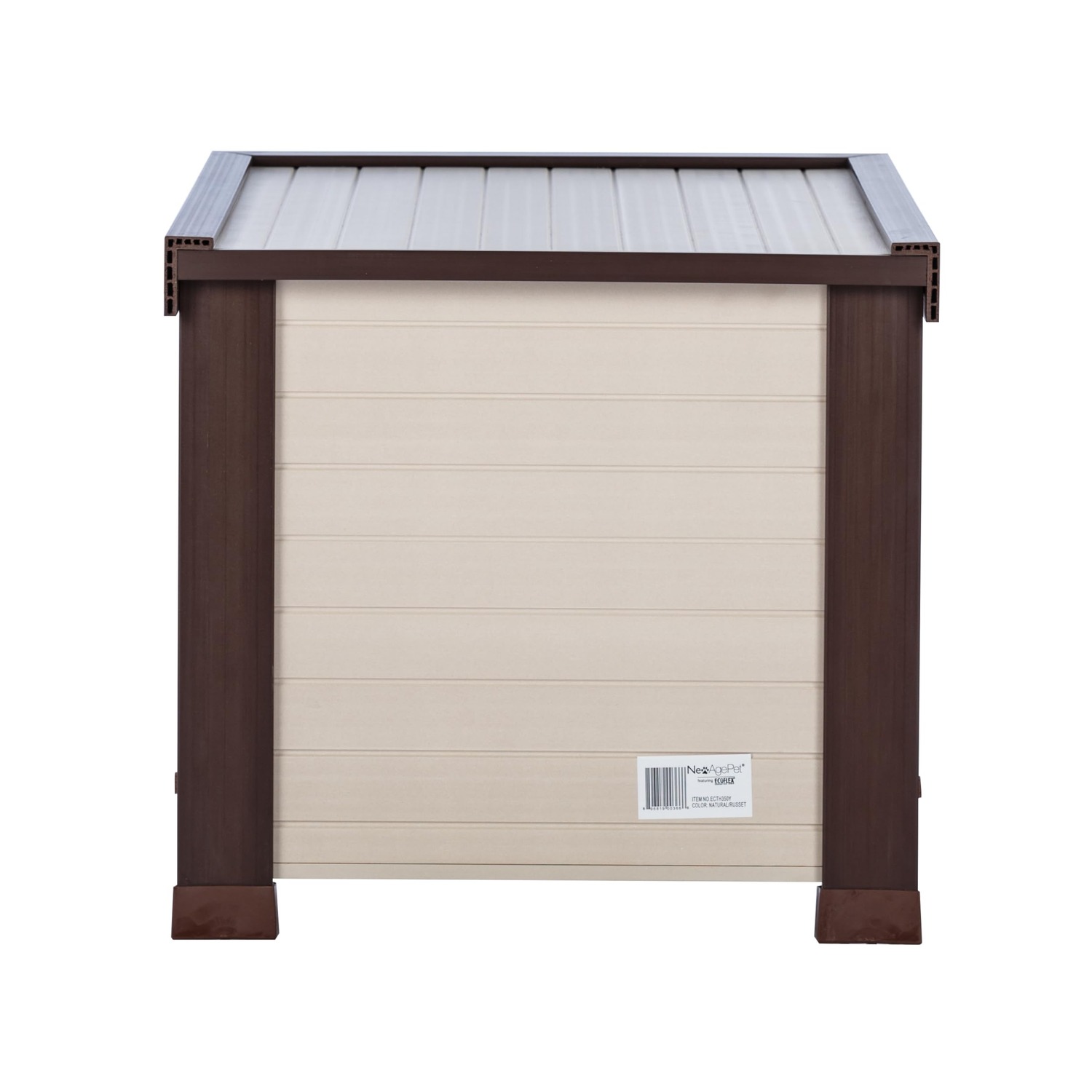
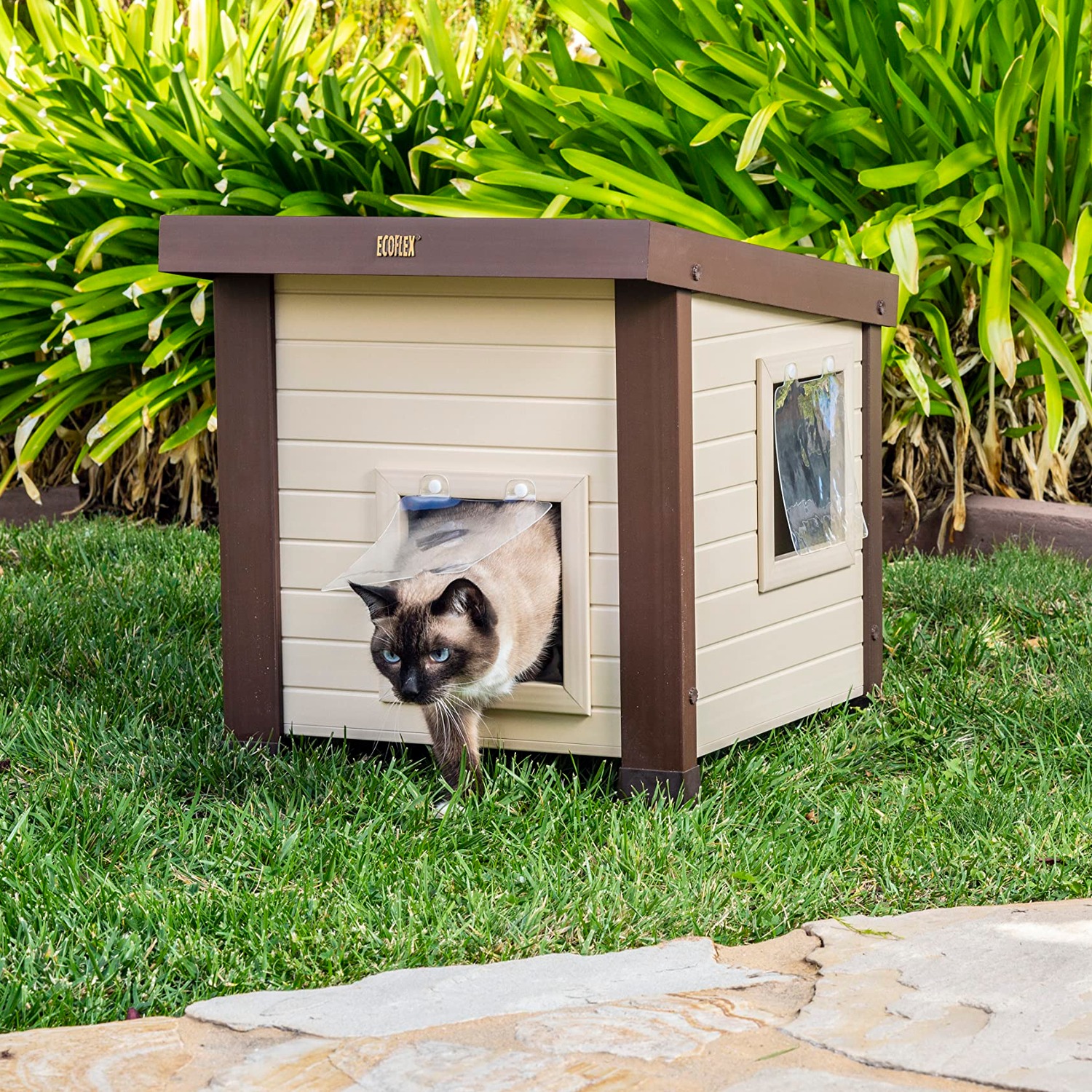
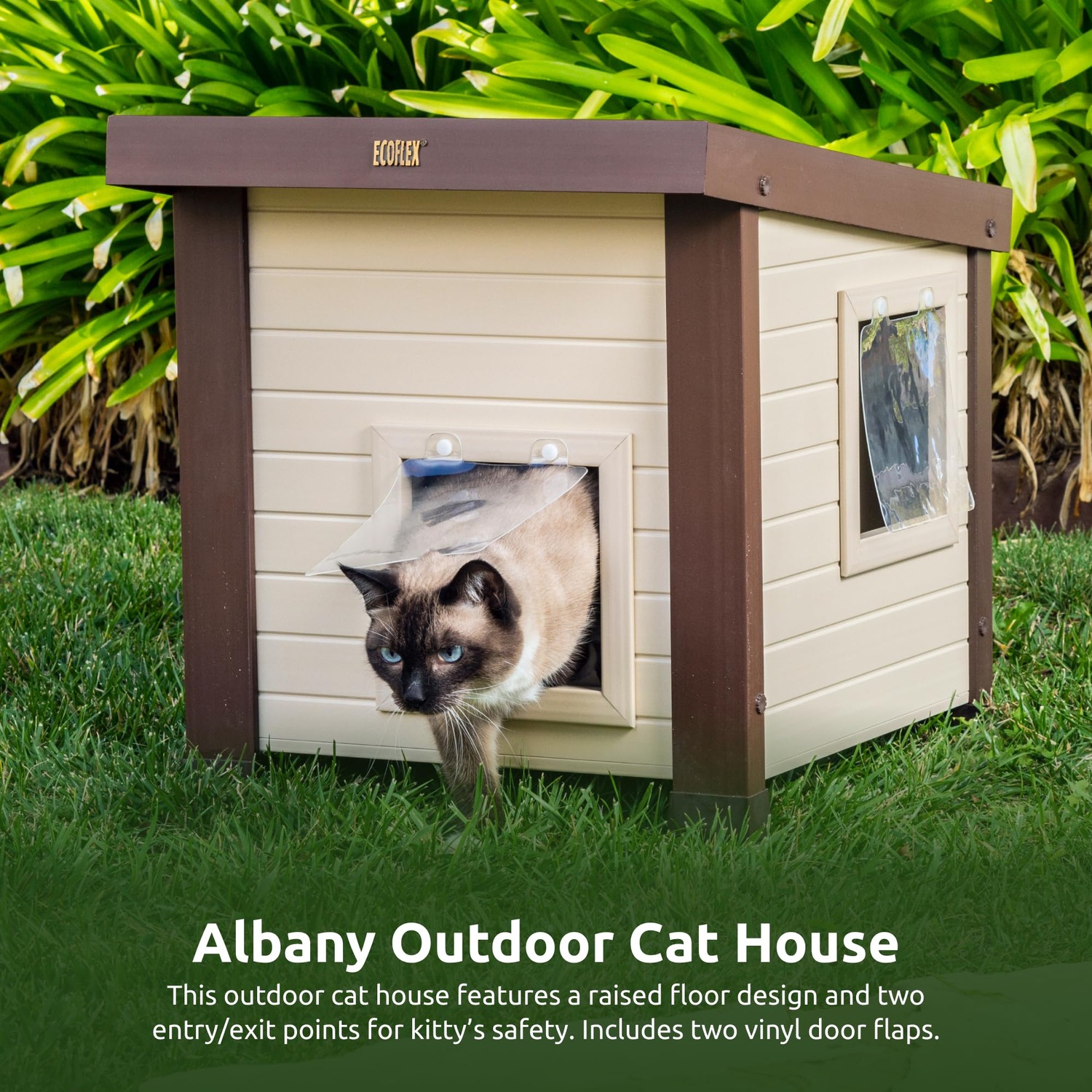
The shelter in question here is a resin house from New Age Pet, model ECTH350, finished in tan. It arrives flat and goes together without tools. The published footprint is 19.1 cm deep by 21.8 cm wide by 20.2 cm high, and the whole thing weighs 8.39 kg.
Why material matters more outdoors than indoors
Indoors, you can get away with almost anything. A cardboard box becomes a bed. Outside, the weather does the deciding.
Untreated timber looks lovely for one season. Then it drinks up rain, swells, goes soft at the base where it meets the ground, and starts to smell. You can seal it, but that means stripping and resealing on a schedule, and you need to be careful which products are safe around animals.
Thin plastic has the opposite failure mode. It stays dry but goes brittle after enough sun, and cheap moulded shells crack at the corners when you move them.
Resin sits in a better spot. It does not absorb water, so there is nothing to rot. It does not need painting or sealing. And because the surface is smooth and non-porous, cleaning is a wipe rather than a scrub. That last point sounds minor until you have actually tried to clean caked mud out of a grainy timber floor with a cat watching you from the fence.
The two-door rule
If you take only one idea from this guide, take this one. A cat shelter with a single opening will often go unused.
The reason is simple. Cats read enclosed spaces in terms of escape routes. A box with one hole has one way out, and if something blocks that hole, the cat is stuck. Even a confident house cat feels that. A semi-feral cat feels it strongly enough to sleep in the rain instead.
Add a second opening and the whole calculation changes. The cat can enter one side, check the space, and leave the other side. Nothing can corner it. Experienced rescue volunteers build shelters with two doors as standard for exactly this reason, and it is the first thing to look for in any feral cat house.
This model is designed as a cat house with two doors. If you are buying for a nervous, new or semi-wild cat, that is the feature doing the heavy lifting.
Who this suits
Owners of indoor-outdoor cats. The cat comes and goes, but there is a four-hour window on a rainy afternoon when nobody is home to open the door. A shelter in the garden covers that gap.
People feeding strays. A stray cat shelter near the feeding station gives a visiting cat somewhere to dry off and rest. Over time the same cat tends to return, which makes trapping for desexing far easier if that is your goal.
Catio owners. A catio gives safe access to fresh air. A shelter inside it gives shade in summer and a windbreak in winter, which extends how long the cat actually wants to be out there.
Rescue and colony carers. Multiple shelters spread through a site work better than one large one. Cats will not reliably share, and separate units reduce friction between individuals.
Rural and semi-rural households. Barn and yard cats earn their keep but still need somewhere out of the weather that is not the hay shed.
Choosing size and checking the fit
The listed dimensions are 19.1 cm deep by 21.8 cm wide by 20.2 cm high. Interior measurements are not given in the product record, so the sensible approach is to measure your cat rather than guess.
Watch how your cat sleeps outside. Most cats curl tightly when cold, which is how they conserve heat, and a shelter that is only just big enough actually warms up faster than a roomy one. A cat does not want a hall. It wants a space that fits snugly.
If your cat is large, long-limbed, or prefers to stretch out rather than curl, measure them in their usual sleeping position and compare. If you are unsure, ask us before ordering.
Placement makes or breaks it
You can buy the best weatherproof cat shelter on the market and have it ignored because it is in the wrong spot.
Put it against something solid. A fence, a wall, the side of a shed. Open ground in the middle of a lawn feels exposed, and cats avoid exposed.
Turn the doorways away from the prevailing wind and rain. In most gardens there is one direction the weather comes from, and you probably already know which it is.
Lift it off wet ground. Two pavers, a short length of decking, a few bricks. This does more for warmth and dryness than almost anything else you can do, because cold travels up from the soil.
Keep the approach visible. Cats like to see what is coming. A shelter tucked where the cat has to round a blind corner is less attractive than one with a clear sightline.
Avoid the dog's territory, the bin area, and anywhere the sprinkler reaches.
Bedding and winter warmth
The shelter is the box. Bedding is what makes it comfortable.
Straw is the standard choice for a cat shelter in winter. It stays dry, it does not wick water, and the hollow stems trap warm air. It is not the same as hay, which holds moisture and goes mouldy. Ask specifically for straw.
Blankets and towels are fine in mild, dry conditions and inside a covered catio. They are poor outdoors in wet weather because once damp they stay damp, and a wet blanket pulls heat out of a cat rather than holding it in.
A pet-safe heated pad rated for outdoor use can be added separately if you live somewhere genuinely cold. Protect the cable, use a weather-rated power point, and follow the pad maker's safety instructions. Do not improvise with indoor heating products.
Change bedding when it gets damp or starts to smell. In winter that might be fortnightly.
Assembly and ongoing care
Assembly needs no tools. Lay the panels out on a flat surface, work out how they relate before you join anything, and build it near where it will finally sit so you are not carrying an assembled house across the yard.
For cleaning, warm water and a mild, pet-safe cleaner on a cloth handles most of it. Skip harsh solvents and abrasive scourers, which can dull the resin surface. Dry it before putting bedding back.
Every few weeks, sweep out leaves, check the doorways are clear, and lift or shift the shelter so the ground underneath can dry. After a storm, have a look inside. A quick five-minute check beats discovering a damp, mouldy interior a month later.
The short version
An outdoor cat house works when it is dry, when it has two ways out, and when it sits somewhere the cat already feels comfortable. This one is resin, so it will not rot and it wipes clean. It goes together without tools. It is sized for a cat rather than borrowed from a dog kennel design.
Pair it with straw bedding, put it against a fence out of the wind, raise it on a couple of pavers, and then leave it alone. The cat will decide in its own time, and most of them decide yes.