

The complete guide
The Practical Guide to Choosing a Portable Catio
The problem with letting cats outside
Every cat owner runs into the same tension eventually. Indoor cats live longer, but they also spend a lot of hours staring out a window at things they cannot reach. Outdoor cats get the fresh air and the stimulation, and they also get the cars, the dogs, the territorial fights and the complaints from neighbours whose vegetable beds have become a litter tray.
Walking lead training is one answer, but plenty of cats simply refuse the walking lead, and the ones who accept it still need a human attached to the other end of the lead. Fencing a whole garden works, if you own the garden and can afford to do it. Most people fit somewhere in between: renting, sharing a yard, living in a flat with a balcony, or wanting outdoor time without rebuilding anything.
That gap is exactly what a portable catio fills. It is a contained patch of outside that you can set up, use for an hour, and put away again.
How a pop up enclosure actually works
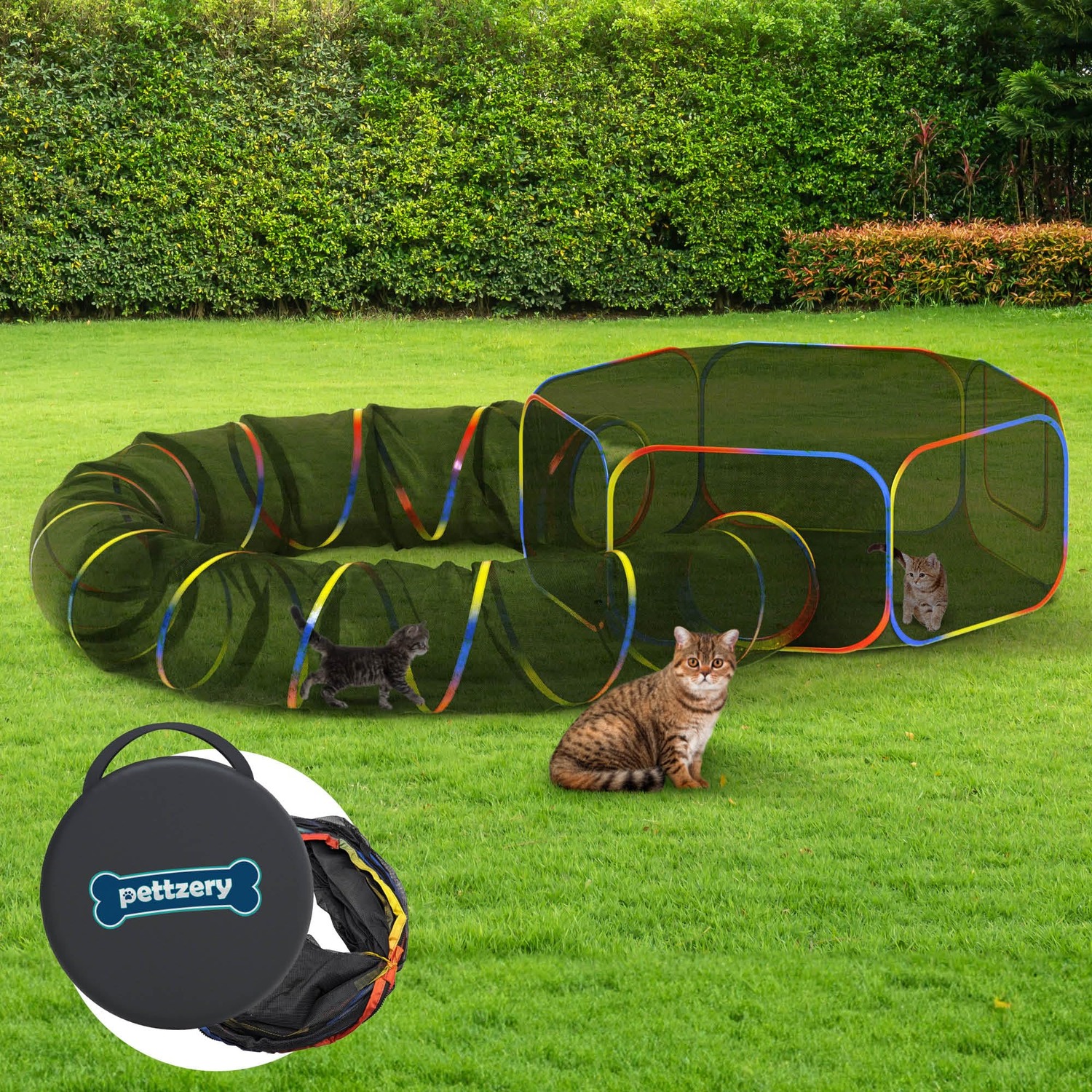
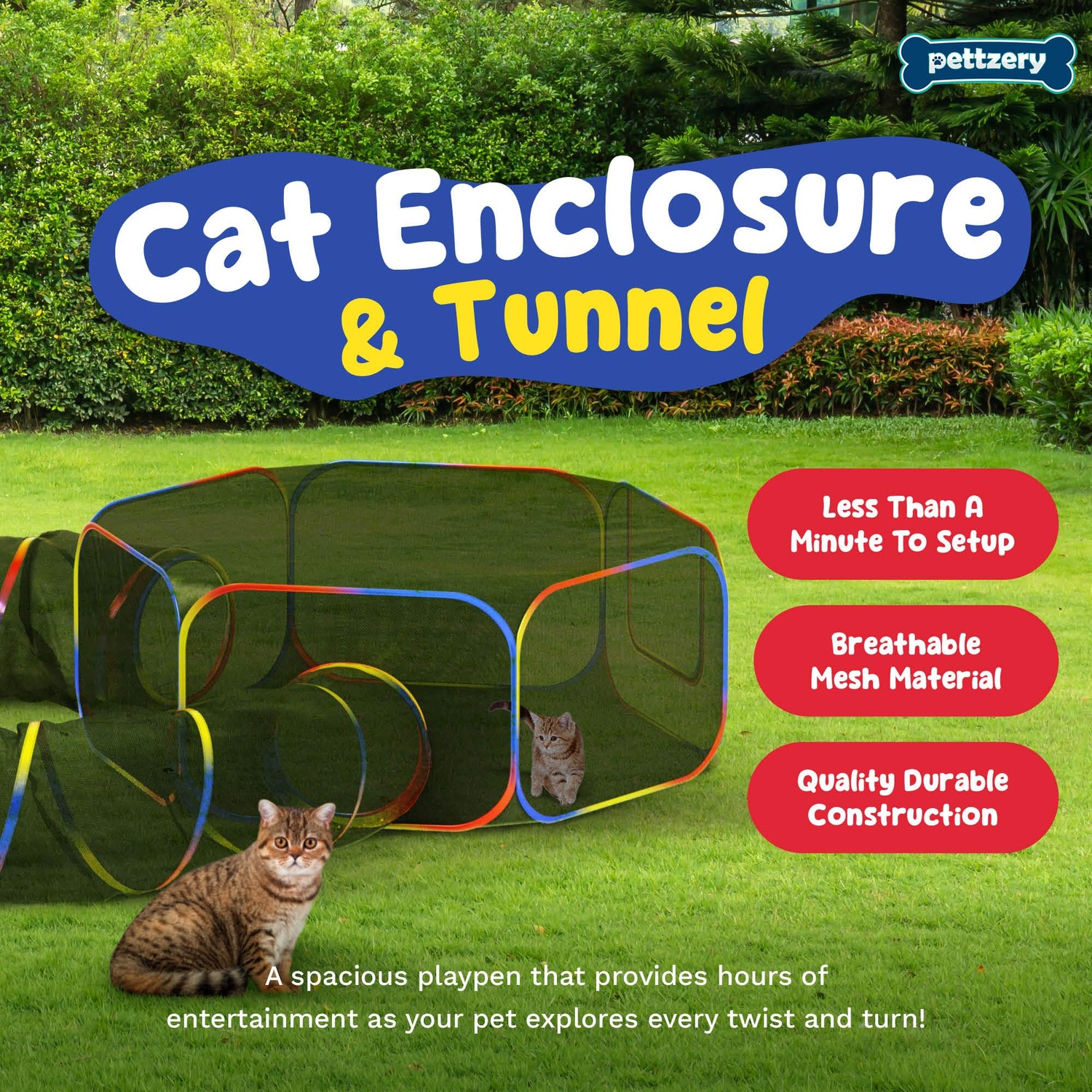
The design is the same idea as a pop up beach shelter or a child's play tent. Flexible hoops are sewn into the fabric panels. When you release it from the carry bag, the hoops spring into shape and the structure holds itself up. There are no poles to slot together and no pegs required for basic setup, which is why the product details list no assembly required.
This particular enclosure is a square tent, 119.4 cm on each side and 45.7 cm tall, made from Oxford cloth with mesh panels. Oxford cloth is a woven synthetic used widely in outdoor gear because it keeps its shape and shrugs off scuffing. The mesh sections do two jobs. They let air move through, which matters a lot on a warm afternoon, and they let you see in. A cat sitting in a solid-sided box is far less relaxed than one who can watch a magpie hop across the lawn.
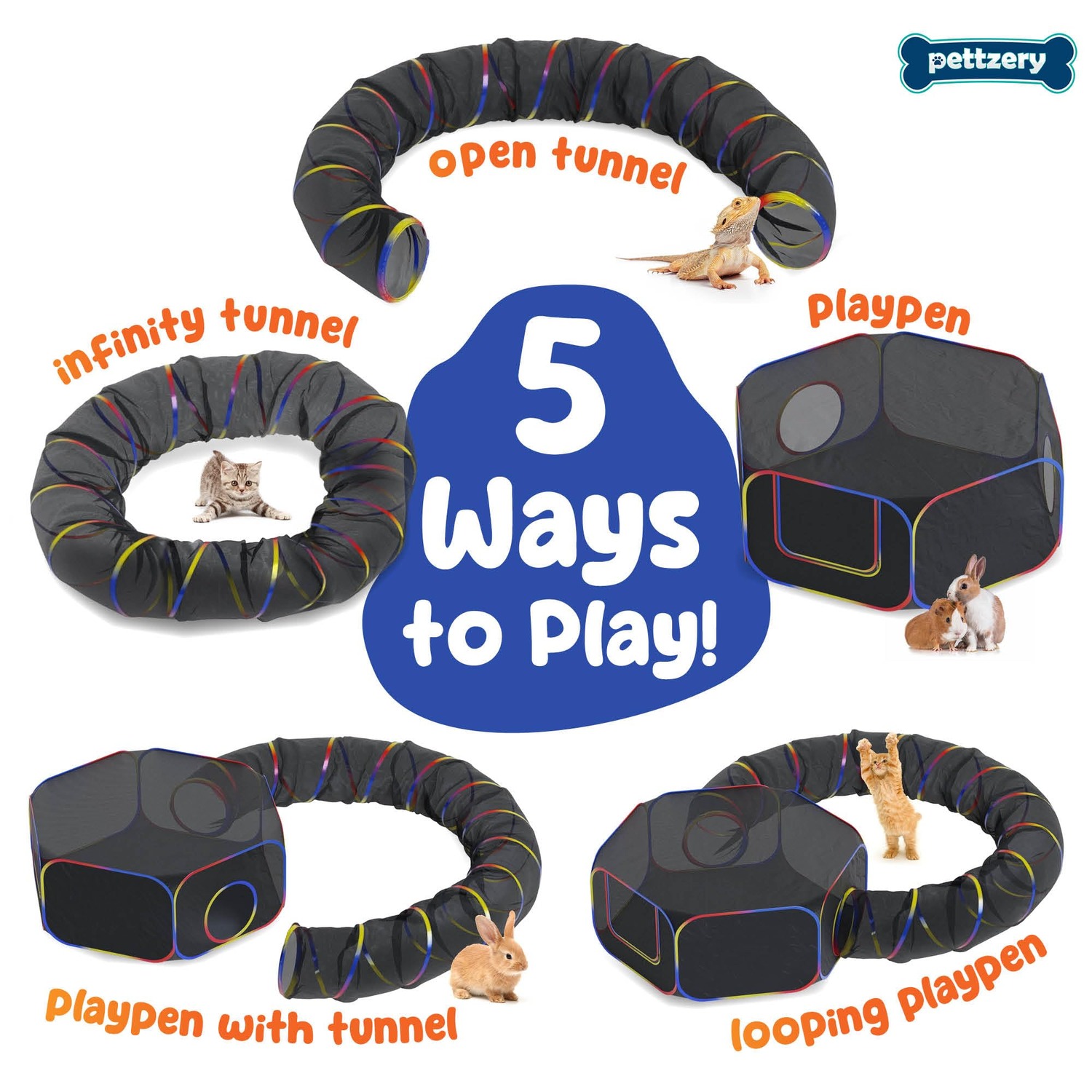
Everything closes with zippers. You unzip to get your cat in, zip up, and the enclosure is contained. The zip-on tunnel is what sets this apart from a plain mesh cat tent. It attaches to the tent to create a longer run, or you can use it on its own.
Why the tunnel matters more than you think
A flat square of outdoor space is nice for sunbathing and not much else. Cats nap, and then they get bored, and then they want to come back in.
A tunnel changes the behaviour. Cats are ambush animals by nature. Give them a tube to charge through, hide inside and pounce out of, and the whole setup becomes a game rather than a holding pen. Owners often report that a cat playpen with tunnel keeps a cat engaged two or three times longer than the tent alone.
It also doubles as an indoor toy. On days when the weather is poor, run the tunnel down a hallway with a toy at the far end. The same piece of gear works in two completely different ways.
Who this suits
Apartment and unit dwellers get the most out of it. If you have a balcony big enough for a 119.4 cm square, a cat enclosure for apartment living means your cat can sit in real sunlight instead of pressing against glass. Nothing is drilled, nothing is fixed, and it comes inside when you are done.
Renters are the second group. A permanent catio means timber, wire and usually a landlord conversation. A foldable catio avoids all of it and moves house with you.
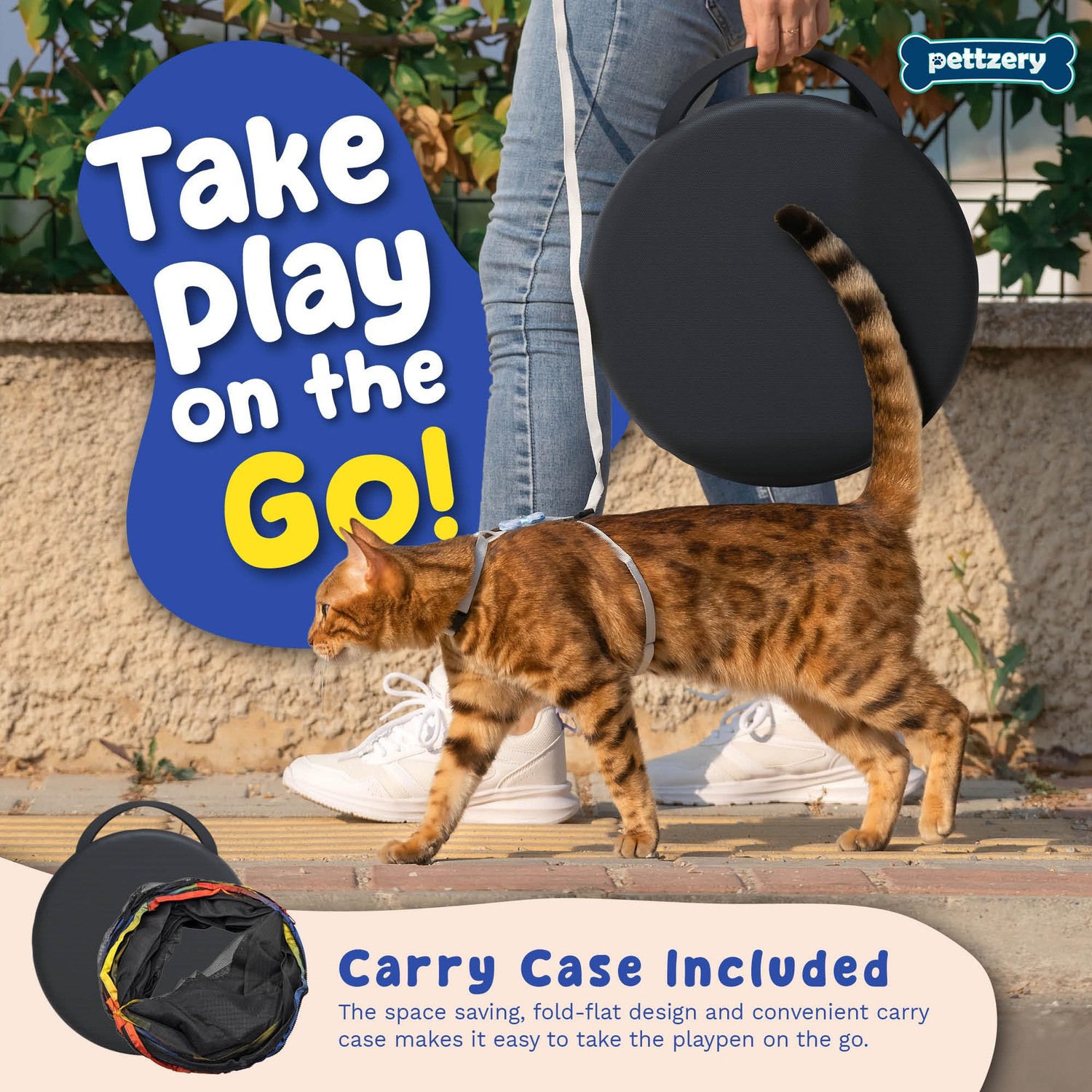
Travellers and campers are the third. The carry bag makes this a travel catio. Caravan parks, holiday rentals, a weekend at a relative's place: anywhere you want your cat to have a safe outdoor spot, this comes along in the boot.
It also works for people who are nervous about the first outdoor step. If your cat has lived inside their whole life, a bounded space is far less frightening than an open garden, and much easier for you to manage.
The manufacturer lists cats, ferrets, guinea pigs and rabbits as target species, so a small catio of this type can serve a multi-pet household, as long as you check that your particular animal cannot squeeze through or chew at the mesh.
What to check before you buy
Measure your space first. The square footprint is 119.4 cm by 119.4 cm, which is roughly the size of a small dining table. Balconies and courtyards can be tighter than they look once you account for furniture and the door swing.
Think about height. At 45.7 cm, this is a lie-down-and-watch enclosure, not a climbing frame. Cats who want vertical space and shelving will be better served by a built catio. Cats who want sun, smells and a tunnel to run through will be perfectly happy.
Consider your cat's temperament honestly. A relaxed cat who sleeps in sunbeams will settle immediately. A chronic fabric chewer or an escape artist needs closer supervision, because any soft enclosure is only as secure as the attention you are giving it.
Finally, think about where you will store it. Folded in its bag it is compact, so a wardrobe shelf or the boot of a car is plenty.
Using it safely
Supervision is the core rule. This is designed for time you spend with your cat, not as a way to leave them outside while you go out.
Shade matters more than most people expect. Fabric and mesh give airflow, but direct midday sun will still heat the inside. Set up under a tree, verandah or shade sail, and always put water in with your cat.
Wind is the other hazard. A pop up structure is light. On breezy days, weight it down with a heavy bed or sandbags in the corners, or skip the session entirely. Never leave it standing unoccupied in wind.
Check the ground before you set up. Ant nests, thorns, bindii and recently sprayed garden chemicals are the usual culprits.
Introducing your cat to it
Do not take a nervous cat straight outside. Set the enclosure up in your lounge room with the doors open and leave it there for a day or two. Put a blanket that already smells like your cat inside, scatter a few treats, and let curiosity do the work.
Once your cat is going in and out happily indoors, move it outside to a quiet spot. Keep the first session to ten or fifteen minutes and stay close. Most cats build confidence quickly once they learn the space is theirs and the exit is right there.
If your cat refuses to go in, do not force them. Reset indoors, add catnip or a favourite toy, and try again in a few days.
Looking after it
Shake it out after every use. Fur, grass clippings and grit all end up in the corners, and grit is what wears out zips.
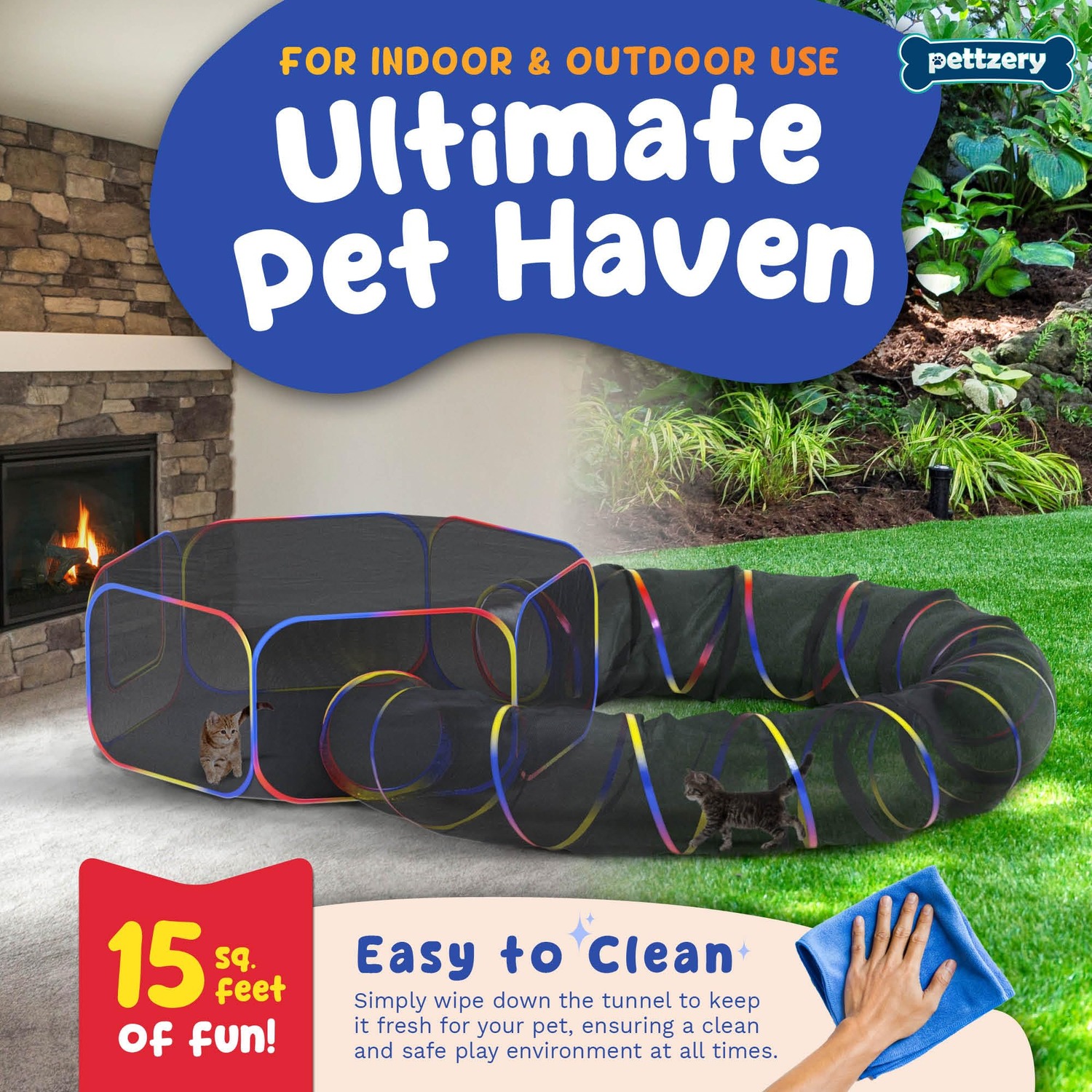
Spot clean the fabric with a damp cloth and a little mild soap. Avoid harsh cleaners near anything your cat will lie on. Be gentle with the mesh, brushing rather than scrubbing, since a tear in mesh is much harder to fix than a mark on fabric.
Dry it fully before folding. Packing a damp outdoor cat tent into its bag is the quickest route to mildew. If it gets caught in a shower, open it out somewhere airy and let it dry overnight.
Store it in the bag, out of direct sunlight. UV is hard on synthetic fabric over the years, so a cupboard beats a sunny windowsill.
The short version
This is a pop up fabric enclosure with a zip-on tunnel, 119.4 cm square and 45.7 cm high, made from Oxford cloth and mesh. It needs no assembly, sets up in about a minute, and folds into a carry bag.
It is a good fit if you rent, live in a flat, travel with your cat, or simply want a safe way to give an indoor cat some sunshine. It is not a replacement for a built, permanent catio, and it is not for leaving a cat outside unattended.
Used the way it is intended, with you nearby and a shady spot picked out, it turns twenty minutes in the garden into the best part of your cat's day.