
The complete guide
Choosing a Foldable Cat Enclosure: A Practical Buyer's Guide
The problem with letting a cat outside
Cats want out. Anyone who has watched a cat sit at a screen door, tail twitching, knows that look. The trouble is that everything good about the outdoors for a cat comes bundled with everything bad about it. Traffic, dogs, other cats, ticks, snail bait, an open gate, a neighbour who feeds strays. Outdoor cats live shorter lives on average, and in a lot of areas there are local rules about cats roaming at all.
So most people land on one of three answers. Keep the cat fully indoors and accept the boredom. Walk the cat on a walking lead, which about one cat in five actually tolerates. Or build some kind of enclosure.
A foldable cat enclosure is the middle path. It gives your cat grass under their paws, wind in their whiskers and something to stare at for an hour, with mesh between them and anything that might go wrong. It is not a replacement for a full timber catio if you have the space and budget for one. It is the version that fits in the boot of a car and costs a fraction as much.
How this one works
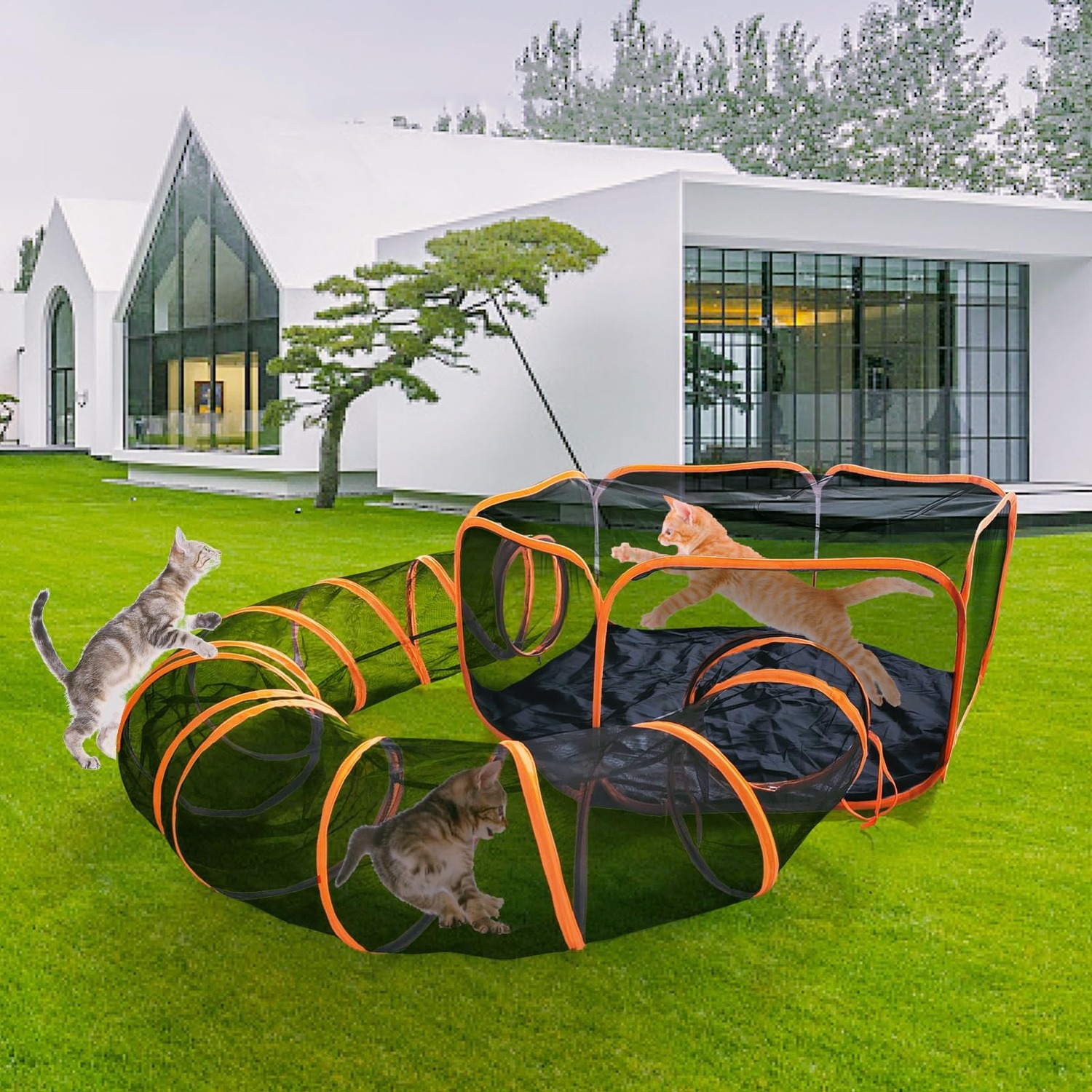
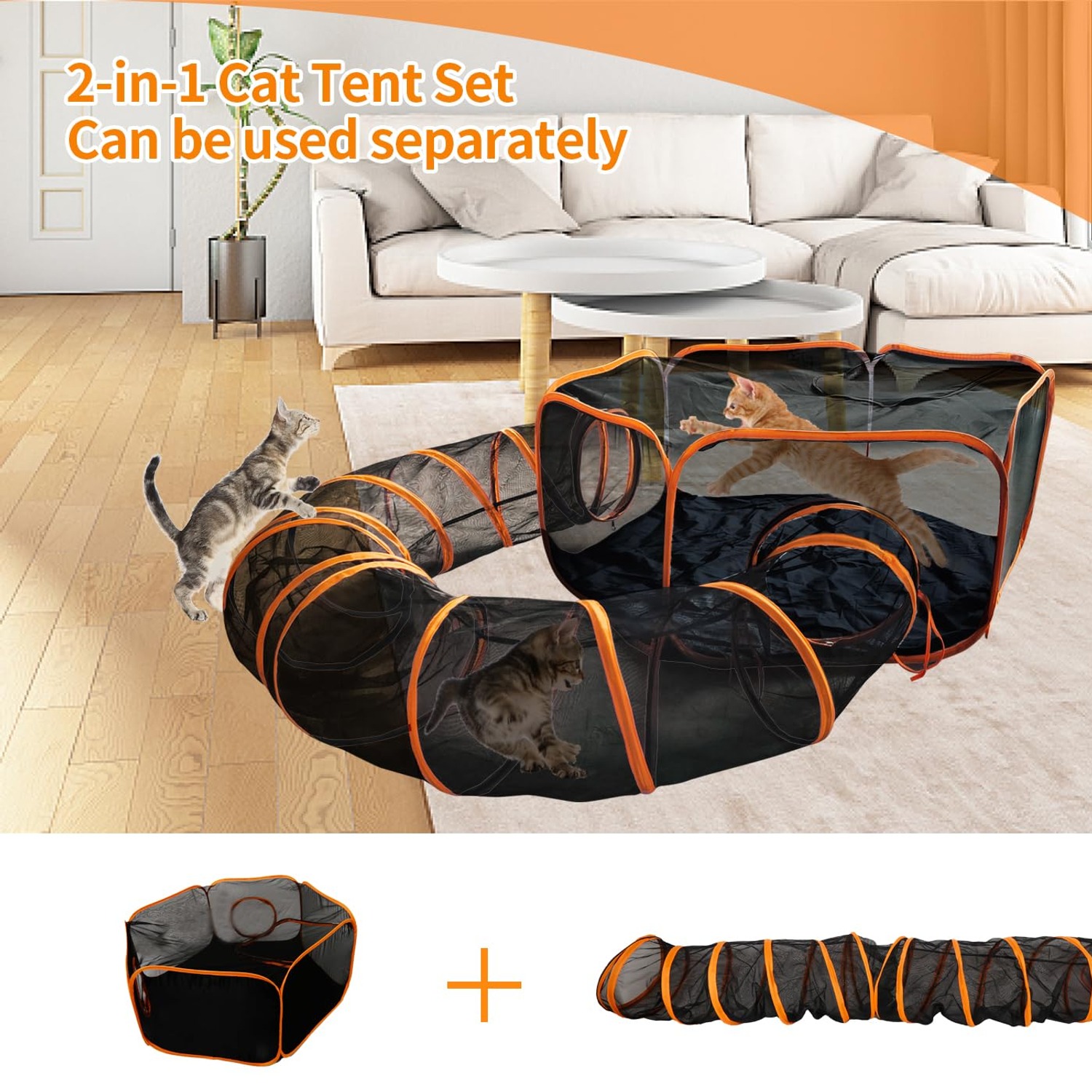
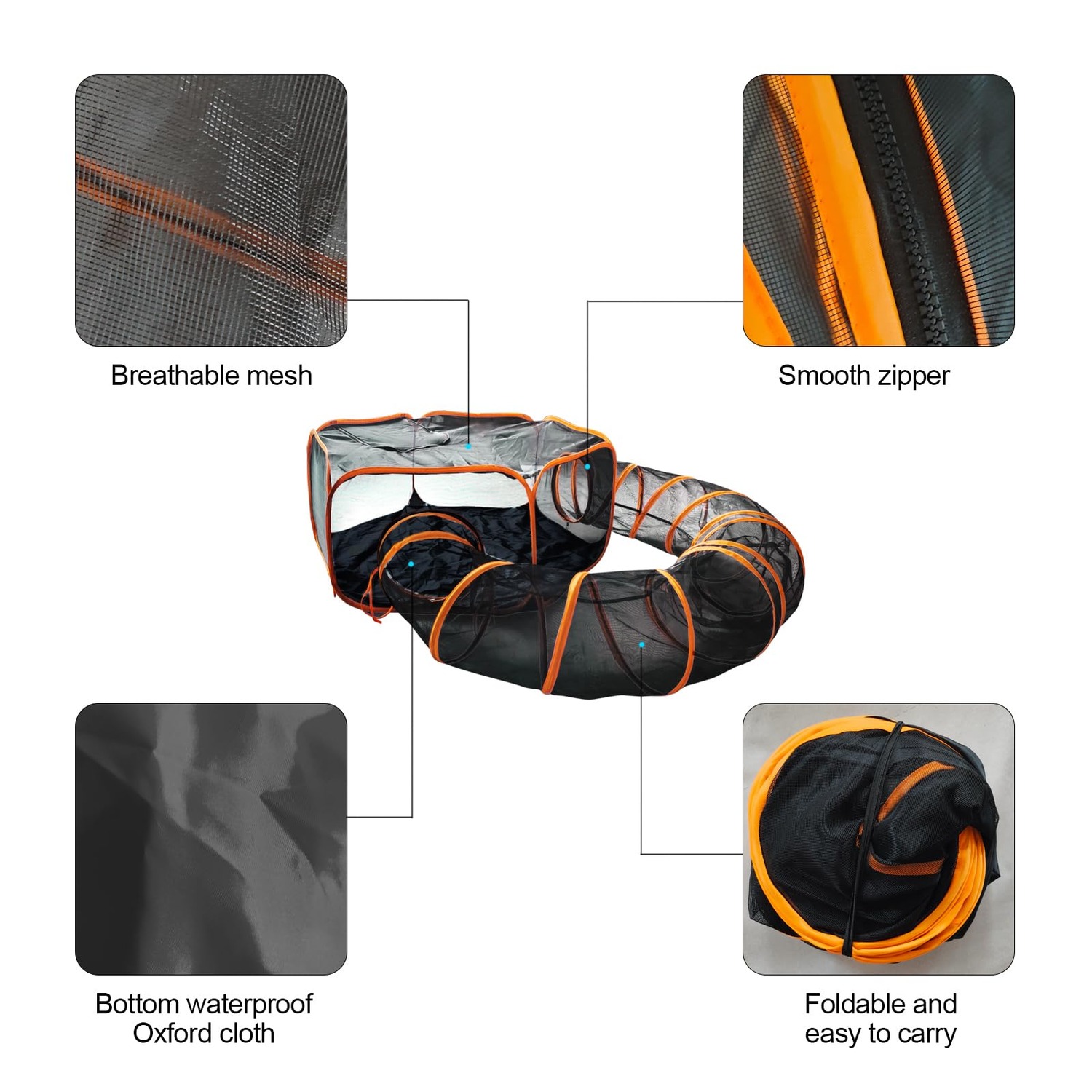
There are two pieces. The tent is a square room measuring 120 cm by 120 cm, standing 45 cm tall. That is low enough that a cat is not jumping around inside it and high enough for them to sit upright, stretch and walk comfortably. The floor is Oxford fabric, which matters more than it sounds. Bare ground means claws catching in turf and paws getting damp. A fabric base gives grip and keeps the inside dry.
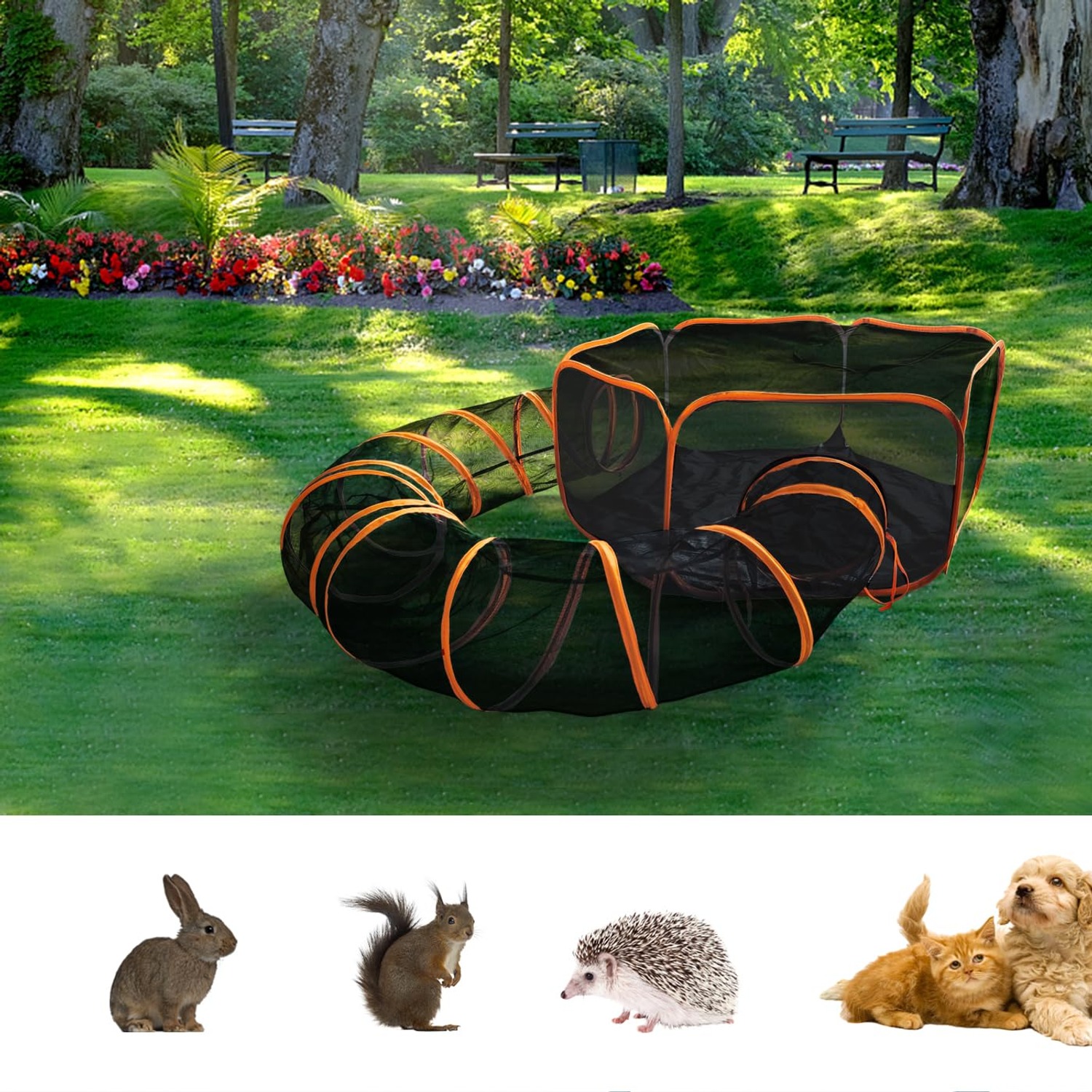
The second piece is a wrap-around tunnel. It zips onto the tent through one of the large zipper doors, so the two become a single sealed space. Your cat can be in the tent, trot through the tunnel, come back out and start again. Cats love enclosed runs. It taps into the same instinct that sends them into paper bags and under the sofa. For a shy cat the tunnel also works as a hiding spot, which means they will often come outside at all when they otherwise would not.
Both doors are zippered. You open one to put the cat in or get them out, then zip it shut. The rest of the enclosure stays closed the whole time.
Mesh makes up most of the walls, which does the two jobs that make or break an outdoor cat tent with tunnel. First, air moves. A solid-walled tent in sun turns into an oven fast, and that is genuinely dangerous for a cat. Mesh keeps the inside close to outside temperature as long as you have shade. Second, your cat can see out in every direction. Cats are prey animals as well as predators and a clear line of sight settles them. Block their view and they get twitchy.
The frame is alloy steel. That is the part holding the shape against a cat landing on it sideways mid-zoomie.
Who it suits
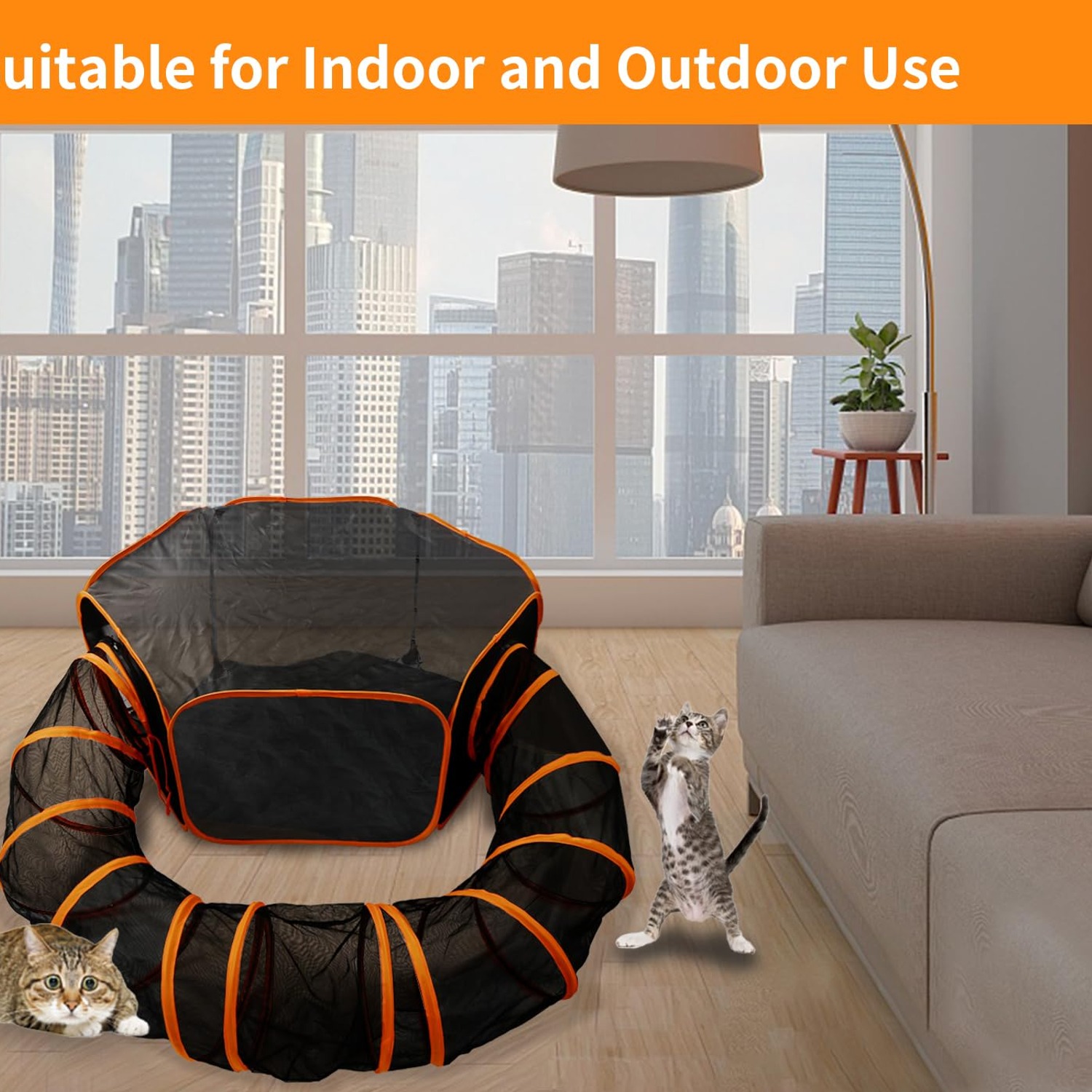
Indoor cats are the obvious group. If your cat has never been out, a pop up cat tent is a gentle way to introduce the outdoors without any of the risk. Start in the shade, keep sessions short, build up.
Renters and apartment dwellers are the second group. You cannot bolt a timber catio to a rented balcony, but you can unfold a balcony cat tent on the floor and pack it away when the inspection comes around. The 120 cm footprint fits most balconies.
Travellers are the third. If you take your cat on road trips, to a holiday house, or camping, a travel catio changes what those trips look like. Instead of the cat being shut in a bedroom or stuck in a carrier, they get their own space with a view. The product style is literally listed as camping, which tells you what it was designed around.
It also works for rabbits and similar small pets under supervision, and indoors it doubles as a recovery or isolation space. If you are bringing a new cat into a house with an existing one, a mesh pen lets them see and smell each other safely for a few days.
Who it does not suit: cats that chew fabric obsessively, and anyone wanting something they can leave a cat in unattended. This is a supervised-use product.
How to choose between enclosure types
Think about four things.
Space. Measure your lawn, deck or balcony before you buy anything. A cat playpen outdoor needs the tent footprint plus a clear curve for the tunnel. Two metres across is comfortable. If you only have a one metre square patio, a tent-only enclosure makes more sense than one with a tunnel.
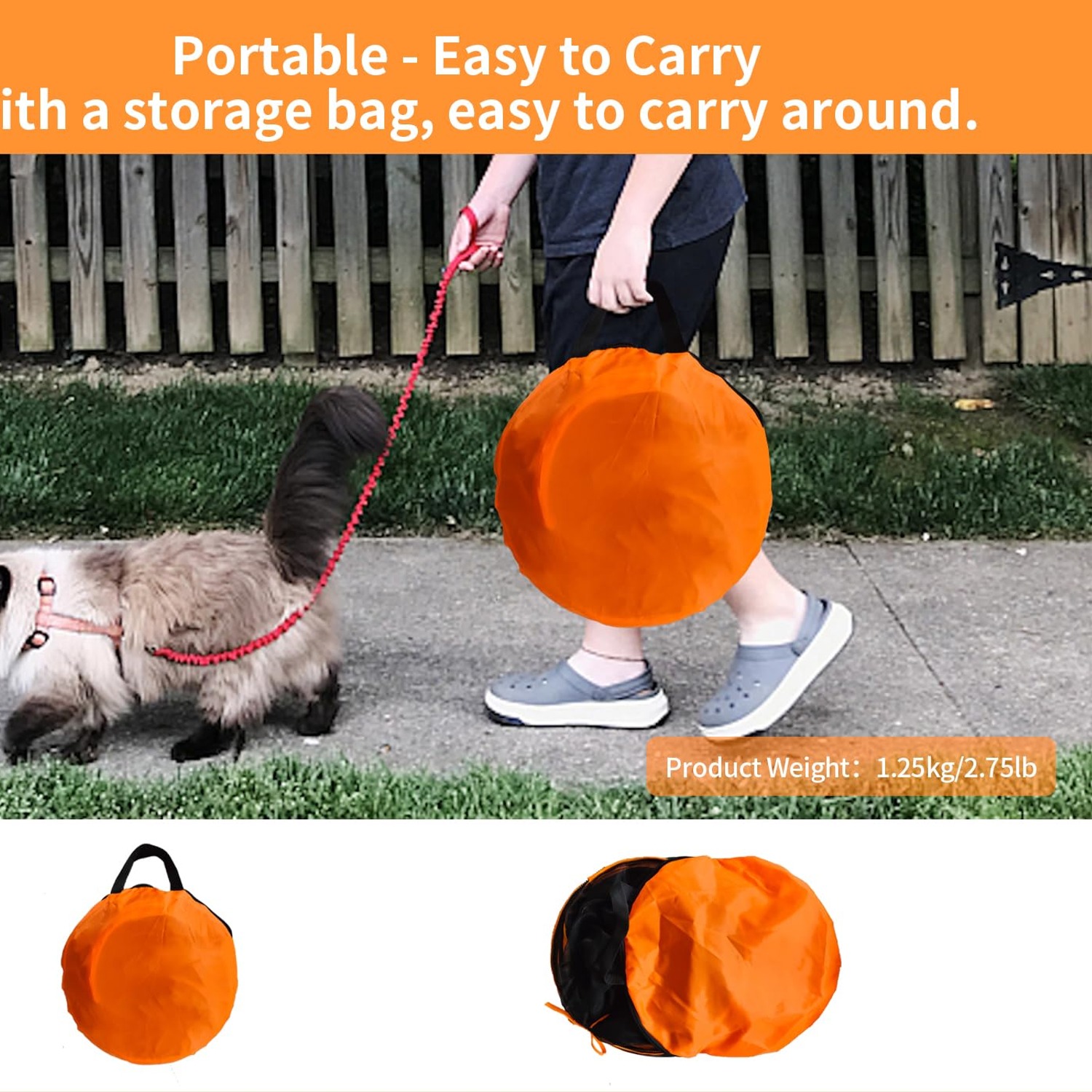
Portability. If the enclosure will live in one spot in the garden, a heavier framed pen is fine and will last longer. If it goes in the car, folding matters more than anything else. This one packs into a supplied bag in about a minute, which is the difference between actually taking it places and leaving it in the shed.
Ventilation and shade. Mesh is non-negotiable for an enclosure that goes in the sun. Beyond that, you need to supply the shade yourself. Position under a tree, beside a fence, or under an umbrella. Never put a cat enclosure outdoor in full midday sun.
Floor. An open-bottom pen lets your cat touch real grass but also lets them dig, and lets ants in. A fabric base is cleaner, safer for claws and better on hard surfaces. This model uses the fabric base approach, which is the right call for something you will set up on decking and campsites as well as lawn.
Getting your cat to actually use it
This is where people get discouraged. You set up a brand new small catio, put the cat in, and the cat flattens itself and refuses to move. That is normal.
Set it up indoors first with the doors wide open and leave it for a day or two. Put something that smells like them inside, a blanket from their bed works best. Let them wander in on their own. Drop a treat at the tunnel mouth. Once they are going in and out without thinking about it, move the whole thing outside and repeat.
First outdoor session, ten minutes is plenty. Sit nearby. Build up over a week. By the end of it most cats will walk in by themselves when they see it come out of the bag.
Some cats never get there, and that is worth knowing before you buy. Roughly speaking, young cats and confident cats take to it fast, and older cats who have been indoors their whole lives take longer.
Safety and placement
Keep the enclosure on level ground. Peg or weight the corners if there is any breeze, because an empty folding tent is light enough to shift. Keep it away from fence lines where a neighbourhood cat could come nose to nose through mesh, and away from anything a dog can reach.
Always provide water in a tip-resistant bowl for sessions longer than a few minutes. Check the ground temperature with your hand before setting up on paving or decking in summer. If it is too hot for your palm, it is too hot for paws.
Supervise, every time. That is the honest rule with any fabric enclosure.
Care and storage
Shake out fur, grass and dirt after each use. Wipe mesh and base with a damp cloth and a little mild soap, then let it air dry fully before folding. Packing a damp tent away is how you end up with mildew and a smell you cannot shift.
Do not machine wash it and do not put any part in a dryer. The frame and the fabric are not made for it.
Before each outing, run a quick eye over the zippers and the frame joints. Zips are the first thing to go on any zippered enclosure, and catching a sticky zip early usually means a bit of candle wax rather than a replacement.
Store it dry in the bag, out of direct sunlight. UV degrades mesh over seasons, so a cupboard beats the back of a ute tray.
The short version
A foldable cat enclosure is the practical answer for anyone whose cat wants outside but cannot safely have it. This one gives you a 120 x 120 x 45 cm mesh tent with a wrap-around tunnel, steel frame, Oxford fabric floor and two zip doors, and it packs into a bag in about a minute.
It suits indoor cats, balconies, rentals, campsites and road trips. It is not a permanent outdoor structure and it is not for unsupervised use. Introduce it slowly, keep it in shade, peg it down in wind, and dry it before you fold it.
Do that and you have an hour of genuine outdoor time for your cat, whenever and wherever you want it.