
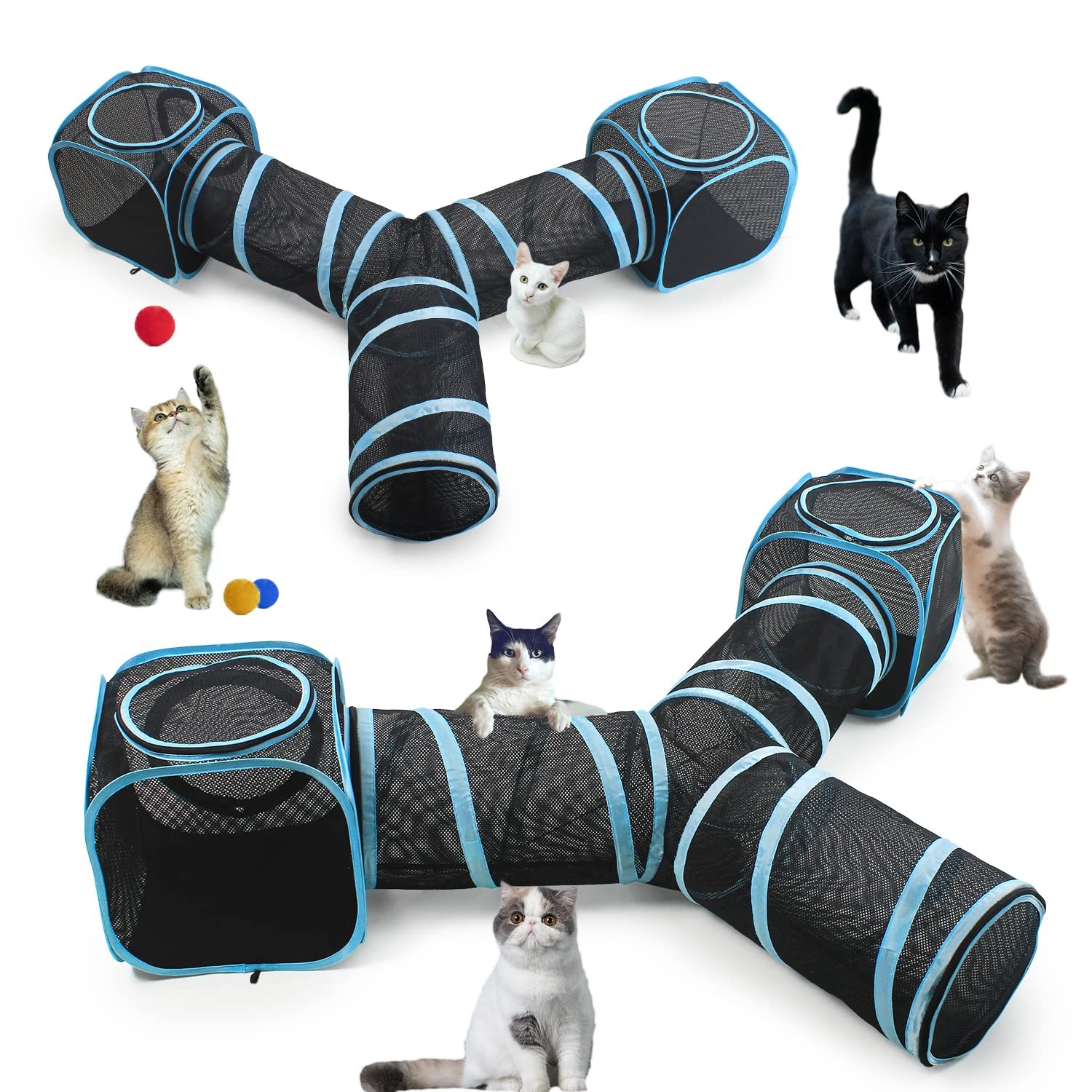
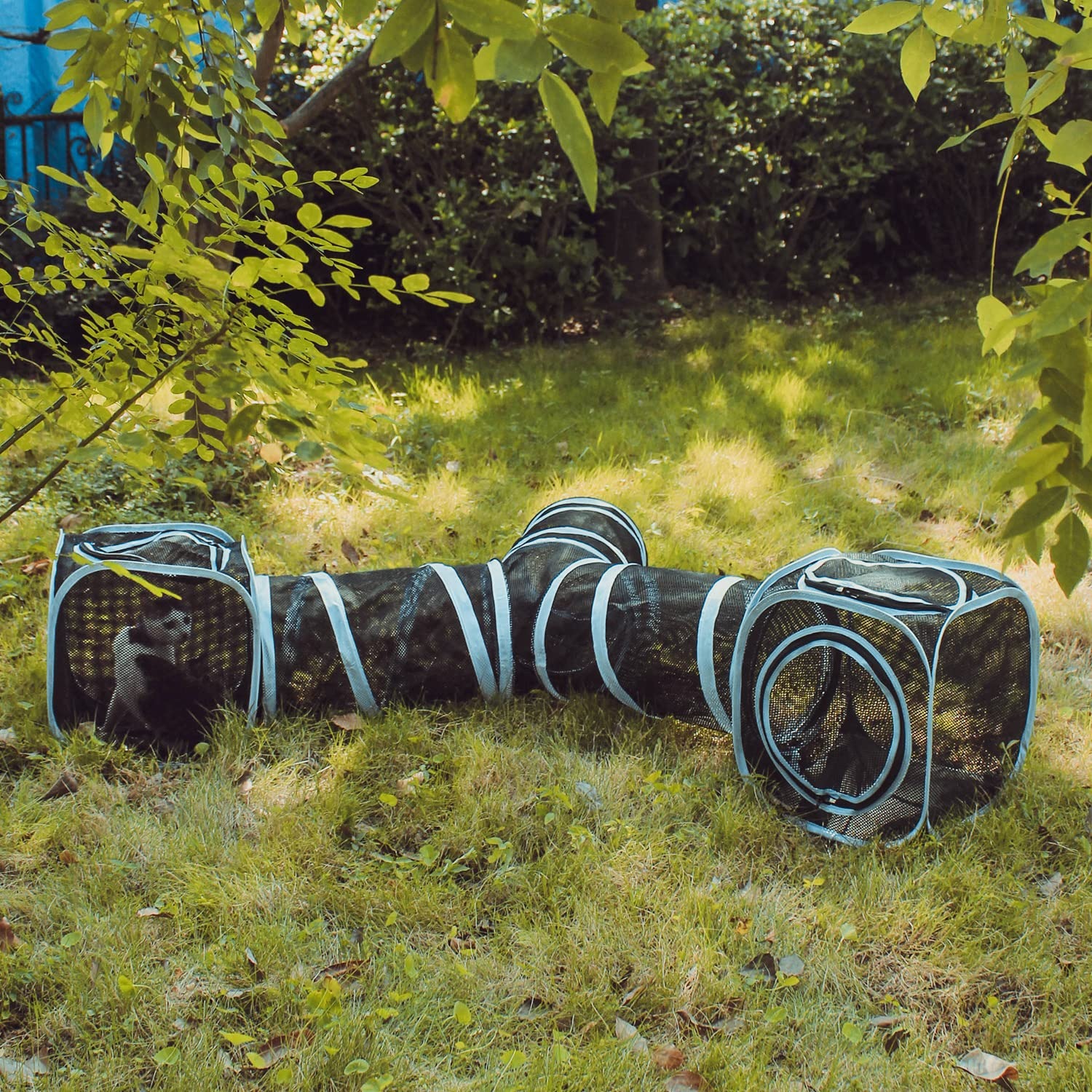
The complete guide
How to Choose a Cat Cube Tunnel Set That Your Cat Will Actually Use
The problem with a bored indoor cat
An indoor cat is safe, and that is the whole point. The trade-off is that a house gives them almost nothing to hunt. Cats are built to stalk, wait, burst forward and then rest. Strip out the stalking and the bursting and you are left with a lot of resting, which is where the three o'clock in the morning zoomies come from, along with the chewed cables and the ambushes on your ankles.
Toys help, but most toys only work while you are holding them. The moment you put the wand down, the game stops. What changes things is architecture. Give a cat something to go inside, something to come out of, and a reason to move between the two, and they will play on their own schedule.
That is what a cat cube tunnel set does. The cubes are the hiding spots and the tunnel is the run between them. Put together, they create exactly the kind of ambush territory a cat understands without you having to teach them anything.
How a cube and tunnel system works
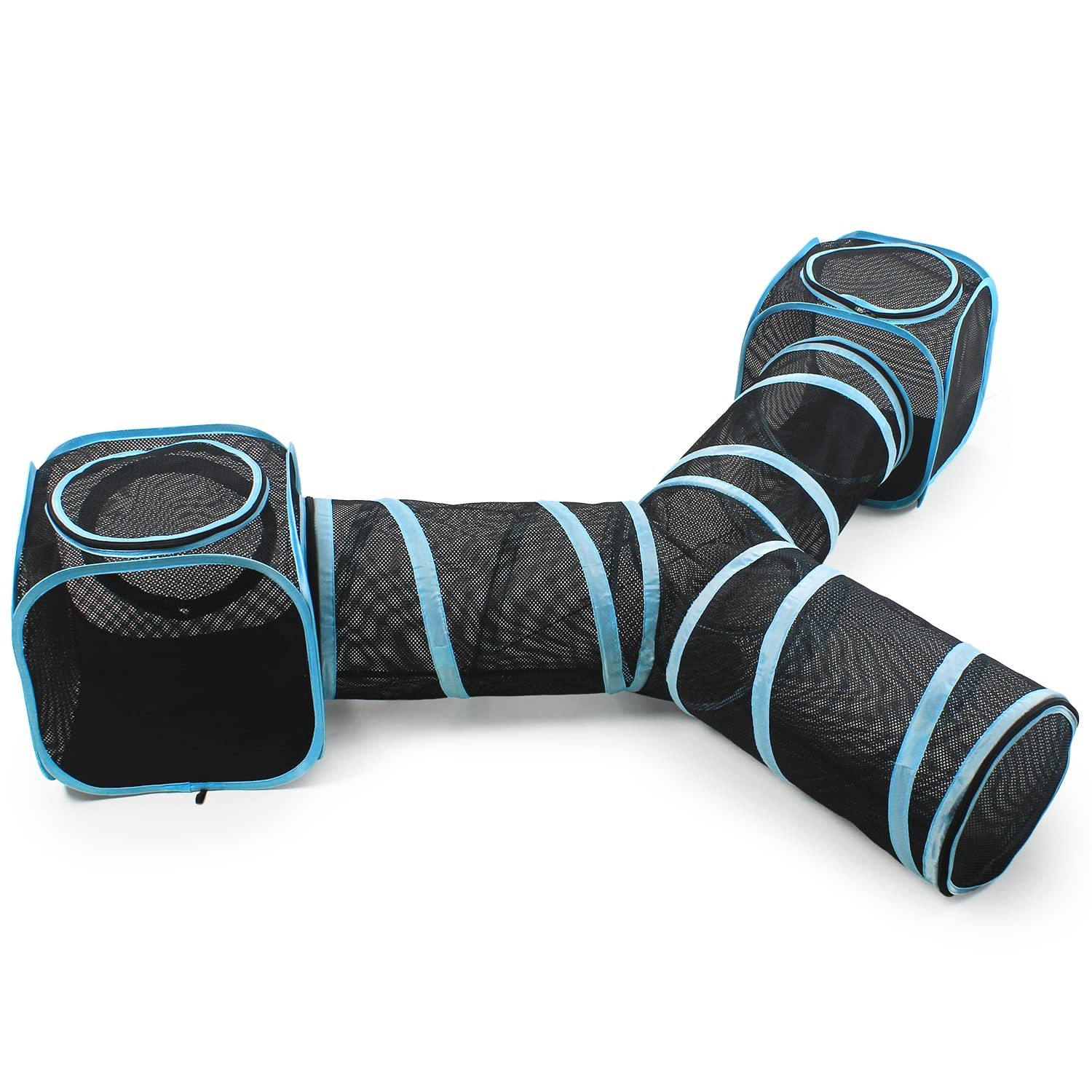
This particular set is a two cube plus 3-way tunnel configuration from INTURN. The cubes are the stations at either end, and the three-way tunnel is the piece that makes the whole thing interesting. A standard tunnel has two ends. A three-way has three, so it acts as a junction rather than a corridor. Your cat can enter one way and leave two different ways, which means they can break line of sight and double back. That is the move a cat actually wants to make.
The panels are a mesh fabric. Two things follow from that. First, air flows straight through, so the inside does not heat up the way a solid-walled tent does when the sun hits it. Second, your cat can see out and you can see in. People underestimate how much that matters. A cat sitting inside a solid box is blind to the room, and a lot of cats will not settle in one for that reason. A mesh cat tunnel lets them keep watch, which is the whole appeal of a hiding spot in the first place.
The pieces join with zipper doors fitted to the tops and sides. Unzip a panel on the cube, unzip a panel on the tunnel, zip them to each other, done. The same zips let you seal an opening if you would rather one cube stayed closed as a quiet den.
No assembly is required. It unfolds, you choose a shape, and it is up.
Indoors, outdoors, or both
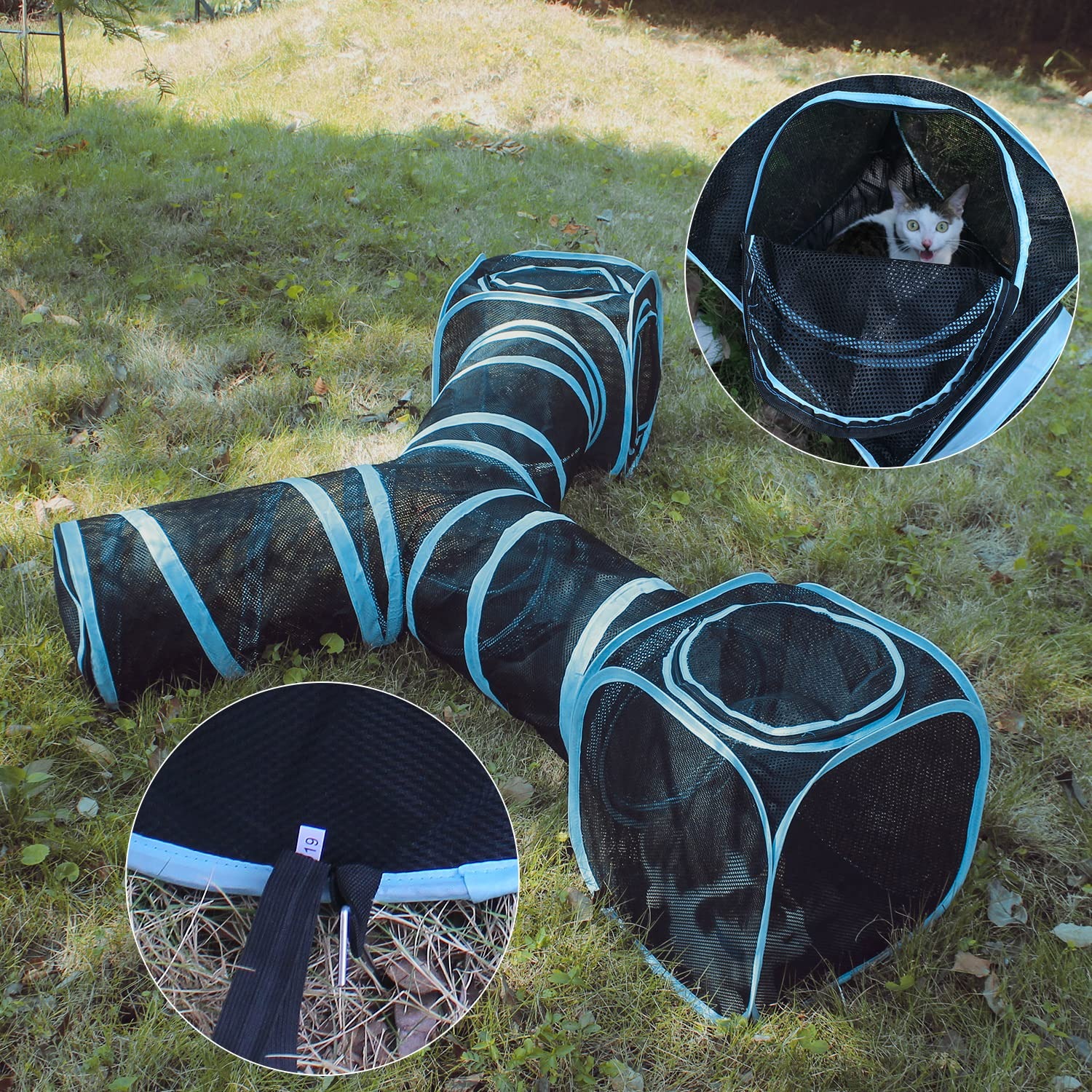
Ground pegs come in the box, and that single inclusion is what makes this more than an indoor toy. Pegged into lawn, the set stays anchored while a cat charges through it. For an indoor cat, a supervised half hour on the grass inside a cat play tunnel outdoor setup is a genuinely good day out. They get real air, real smells and real sunlight without being loose in a neighbourhood full of roads and other animals.
A few sensible rules apply. Supervise the whole time, because fabric and pegs are not a containment system and a determined cat will find a way out of anything. Pick shade or part shade rather than full midday sun. Check the grass for anything sharp before you peg down. And bring it inside when you are finished, since the brief lists no weatherproofing and constant weather exposure will wear out zips and fabric faster than anything a cat does.
Indoors, think about traffic. A hallway is a natural fit because cats already run hallways. A lounge room corner works well too, especially tucked along a wall where it does not block a walkway. Small flats are where a collapsible cat tunnel earns its keep, since you can set it up for an hour and fold it away before guests arrive.
Who this set suits
Multi-cat households get the most out of it. Two cubes and a branching junction means there are several places to be at once, so chase games have somewhere to go and the cat being chased always has an exit. That matters more than it sounds. Tunnels with only two ends can create a trapped-cat situation that turns a game into a genuine scrap. Branching layouts do not have that problem.
Single-cat homes still get value, particularly if your cat is the type who patrols. Give them a route and they will use it.
Nervous cats and new arrivals do well with cubes because a covered space with a view is the thing that settles them. Put the set somewhere quiet, leave the openings clear, and let them find it. Many cats claim a cube as a nap spot before they ever use it for play.
Travellers and anyone who moves around benefit from the flat-pack build. A portable cat tunnel that carries a familiar smell is a real help in an unfamiliar house.
How to choose and set it up
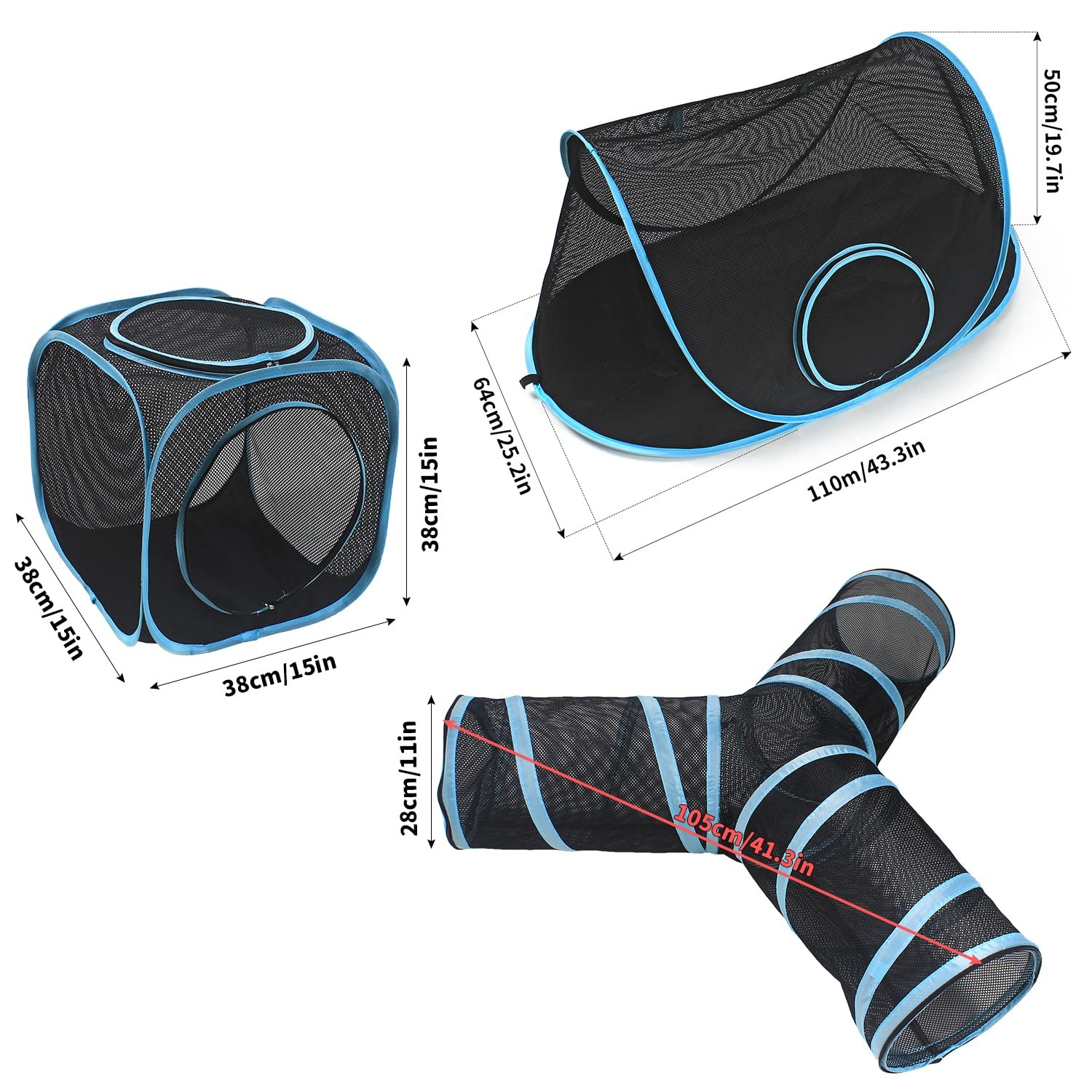
Start with floor space. The listed item dimensions are 38.1 by 35.6 by 20.3 centimetres, but supplier figures often describe a single component or the packed size rather than the full assembled spread. Plan on the set taking up noticeably more room than that once the pieces are zipped end to end, and measure your intended spot before you commit to a layout.
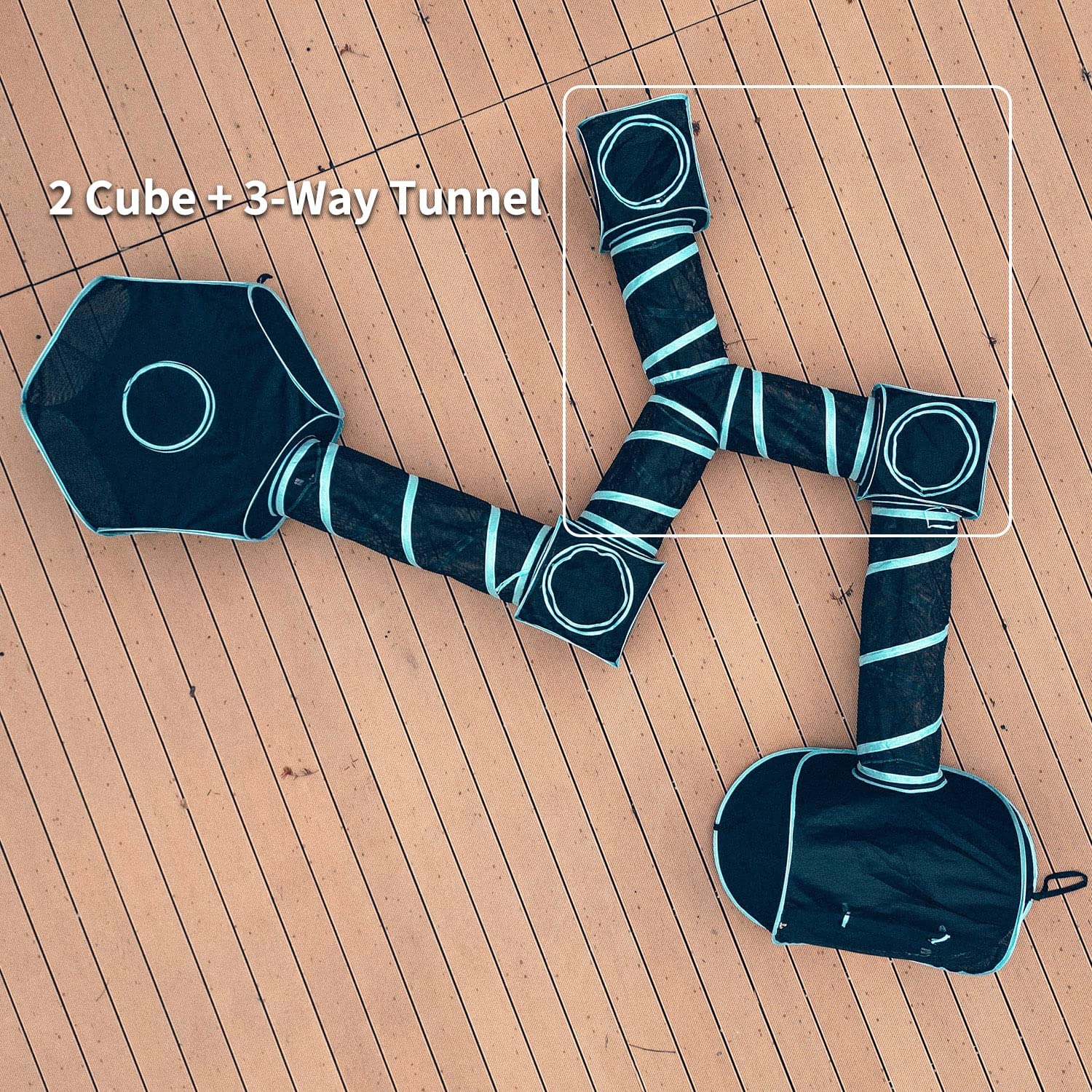
Next, think about shape. A straight line is the easiest setup and suits a corridor. An L-shape tucks nicely into a corner. A loop, where the tunnel feeds back around to the second cube, is the most engaging for a cat who likes to run, because there is no dead end.
Then think about change. The single biggest mistake people make with cat gear is setting it up once and never touching it again. A cat tunnel set that moves every few weeks keeps working for years. New corner, new orientation, new cube sealed off as a den, and your cat treats it as a fresh discovery.
Finally, consider expansion. This set is built to link with other INTURN pieces through the same zip system, so if your cat takes to it you can grow a modest set into a proper catio tunnel style run without replacing what you already own.
Getting your cat to use it
Do not place a cat inside and hope. Set it up, walk away, and let curiosity do the work. If nothing happens after a day or two, drop a treat just inside an opening, or run a wand toy along the outside of the mesh so your cat chases a moving shape through the wall. That mesh is a useful feature here, since the cat can see the target.
A folded towel in one cube often seals the deal. Something that smells like home turns an unfamiliar structure into a nap spot, and a cat who naps in it will eventually play in it.
Give it two weeks before you judge. Cats are slow to accept new furniture and fast to adopt it once they have decided.
Care and keeping it going
Spot clean with a damp cloth and a little mild soap, then air dry completely before folding. Shake out fur, grass and dirt after every outdoor session, because grit in a zip track is the most common cause of a stuck zip.
Run the zips slowly and all the way, rather than forcing them halfway. Check the mesh near the openings now and then, since that is where claws land most often. Store it flat and dry, not crushed under something heavy.
Keep claws trimmed as you normally would. It helps the fabric and it helps your furniture.
The short version
This is a two cube and 3-way tunnel set with mesh panels, zipper doors that let you rearrange the layout, included ground pegs for grass, and no assembly required. It folds flat for storage and travel, and it links with other INTURN pieces if you want to extend it later. Weight, specific colour and country of origin are not stated in this record.
Buy it if you have an indoor cat with energy to burn, more than one cat, a small home that cannot hold permanent play furniture, or a backyard you would like your cat to enjoy safely. Set it somewhere your cat already walks, change the shape every so often, and it will keep earning its place.