
The complete guide
How To Choose A Pop-Up Cat Enclosure That Your Cat Will Actually Use
The problem with an indoor cat who wants outside
Keeping a cat indoors is the safest choice for the cat and the kindest one for local wildlife. It is also, from the cat's point of view, a bit boring. They watch birds through glass. They flatten themselves against the door. They get restless in the evening and take it out on the sofa arm.
The outdoors is where cats get most of their enrichment. Air moving over fur, different smells, insects to track, sun on a warm patch of grass. None of that comes through a closed window.
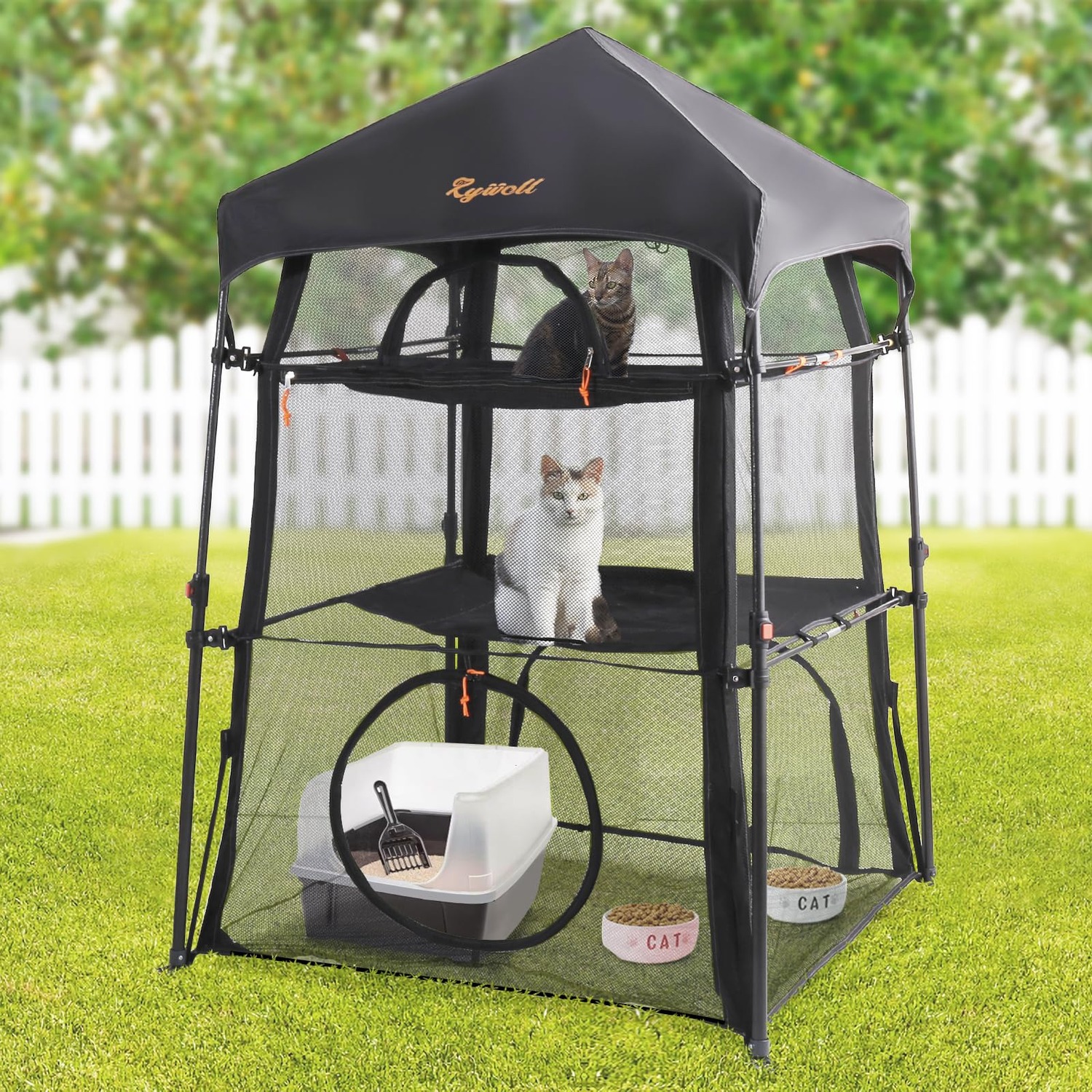
A pop-up cat enclosure is the middle ground. It is a mesh tent with a steel frame that you open in your yard, on your decking or on a balcony. Your cat sits inside with access to real air and real sun, and you do not spend the afternoon wondering where they went. For a lot of households it turns one grumpy indoor cat into one tired, satisfied indoor cat.
How a pop-up enclosure works
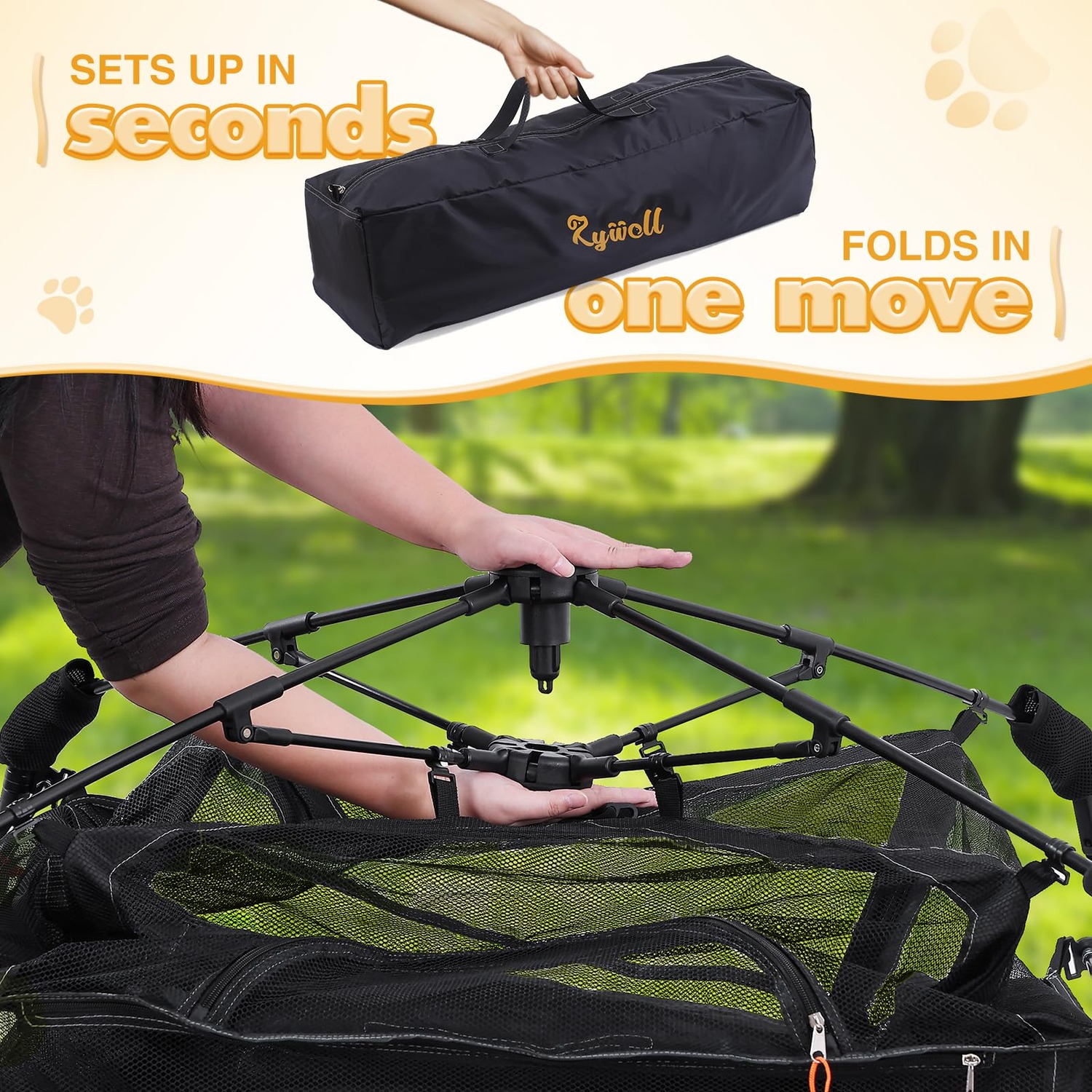
The frame is the interesting part. Instead of a bag of poles you thread through sleeves, this design uses a central hub. You hold the base, press the top into its slot, and the whole structure springs into shape. To pack it away you squeeze the bottom support rods with both hands and it folds back down.
That matters more than it sounds. If setting up takes twenty minutes, you will do it on a Sunday and never again. If it takes a second, you will do it whenever the sun comes out.
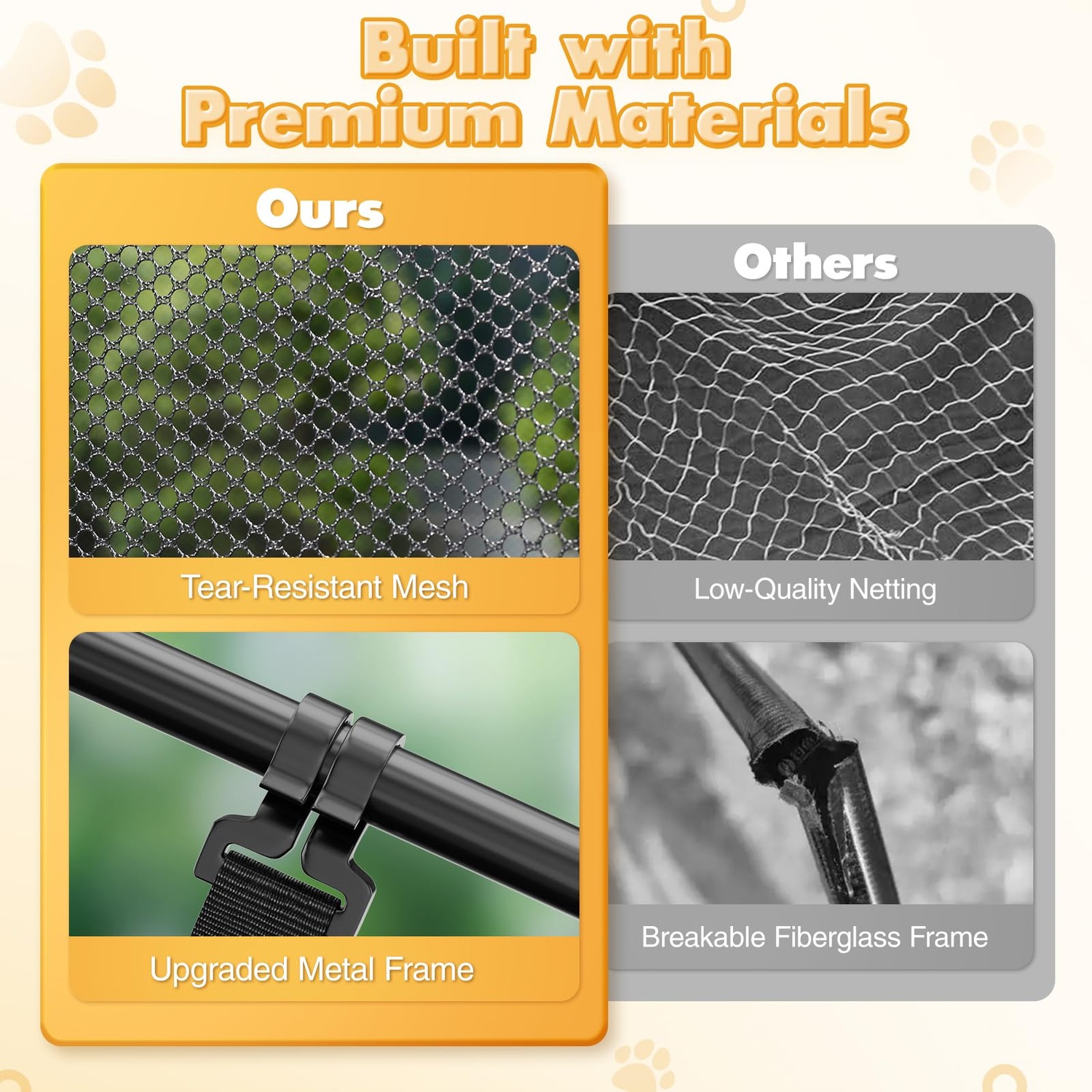
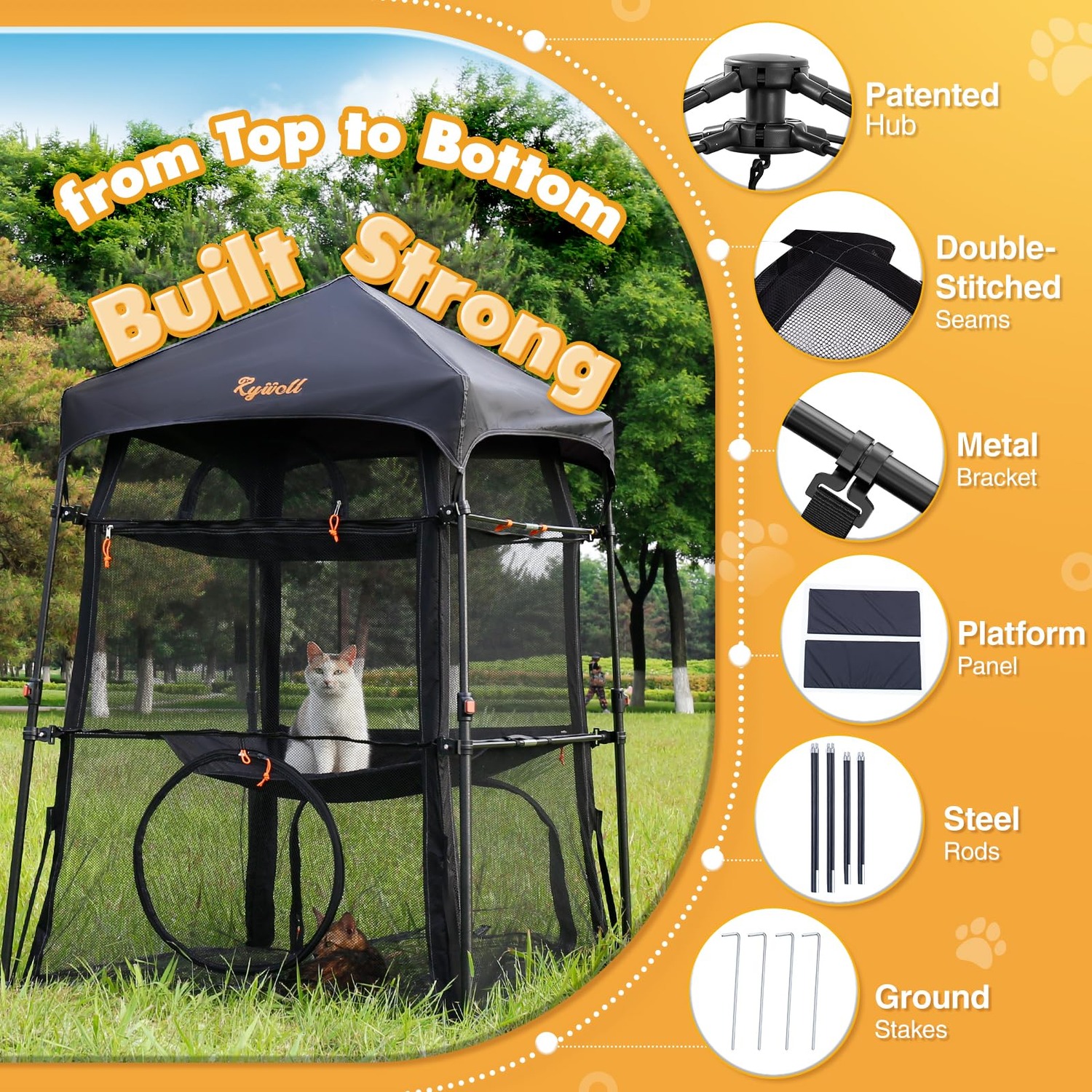
The structure here is alloy steel with support poles and fabric panels in Oxford cloth and 300D mesh. The corners use triangular reinforcement blocks, which spread the load across the fabric instead of concentrating it at a single stitch line. That is one of the places cheap tents fail first.
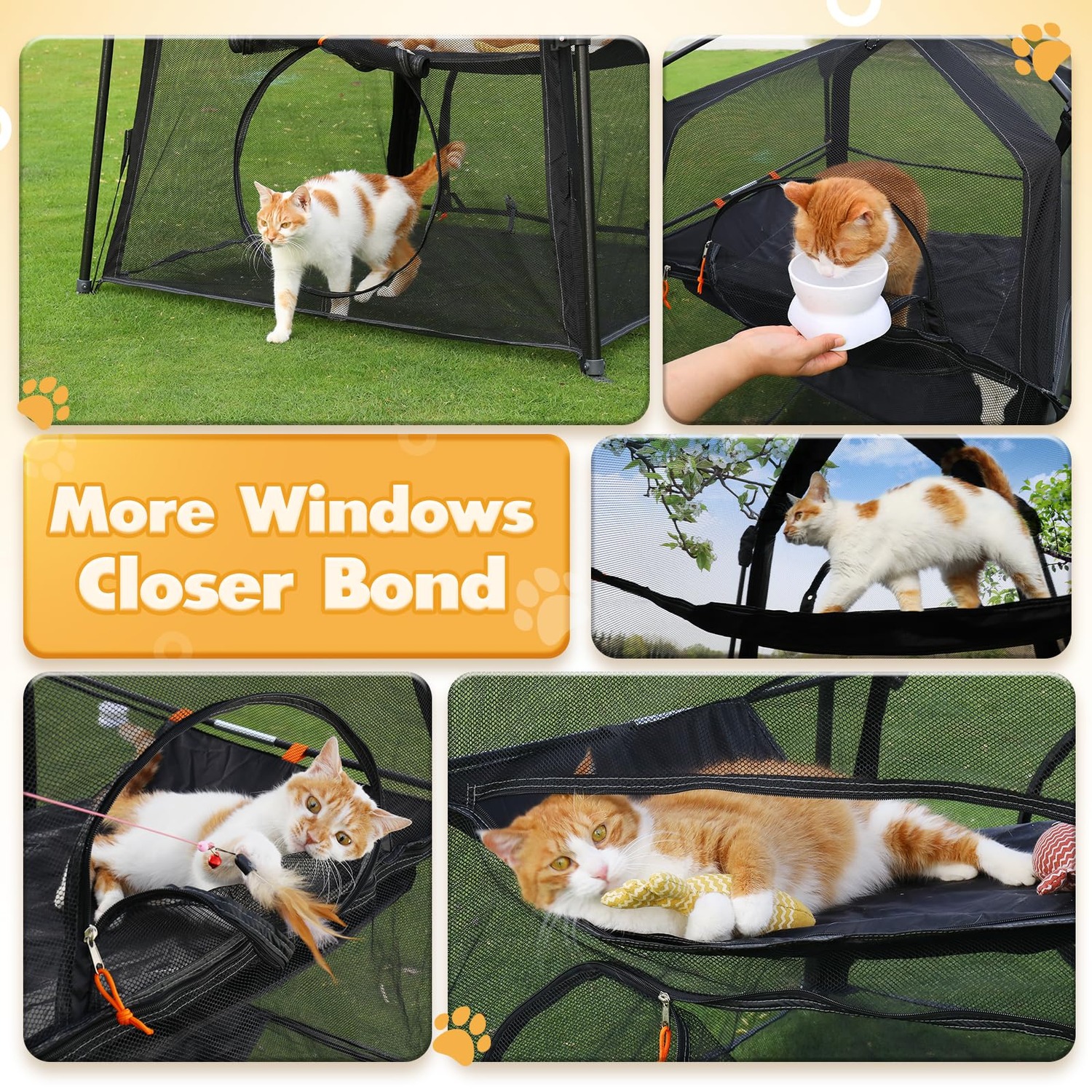
Inside, the layout is three tiers rather than one open floor. Cats do not just want space, they want height. Being able to sit above everything and survey the yard is a large part of why cats like climbing. Three levels in a 110 x 110 x 145 cm footprint gives a lot more usable area than the floor plan suggests.
Who it suits
This works well if you have an indoor cat, a small patio, a courtyard or a balcony. It suits renters who cannot build anything permanent. It suits people with more than one cat, because the tiers let cats share a space without being forced into each other's company.
It is also useful in situations that have nothing to do with sunbathing. Separating a cat recovering from surgery. Introducing a new cat to a resident one with a safe barrier between them. Giving a nervous rescue cat somewhere defined to settle. A mesh cat enclosure handles all of those jobs and then folds away.
Travel is the other obvious fit. Camping, caravans, holiday rentals, a weekend at a relative's house where the cat cannot be trusted near the front door. At 5.9 kg and folded into a carry bag, it goes in a boot easily.
It is less suited to anyone who wants a fully secure, weatherproof structure they can leave a cat in all day. That is what a built timber catio is for. This is supervised daytime space, and it is honest about that.
How to choose
Measure your space first. The footprint is 110 x 110 cm, so you need a bit over a metre square of flat ground plus room to walk around it. On a balcony, measure twice. Many balconies are narrower than people remember.
Think about anchoring. Tent pegs are included and they work on grass or soil. On concrete, decking or tiles you need weights instead, and this is not optional. A pegged or weighted enclosure is noticeably steadier, and the internal shelves feel firmer when a cat lands on them. An unanchored one wobbles, and wobble is the number one reason cats refuse to use the upper tiers.
Count your cats. One cat will love the whole thing. Two or three that already get along will manage fine. Cats that genuinely dislike each other should take turns rather than share.
Consider what goes inside. There is room for a bed, a water bowl, a litter tray and a couple of toys alongside the cat. The large bottom window is built big enough for an adult to climb in and clean, which is the practical detail that decides whether you keep using it.
Check the extras you might want. The base has a tunnel connector that fits standard cat tunnels, so you can extend the run later. Tunnels are not included, but they are cheap and most cats love them.
Getting your cat to use it
Do not carry a reluctant cat outside and zip them in. That is a bad first impression and some cats never recover from it.
Open the enclosure indoors with the doors unzipped. Put a blanket that smells like home on the floor level, drop a few treats inside, and walk away. Let your cat investigate on their own schedule. Most will be in and out within a day.
Once they are comfortable, move it outdoors for short sessions and stay nearby. Ten minutes is plenty at the start. Build up from there.
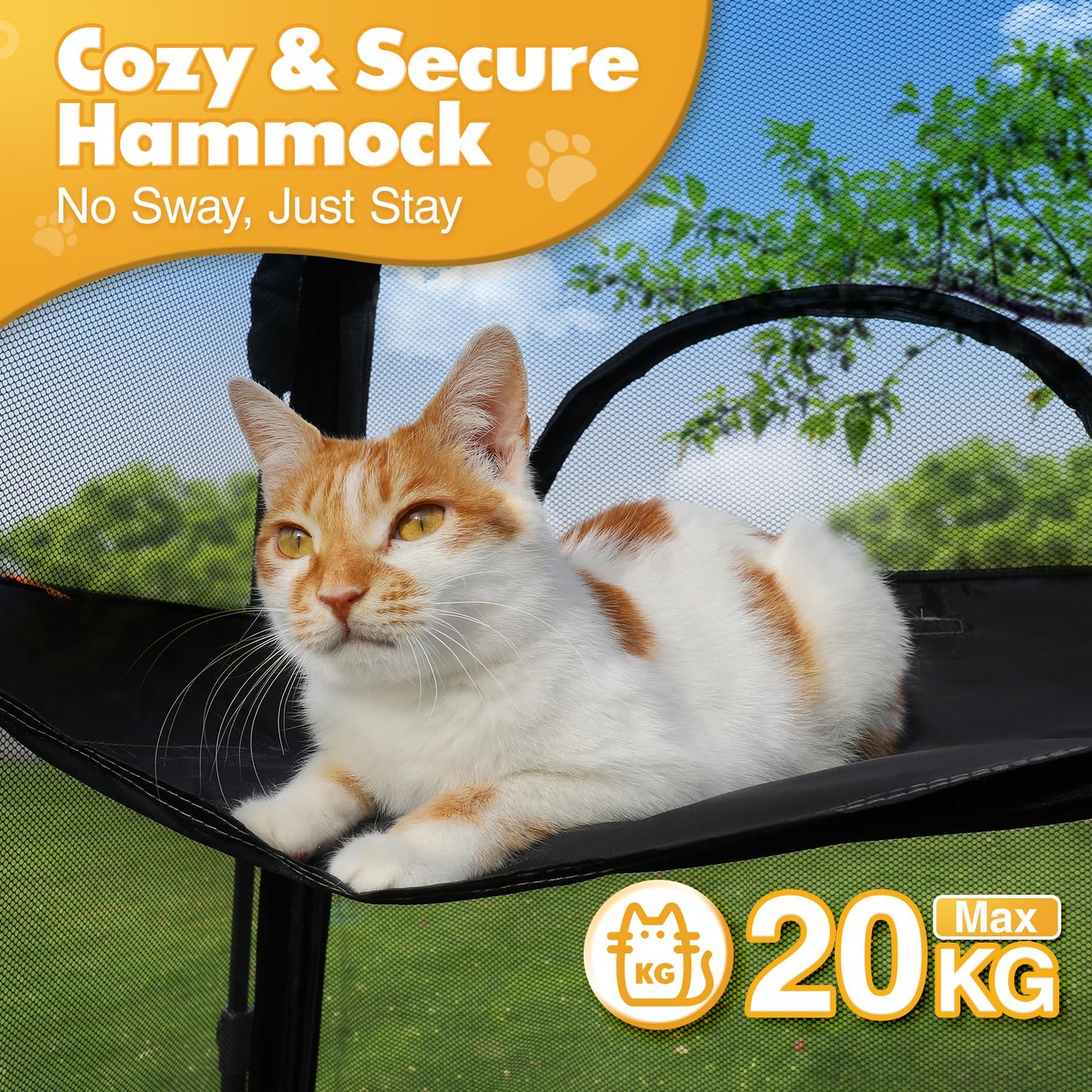
The hammocks and upper tiers take longer for some cats. There is a slight bounce when they jump on, and a cautious cat will hesitate. Peg the corners tighter, put a treat on the second level, and be patient. Some cats are on the top tier in an hour. Others take a fortnight. Both are normal, and a cat that only ever uses the ground level is still getting everything they came for.
Looking after it
Shake out fur and grit after each session and keep the zip tracks clear, because grit in a zip is what kills a zip. Spot clean mesh and fabric with warm water and a mild pet-safe soap, and let it dry fully in the open position before you fold it. Never put it in a washing machine or a dryer.
Store it dry. Packing a damp enclosure into a carry bag is the fastest way to get a musty smell you cannot get out.
Every few uses, run your hand over the mesh and look at the corner stress points and the frame joints. Catching a small tear early is much easier than patching a big one. Keep it off ground where sharp garden tools or broken pots have been.
Sun is the slow enemy of any outdoor fabric. If you leave the enclosure standing for weeks in full sun it will fade and weaken faster than one that lives in a cupboard between uses. Folding it away is both easier and better for it.
A quick note on safety
Check zips are properly closed before you step away. Check the pegs are driven in firmly. Leave water inside whenever the sun is out, and move the enclosure into shade during the hottest part of the day. Bring your cat in during wind, heavy rain or storms.
On a balcony, keep the enclosure away from railings a cat could reach from an upper tier, and check your building's rules before you set anything up outdoors.
The short version
If you have an indoor cat who stares out the window, this gives them real outdoor time without the risks of letting them roam. It opens in a second, measures 110 x 110 x 145 cm across three tiers, uses an alloy steel frame with 300D mesh, and folds into a carry bag that weighs 5.9 kg.
Peg it down properly, introduce it slowly, and keep it dry between uses. Do that and you have an outdoor cat pen that gets used almost every sunny day, rather than one that lives in the shed.